
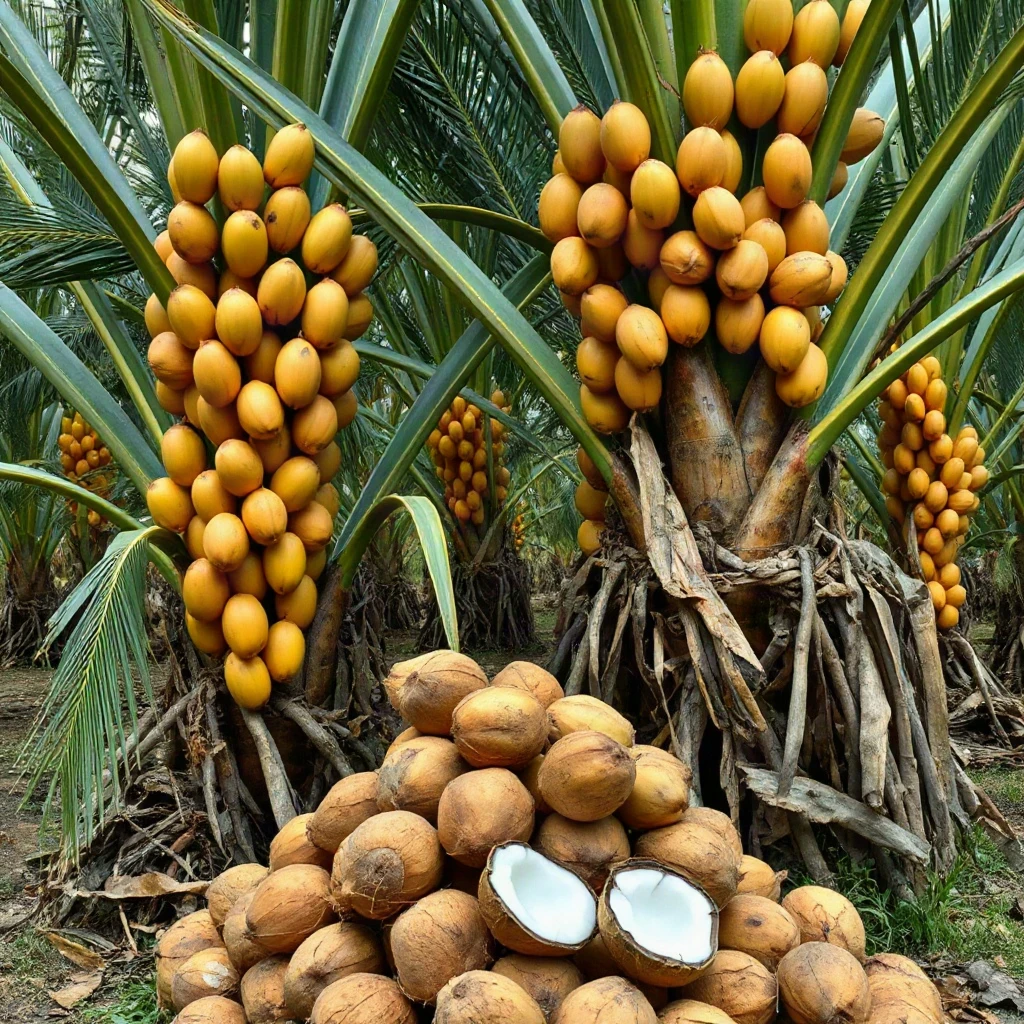
Palm oil and coconut oil are both major tropical vegetable oils, but they occupy very different positions in the global market. Palm oil, derived from the fruit of the oil palm, is the world's most widely produced and traded vegetable oil. Coconut oil, extracted from the kernel of the coconut palm, is a smaller-volume, specialty oil with distinct chemical traits. Their differences in yield, cost, fatty-acid profile and functional behavior drive their separate market niches.
Yield and cost
The most striking contrast is productivity. Oil palm is exceptionally efficient, yielding roughly four to five tonnes of oil per hectare per year under good conditions, while coconut palms typically produce less than one tonne per hectare annually. This yield gap translates directly into production cost: crude palm oil is generally among the cheapest vegetable oils available, whereas coconut oil commands a significant premium. For large-scale food manufacturing and biodiesel blending, palm oil's cost advantage is decisive. Coconut oil's higher price reflects its lower output and more labor-intensive harvesting.
Properties and applications
Palm oil is semi-solid at room temperature, rich in saturated and monounsaturated fats, and highly versatile. It is used extensively in cooking oils, margarines, confectionery fats, frying applications and as an ingredient in personal care products. Its oxidative stability makes it suitable for high-heat cooking. Coconut oil, by contrast, is highly saturated and remains solid in cooler climates; it has a distinctive flavor and aroma. It is prized in bakery shortenings, non-dairy creamers, and increasingly in cosmetics and hair care. A key chemical difference is lauric acid content: coconut oil is about 45-50% lauric acid, while palm kernel oil (derived from the palm seed, not the fruit) also contains lauric acid, but palm fruit oil does not. Lauric acid gives coconut oil antimicrobial properties and rapid melting behavior, which is valued in certain confectionery and pharmaceutical applications.
Sustainability and market positioning
Palm oil faces intense scrutiny over deforestation, peatland conversion and social conflicts, leading to sustainability certification schemes and moratoriums. Coconut oil is often marketed as a more natural or eco-friendly alternative, but it is not without issues: aging coconut plantations, low yields and limited certification coverage can undermine sustainability claims. In market positioning, palm oil is a bulk commodity driven by price and volume, while coconut oil is a niche product with health and premium branding. This distinction shapes supply chains: palm oil flows through massive integrated plantations and refineries, whereas coconut oil often comes from smallholders in coastal regions.
Practical note for buyers
For high-volume applications where cost and neutral flavor matter—such as frying oils, margarines and general food processing—palm oil is the logical choice. For products that rely on coconut's unique aroma, lauric acid content or solid fat profile—like confectionery fillings, dairy alternatives, cosmetics or specialty bakery items—coconut oil's premium may be justified. Buyers should also weigh supply security and sustainability commitments. In formulations, the two oils are rarely interchangeable; the decision should rest on functional requirements, price tolerance and the brand's sustainability narrative, not on a blanket preference.