
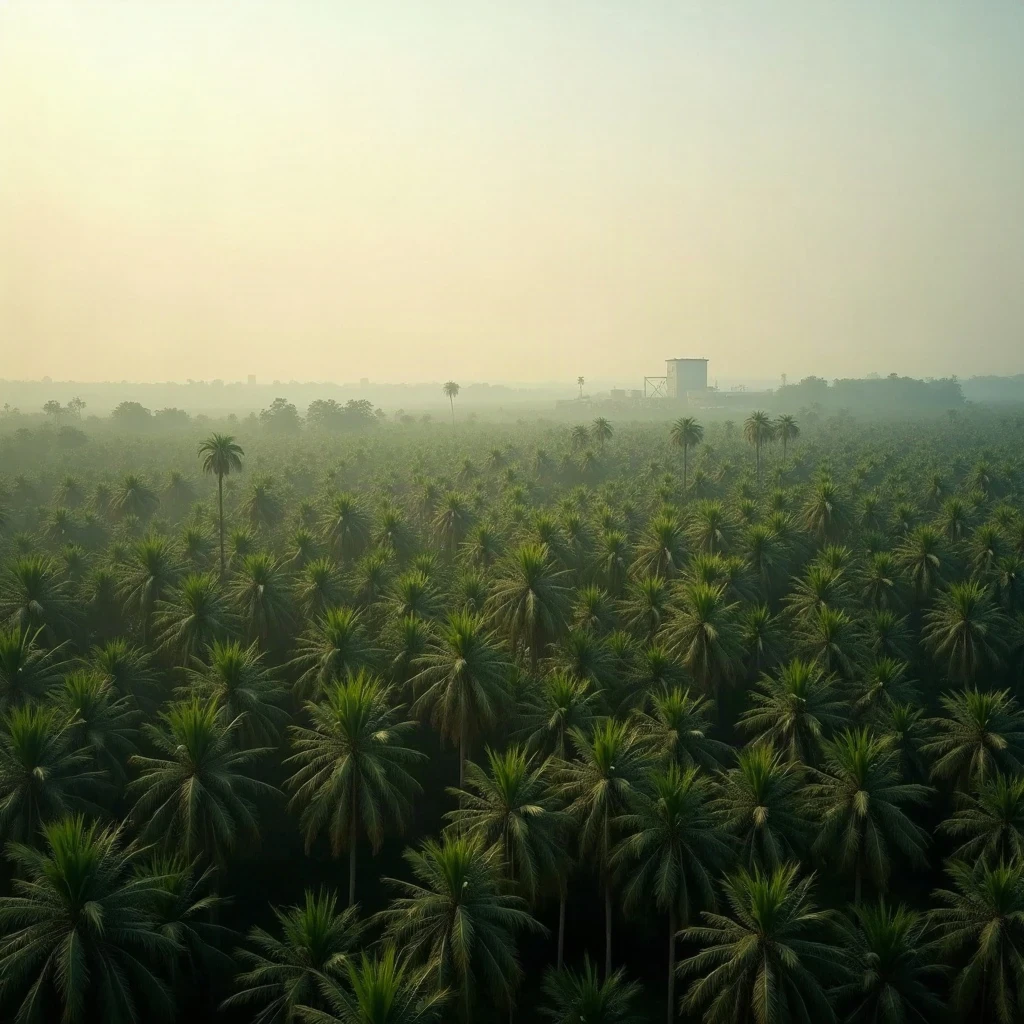
Malaysian crude palm oil futures settled little changed at about $1,153/MT (RM 4,663), up 0.1% on the session, as the market balanced pre-report caution against supportive energy and weather fundamentals. The global World Bank benchmark stood near $1,117/MT, while Indonesia's September reference price was set at about $1,008/MT, keeping export levies unchanged at $148/MT.
Supply: Stocks rising, output outlook tightening
The market is bracing for the Malaysian Palm Oil Board's August report, widely expected to show inventories at a seven-month high. July data already pointed to a build: closing stocks rose 7.2% month-on-month to 1,429,316 t, while production increased 9.4% to 1,792,979 t. Exports were firmer, up 14.5% to 1,392,178 t, though imports fell sharply by 51.9% to 49,566 t.
Seasonally, September typically brings further output gains, which could weigh on prices in the near term. Yet the supply outlook beyond this year is less comforting. El Niño conditions remain firmly in place (ONI +1.8), with dry weather reported in Sarawak and Kalimantan. Industry association Gapki has now forecast that Indonesia's 2027 palm oil output could drop by 2.9%, citing El Niño risks and urging accelerated replanting of aging trees. This adds weight to the existing narrative of tighter supply ahead, supporting the price floor. Our model outlook sees near-term bias as mixed-to-soft, with a base case of modest negative drift before a possible post-report relief bounce.
Demand: Biodiesel and energy underpin
Energy markets are providing a solid floor. Brent crude held near $96/bbl, flat on the session, which improves the economics of palm-based biodiesel. Indonesia is pushing ahead with full B50 implementation targeted for October 1, with national distribution reportedly above 80% and coverage at 90% of Pertamina stations. Beyond that, preparations for a B60 mandate in 2027 are already being discussed, although industry groups caution that feedstock supply flexibility will be a key challenge.
Soybean oil has been a drag, with weakness in that market pressuring palm values recently. However, a fresh rally in US soybean oil and rising crude have lent support. The wide BOPO spread and firm crude keep palm's energy-linked demand attractive.
Policy and trade flows
Indonesia's new export governance rules (PP 24/2026) are drawing attention, with producers urging that export levies not be raised to avoid pressuring fresh fruit bunch prices. Lawmakers have also pushed for a single-gate export system that prioritizes domestic industry needs over foreign-exchange earnings. Separately, Malaysia's MPOB has launched its PALMS 2030 agenda, focusing on digitalization and expanding global market reach.
The ringgit slipped to about 4.04 per dollar, providing some local-currency support for exporters, while the rupiah traded near 17,636 per dollar.
Takeaway for buyers
Watch the August MPOB report for confirmation of the stock build, but weigh it against the tightening 2027 supply narrative driven by El Niño, slower replanting, and now Gapki's explicit 2.9% output cut forecast. The October 1 B50 start and crude oil direction will likely set the near-term price tone more than the monthly inventory print.