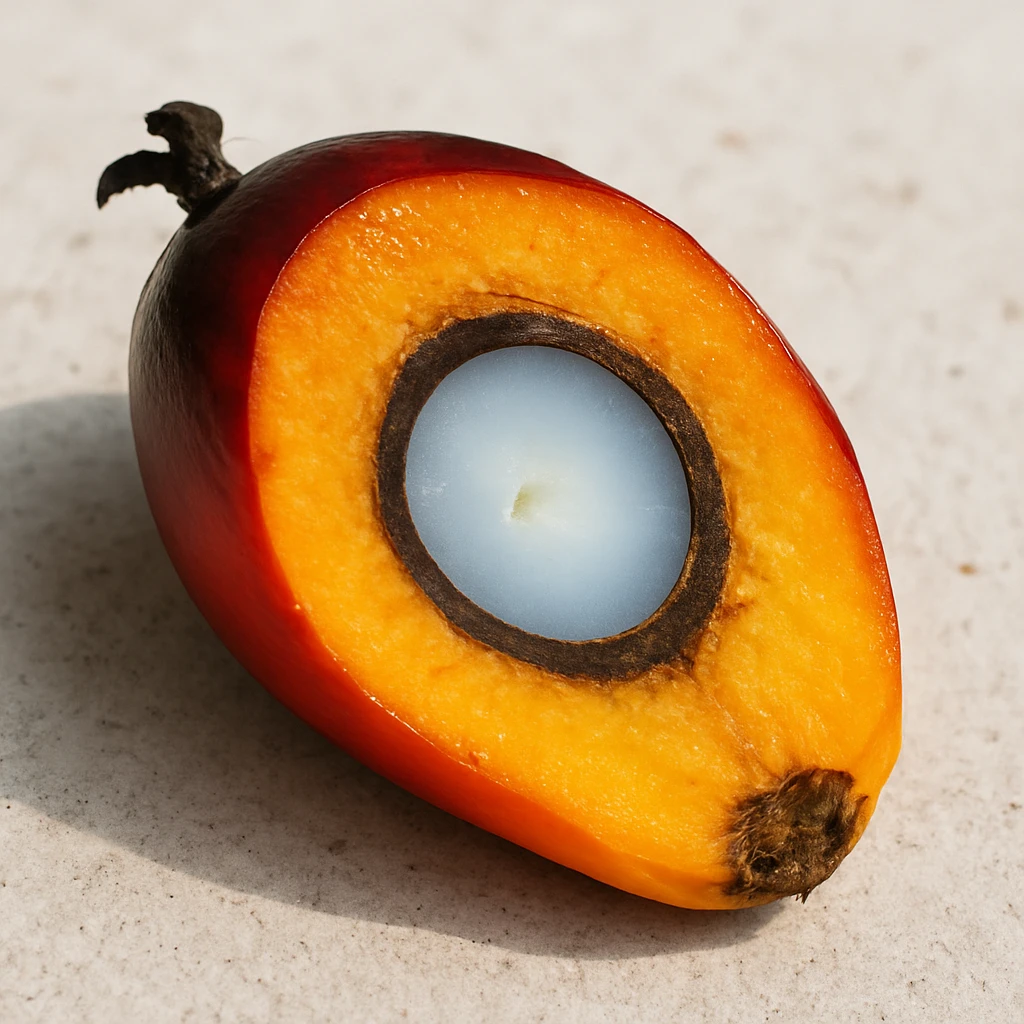
Oil palm (Elaeis guineensis) is a perennial tropical tree crop that produces two commercially valuable oils from the same fruit: crude palm oil from the fleshy mesocarp and palm kernel oil from the kernel. This dual output is one reason its total oil yield per hectare is the highest among major vegetable oil crops.
The yield gap explained
Oil palm is harvested year-round in humid tropical climates. It bears fruit bunches continuously after a maturity period, rather than being planted and harvested in a single season like annual oilseeds. A mature plantation can produce roughly four to five tonnes of total oil per hectare per year. By comparison, soybean typically yields about 0.4 tonnes of oil per hectare, rapeseed about 1.2 tonnes, and sunflower about 0.6 tonnes. These are approximate, long-run agronomic averages; actual yields vary by region, management and weather.
The biological efficiency comes from several factors. The oil palm allocates a large share of its above-ground biomass to fruit, and the mesocarp of the fruit is typically rich in oil, with crude palm oil extraction from fresh fruit bunches often around 20 to 25 percent by weight. In annual crops, oil is extracted from seeds that represent a smaller fraction of total plant biomass, and the crop must be re-established each year. Oil palm, as a tree, stores energy and continues producing from the same root system and canopy for decades, which raises the oil output per unit of land over time.
What this means for procurement managers
For buyers comparing vegetable oils, the yield advantage translates directly into land use. Producing one tonne of palm oil requires substantially less land than one tonne of soybean, rapeseed or sunflower oil. This is why palm oil often has a cost advantage and why it is a major ingredient in food, personal care, cleaning products and industrial applications.
However, the high yield is concentrated in a narrow tropical belt, mainly Indonesia and Malaysia. That geographic concentration means procurement teams should treat palm oil supply with the same risk lens as any commodity: weather, logistics, regulatory and sustainability factors can affect availability. The high yield per hectare also does not remove the need for responsible sourcing; deforestation, peatland management and labor practices remain important supplier due diligence topics.
- Compare total oil yield per hectare, not just price per tonne.
- Remember that one hectare of oil palm produces both palm oil and palm kernel oil, which may serve different product uses.
- High yield per hectare supports lower land footprint, but verify sustainability certifications and traceability claims.
- Assess supply concentration risk, since most production comes from a limited number of countries.
In summary, oil palm's unmatched oil output per hectare comes from being a continuously harvested perennial tree crop with oil-rich fruit and dual oil streams. For procurement managers and first-time buyers, this yield advantage is the foundation of palm oil's large global supply and competitive pricing, but it must be weighed alongside geographic and sustainability considerations.