
Palm kernel stearin is the solid fraction obtained when palm kernel oil is cooled and pressed or filtered. It is naturally rich in lauric and myristic fatty acids, which give a steep melting curve, rapid crystallisation and good gloss when used in coatings.
From palm kernel oil to stearin
Palm kernel oil is first refined to remove free fatty acids, gums, colour and odour. It is then fractionated. The liquid olein fraction is separated from the harder stearin fraction. The stearin has a higher melting point and a higher proportion of saturated fatty acids, making it suitable as a base for cocoa butter substitute.
Making a cocoa butter substitute
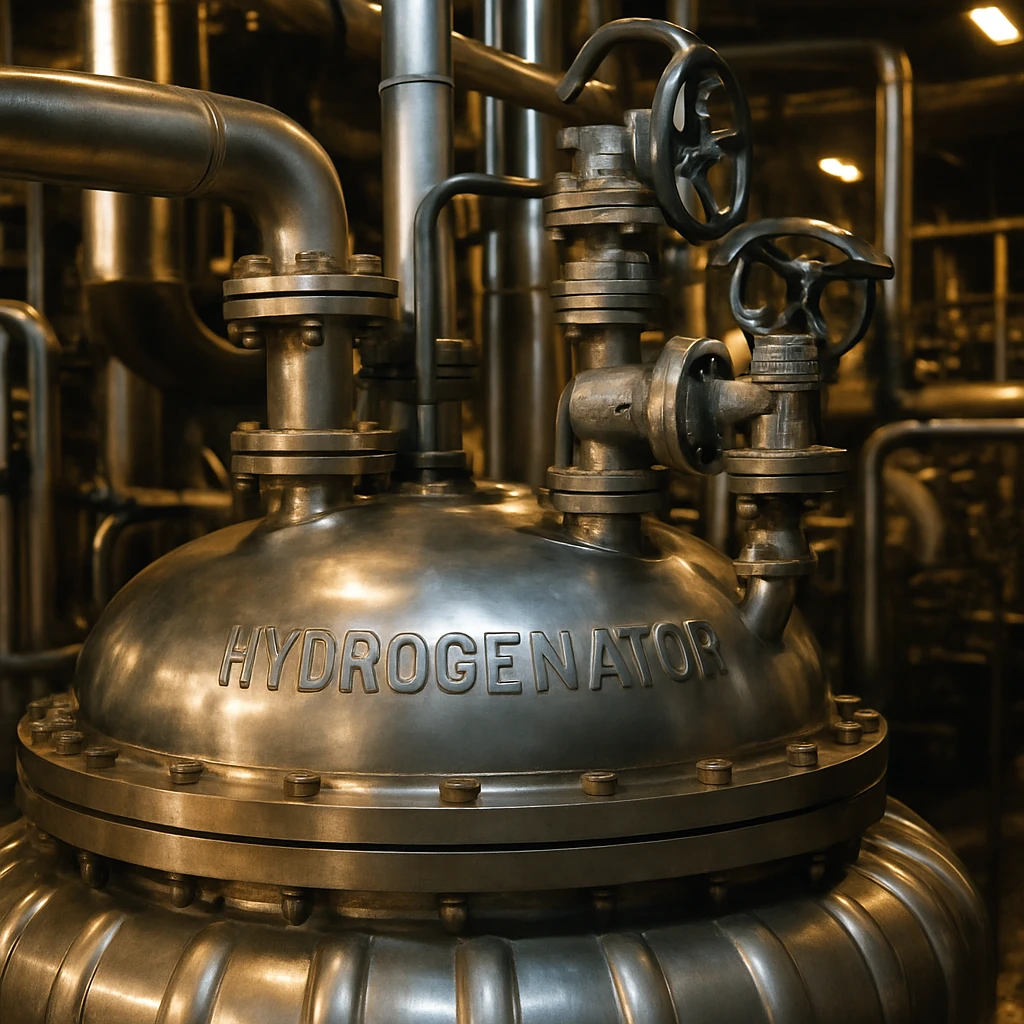
To turn palm kernel stearin into a workable CBS, manufacturers typically hydrogenate the fat. Hydrogenation raises the melting point and improves oxidative stability. Full hydrogenation removes almost all double bonds, producing a very stable fat with no trans fatty acids. Partial hydrogenation was used historically but can produce trans fats, so many modern CBS products are based on fully hydrogenated palm kernel stearin or blends that have been interesterified. Interesterification rearranges fatty acids on the glycerol backbone without adding hydrogen, allowing the melting profile to be adjusted while keeping the fat trans-free.
Key properties for buyers
A practical CBS has a melting point close to cocoa butter, usually in the range of roughly 33–38°C, but this can be tailored. It sets quickly, gives a good snap at room temperature and resists softening in warm conditions better than cocoa butter itself. However, CBS is a lauric fat and is not compatible with high levels of cocoa butter. Blends containing more than about 5–10% cocoa butter can become soft, grainy or prone to fat bloom because of eutectic effects. Buyers should therefore ask for the intended fat phase composition and request melting point, solid fat content, free fatty acid, peroxide value and iodine value data from the supplier.
As with all palm kernel fractions, CBS should be stored in clean, dry, odour-free conditions, protected from light and air, and kept within the supplier’s recommended temperature range. Many buyers specify nitrogen blanketing or inert gas coverage in bulk tanks to limit oxidation.
Where CBS is used
CBS is used in compound chocolate coatings for biscuits, wafers, confectionery bars, cereal bars and ice cream. It is also used in bakery coatings, moulded novelty items and some fillings where a hard, glossy, quick-setting fat is required. Because it is made from palm kernel stearin rather than cocoa butter, it offers a lower-cost alternative and can be used in products that are not labelled as chocolate but as chocolate flavoured or compound. Its resistance to heat and bloom makes it especially useful in tropical climates and for products that must survive a warm distribution chain.