
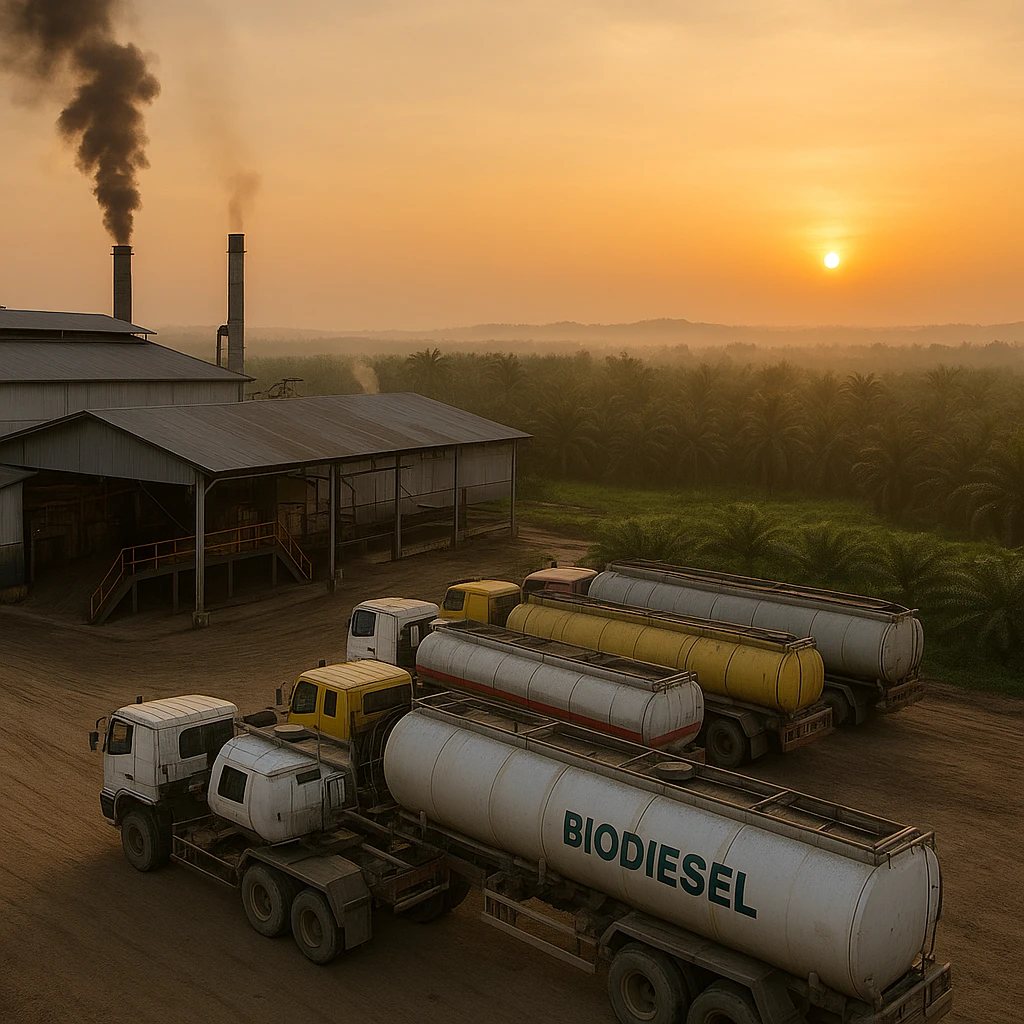
Recent reporting indicates that Indonesia's B50 biodiesel blending programme has been officially implemented, with distribution reported at 80% and coverage of 90% of Pertamina fuelling stations. This marks a further step in the country's effort to absorb more palm oil into the domestic energy mix.
At the same time, the Indonesian Palm Oil Association (GAPKI) has cautioned that the planned B50 mandate for 2027 will require flexibility, pointing to palm oil supply as a key challenge. This suggests that feedstock volumes, logistics and blending economics may need careful management as the higher blend rate approaches.
Regional reporting from East Kalimantan highlights both opportunity and friction: B50 is seen as opening a new market for the province's palm oil, but infrastructure and efficiency remain unresolved homework for producers and distributors.
Supply implications
- A higher biodiesel blend raises domestic palm oil consumption, leaving less crude palm oil available for export unless production rises proportionally.
- Distribution logjams or infrastructure gaps, such as those flagged in East Kalimantan, could create localised feedstock bottlenecks and price divergences.
- GAPKI's call for flexibility signals that fixed blending targets may need adjustment mechanisms to avoid supply shocks.
These factors point to a tighter palm oil balance in Indonesia, which can support domestic prices and widen the premium over competing edible oils if export volumes are constrained.
Demand and compliance buyers
For buyers with sustainability or regulatory obligations, the B50 rollout raises several watch items. First, actual distribution coverage is not uniform; even at 90% of Pertamina stations, the remaining gap and non-Pertamina distribution matter for compliance claims. Second, a larger share of palm oil diverted into biodiesel can shift feedstock availability for food and oleochemical buyers, affecting contract performance and traceability. Third, companies relying on Indonesian palm oil for renewable energy mandates in other jurisdictions may need to verify that domestic B50 compliance does not disrupt their supply chains.
- Monitor blend-rate enforcement and distribution updates, especially outside major Pertamina networks.
- Watch for GAPKI and government adjustments to 2027 blending schedules, which may indicate supply stress.
- Assess infrastructure readiness in producing provinces, as local bottlenecks can delay feedstock movement to biodiesel plants.
In summary, B50 is progressing but remains a balancing act between domestic energy policy ambition and the palm oil supply base. Official implementation and early distribution data show momentum, while producer warnings and regional infrastructure gaps suggest compliance-minded buyers should track flexibility measures and regional capacity carefully.