
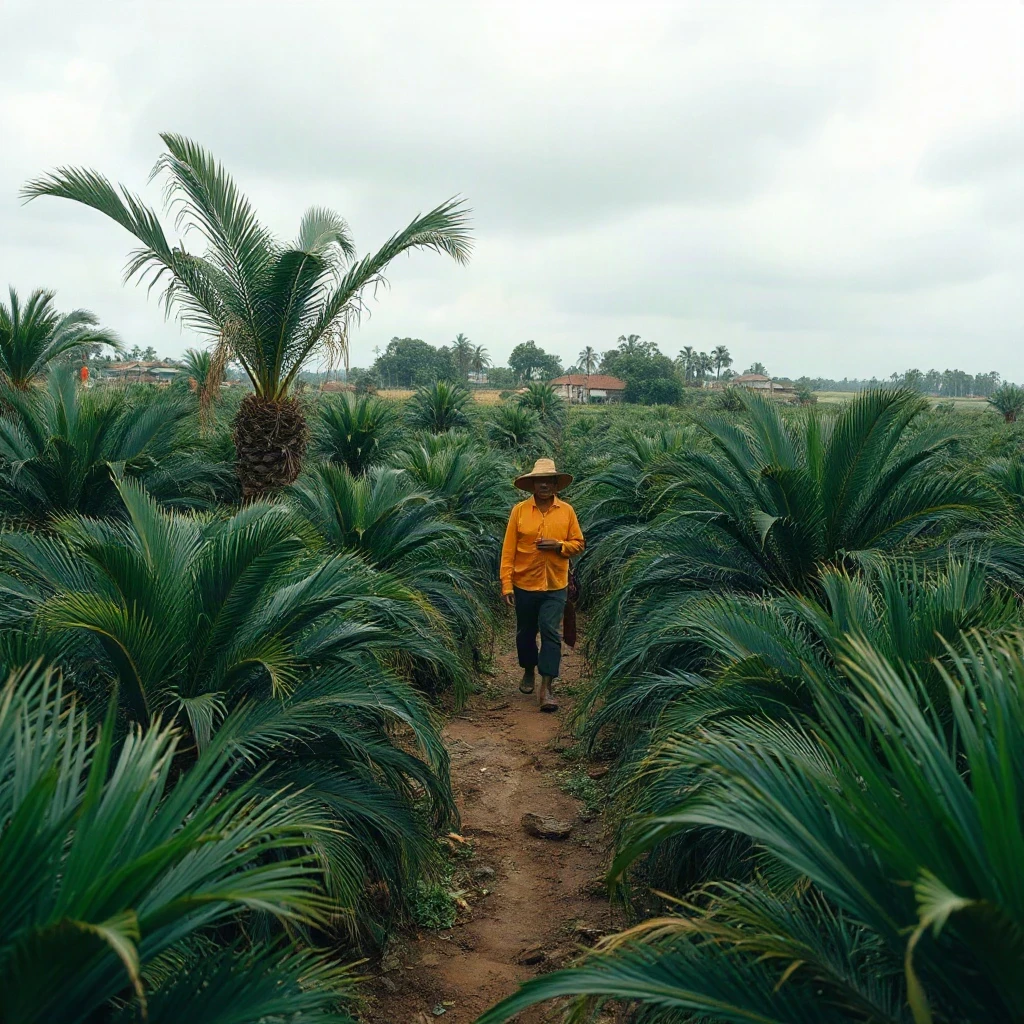
The palm belt enters September with El Niño still firmly in place — the ONI index sits at +1.4 — but seven-day rainfall is broadly normal across both Malaysia and Indonesia. That combination keeps the market's attention split between two very different time horizons: the lagged yield drag from the warm phase and the immediate logistics risk from any heavy rain events.
ENSO state and the yield lag
El Niño's main impact on oil palm is not instantaneous. Drought stress typically shows up in fruit bunch weight and overall FFB output with a six-to-twelve month delay. With ONI at +1.4, the current warm episode has been running long enough that its effects are now feeding through to trees that experienced dry conditions earlier in the cycle. Our model outlook reflects this: CPO is anchored near $1,152/MT, close to a 52-week high, with bullish El Niño signals still supporting prices even as other factors cap gains.
For Malaysia, the July MPOB data already showed production climbing 9.4% month-on-month to 1.79 million tonnes, and closing stocks up 7.2% to 1.43 million tonnes. Those figures capture the current harvest, but they do not yet fully price in the El Niño lag. The months ahead could see lighter fruit bunches as the stress effect matures, even if rainfall now looks adequate.
Rainfall: normal now, but logistics matter
The seven-day outlook shows no extreme dry or wet anomalies across the main producing regions. That is supportive for ongoing harvest work — workers can access fields, and fruit can move to mills without weather-related delays. But the market is also watching for any shift toward heavier rain. La Niña, which often follows El Niño and brings wetter conditions to Southeast Asia, remains a background risk. Should rains intensify, the immediate effect would be on harvesting and logistics: flooded roads, slower collection, and temporary mill bottlenecks. That kind of disruption hits current supply rather than future yields.
Indonesia: policy and reference prices
Indonesia's reference price is set at about $1,008/MT, below the global benchmark of roughly $1,117/MT and Malaysia's CPO level near $1,153/MT. The discount partly reflects export levy structures and domestic market obligations. Weather-wise, the Indonesian belt mirrors Malaysia: normal rainfall over the next week, with the same El Niño lagged-yield concern hanging over late-2026 output. Biodiesel economics also matter here — Brent crude near $96/bbl keeps blending incentives relatively firm, which supports domestic absorption and can tighten export availability if policy leans that way.
Net view for near-term output
For the next few weeks, the market's own data points — the August MPOB release, cargo survey numbers, and Bursa Malaysia trades — will matter more than weather. Our model outlook sees choppy consolidation with modest upside into that release, with a published path of +1.2% over seven sessions. Rainfall is not the binding constraint right now. The bigger question is how much of the El Niño yield penalty is already in the price and how much is still to come. Ample July stocks in Malaysia and soft September seasonality argue for caution, while the lagged drought effect and policy signals from Jakarta keep a floor under sentiment. For producers, the near term is about logistics and harvest efficiency; for the market, it is about waiting to see how the dry-season legacy translates into actual bunch weights over the coming months.