
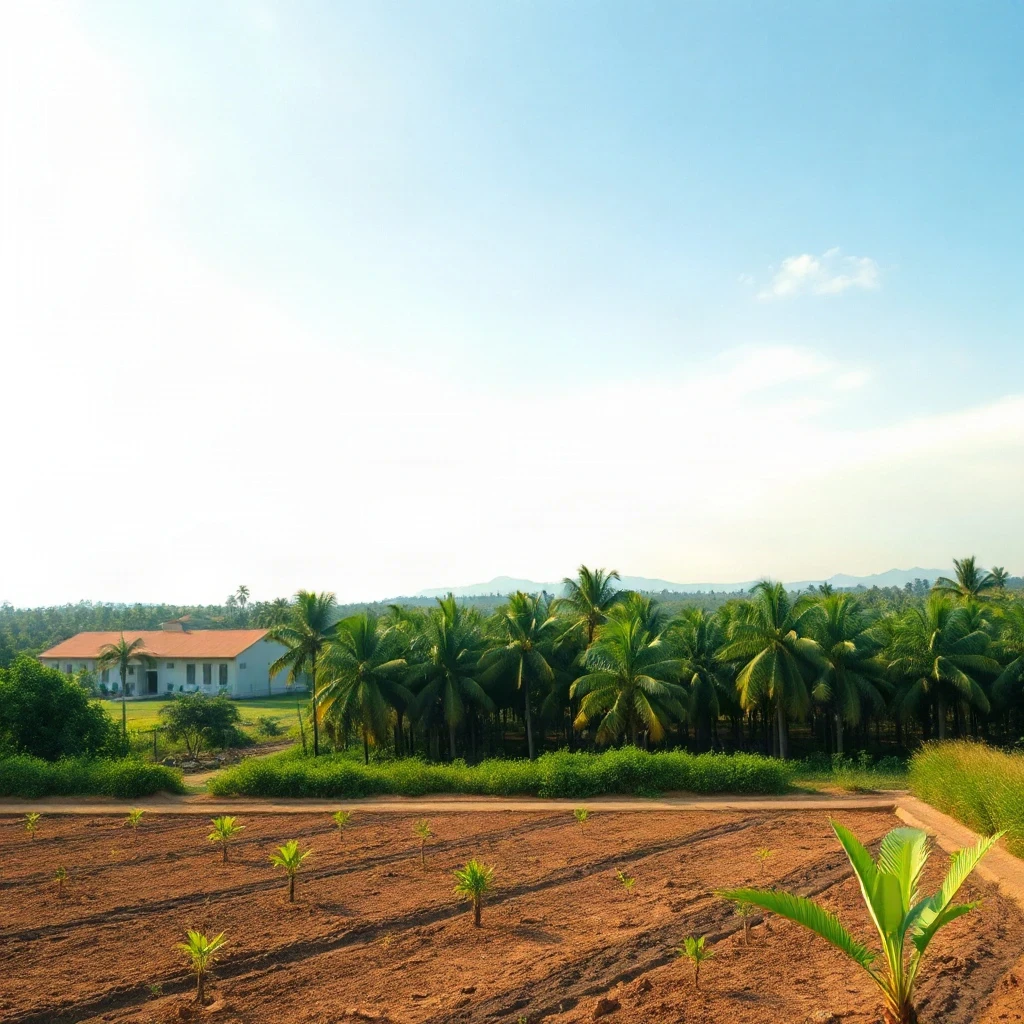
For much of the first half of the 20th century, the Malayan landscape was defined by rubber. The great estates that stretched across the peninsula were planted almost exclusively with Hevea brasiliensis, feeding a global tyre and industrial demand that seemed insatiable. But by the 1960s, that model was showing strain. Low rubber prices, rising production costs, and competition from synthetic rubber and new natural-rubber producers began to erode the economics of the old estate system.
The policy turn
The Malaysian government's response was a deliberate, state-led diversification programme. The key instruments were the Federal Land Development Authority (FELDA) and, later, the Federal Land Consolidation and Rehabilitation Authority (FELCRA). These agencies were tasked with opening new land for smallholder settlement, and crucially, they chose oil palm as the primary crop for many of these schemes. The logic was straightforward: oil palm offered higher and more stable returns per hectare than rubber, and it suited the tropical lowland conditions of the peninsula.
The policy was not merely about replacing one crop with another. It was about restructuring rural society. FELDA schemes were designed to settle landless families on newly cleared land, giving them title to smallholdings within a centrally managed plantation framework. The state provided the capital for land clearing, planting, and the construction of palm oil mills, and the settlers repaid these costs over time from their harvests. This model effectively created a new class of smallholder-planters, integrated into a modern supply chain from the outset.
The rubber-to-palm transition
On the existing private estates, the shift was more gradual but equally profound. As rubber trees aged and became less productive, many estates chose not to replant with rubber but to convert directly to oil palm. This was a commercial decision, encouraged by government incentives and by the demonstrated success of the FELDA schemes. By the late 1970s, oil palm had overtaken rubber as the dominant planted area in Malaysia, a historic reversal that had taken barely two decades to achieve.
This conversion was not without friction. The infrastructure of the rubber industry—smoking sheds, latex collection centres, and the skilled tapping workforce—was not directly transferable. Oil palm required different harvesting techniques, a more intensive use of labour for fruit collection, and the construction of new milling capacity. The transition therefore involved a significant re-skilling of the rural labour force and a major investment in processing facilities.
The legacy for today's industry
The policy pivot of the 1960s and 70s did more than change the crop mix. It created the structural template for the modern Malaysian palm oil industry. The FELDA and FELCRA schemes became the backbone of the smallholder sector, which today accounts for a substantial share of national production. The emphasis on integrated plantation-mill complexes, pioneered in those early settlement schemes, remains the standard model for efficient production. And the institutional capacity built to manage land settlement and crop diversification evolved into the regulatory and research bodies that still govern the industry.
In short, the Malaysian palm oil industry is not a natural resource accident. It is the product of a specific, state-directed historical process that converted a struggling rubber economy into a highly productive oil palm economy. Understanding that origin helps explain the industry's structure, its land tenure patterns, and the central role of government-linked agencies—all of which remain defining features of the trade today.