
The premium paid for RSPO-certified palm oil is not a single fixed surcharge. It is the additional cost a buyer accepts to source oil that meets the Roundtable on Sustainable Palm Oil production standards. The premium compensates growers, mills, and refiners for the expense of certification and for maintaining the chain-of-custody model the buyer chooses.
What the premium pays for
At the production level, the premium helps cover the cost of implementing the RSPO Principles and Criteria: environmental management, safe working conditions, legal compliance, and support for smallholders. It also covers audit fees, documentation systems, and training needed to keep a certificate valid. For supply chain models that require physical separation, the premium additionally pays for dedicated storage tanks, transport cleaning, segregated handling, and the extra planning that prevents mixing with non-certified oil.
Mass Balance (MB) in practice
Under Mass Balance, certified palm oil can be mixed with non-certified palm oil at any point in the supply chain. The certified volume is tracked administratively, not physically. A buyer who purchases 100 tonnes of MB oil receives documentation showing that 100 tonnes of certified oil entered the supply chain, but the physical oil in the tanker may be a blend. MB is practical when a buyer wants to support certified production without incurring the full cost of physical segregation. It is commonly used for processed palm fractions, oleochemicals, and products where the final manufacturing step blends many inputs.
Segregated (SG) in practice
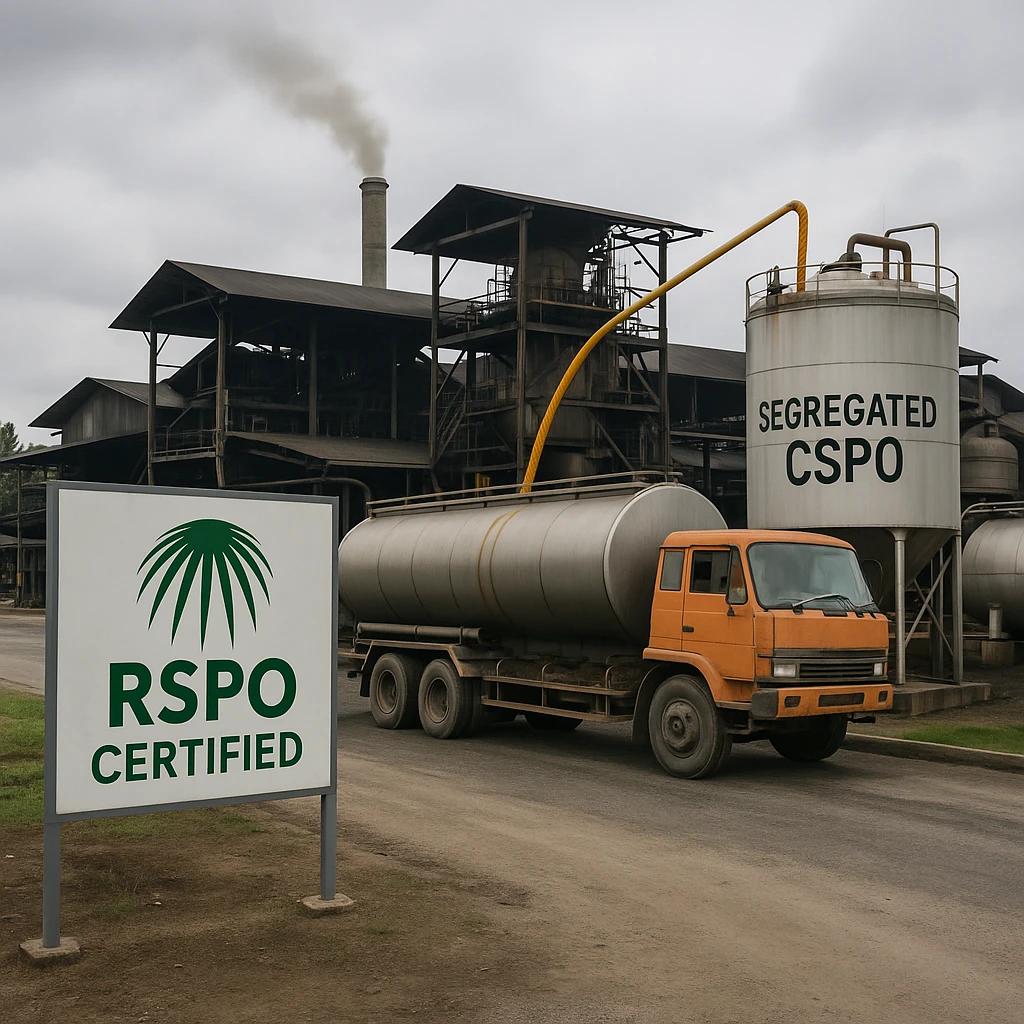
Segregated supply keeps certified palm oil physically separate from non-certified oil from the mill to the refinery and onward. This requires dedicated or verified-cleaned storage, pipelines, and transport. Because of these extra handling requirements, the SG premium is generally higher than MB. SG provides physical traceability: the oil delivered is from certified sources. SG is stricter than MB but less strict than Identity Preserved, which also keeps oil from a single identified source separate.
Choosing between MB and SG
- If your priority is cost and supply flexibility, MB is often the most practical certified option short of buying RSPO credits.
- If your product, customer, or label requires physical certified oil, choose SG.
- If you need to support certification but cannot yet source enough SG volume, MB can be a transitional step.
The choice is not about better or worse; it is about matching your traceability needs and budget to the chain-of-custody model. A clear internal policy on what each model allows you to claim will reduce confusion when suppliers offer different premiums.