
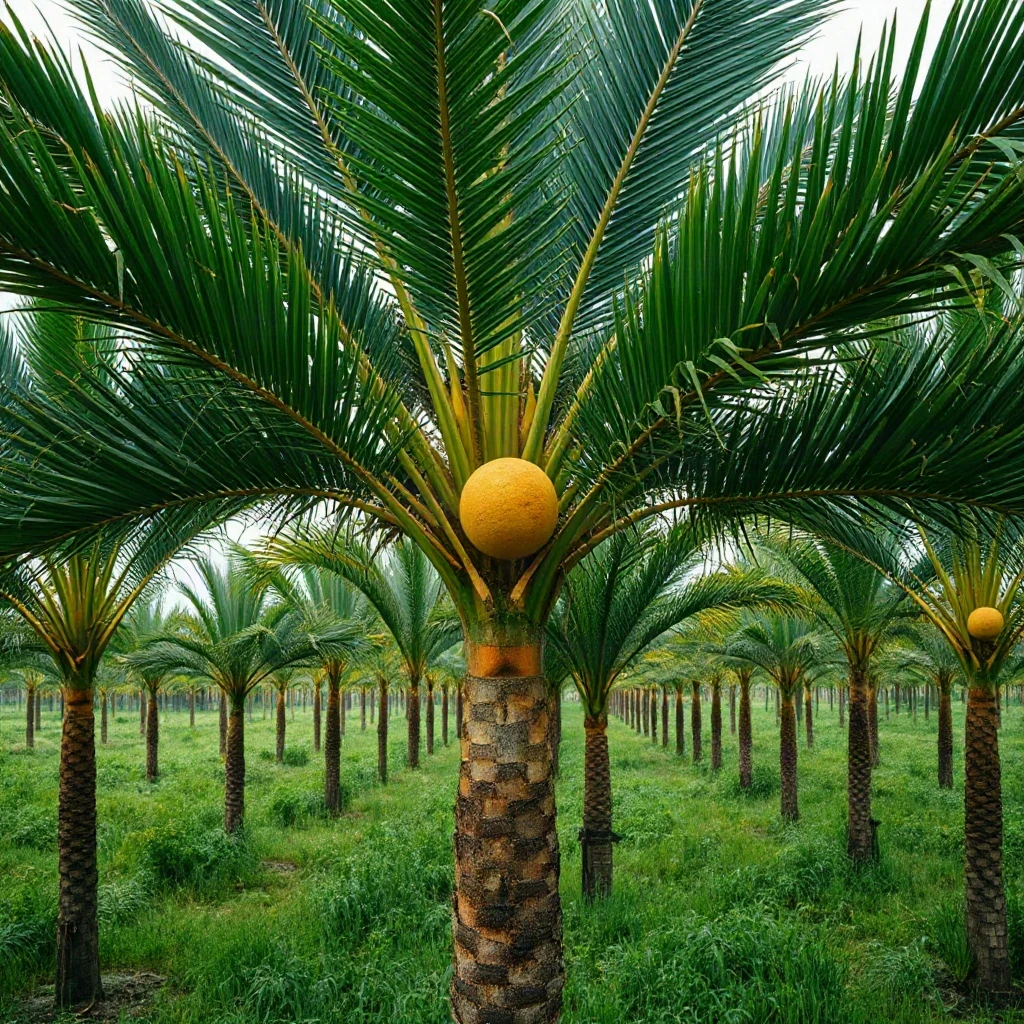
The pathogen and its behavior
Ganoderma basal stem rot is caused by white-rot fungi of the *Ganoderma* genus, most commonly associated with *Ganoderma boninense* in Southeast Asian oil palm plantings. The fungus is a wood-decayer that colonises the palm's internal tissues, degrading lignin and cellulose and eventually disrupting the vascular system. Infected palms show no reliable external symptoms until the disease is advanced, which is a central problem for management.
Well-established evidence confirms that the pathogen spreads through root-to-root contact between adjacent palms and persists in old palm stumps and root debris left after replanting. Inoculum can remain viable in the soil for years, which explains why disease pressure often rises in second- and third-generation plantings. Beyond that, much of the pathogen's epidemiology is less certain: the relative importance of basidiospore dispersal versus soilborne spread, and the role of different *Ganoderma* species in mixed infections, remain active research questions.
Detection: what works and what does not
Field detection still relies heavily on visual inspection for symptoms such as unopened spear leaves, yellowing fronds and the formation of fruiting bodies at the palm base. These signs appear late, typically when the internal rot is already extensive, so visual surveys systematically undercount early infections.
Molecular detection methods, including DNA-based assays, can identify the fungus in tissue or soil samples with high sensitivity. However, their practical use is constrained by sampling difficulty: the fungus is unevenly distributed within the palm and in the soil, so a negative sample does not rule out infection. Remote sensing and drone-based imaging are being tested to detect canopy stress, but these methods detect physiological changes that can have many causes, so they are not yet a definitive diagnostic. The state of the art is a combination of visual scouting, targeted molecular testing and spatial mapping of known hotspots, with the honest caveat that no current method reliably finds early infections in a standing crop.
Resistance: breeding progress and its limits
Resistance breeding has produced material with partial tolerance, but no commercially available variety is fully resistant to Ganoderma. Screening trials typically involve artificial inoculation of seedlings, and results from these trials do not always translate to field performance, where inoculum pressure, soil conditions and fungal strain variation interact. There is evidence that some progenies consistently show lower disease incidence, which suggests a genetic component, but the heritability of resistance is not well quantified and the underlying mechanisms are not fully understood.
Industry claims of "Ganoderma-resistant" planting material generally outrun the evidence. What is more accurate is that some crosses show reduced susceptibility under specific conditions, and that tolerance is likely polygenic. No single gene or marker has been validated for reliable marker-assisted selection, and progress is slow because the disease takes years to express in field trials.
Practical implications
For producers, the practical takeaway is that prevention and hygiene remain the most defensible strategy: removing and destroying old stumps, maintaining good drainage and using fallow periods to reduce inoculum. Detection programs should be treated as a tool for slowing spread, not for eliminating the disease, and budgets should reflect that.
For refiners and buyers, the relevance is indirect but real. Ganoderma reduces yield per hectare over a plantation's life and shortens the economic lifespan of affected blocks, which can tighten supply in mature regions. Sustainability certifications increasingly ask about disease management, so credible evidence of monitoring and replanting hygiene matters for market access. The honest summary is that research has clarified the pathogen's basic biology and the limits of current tools, but the gap between what is known and what is needed for reliable early detection and durable resistance remains wide. ---
*This article reflects the position as of 2 September 2026. Research moves on, and later work may revise or supersede what is described here. Please verify the current position, and any changes made after this date, before relying on it.*