
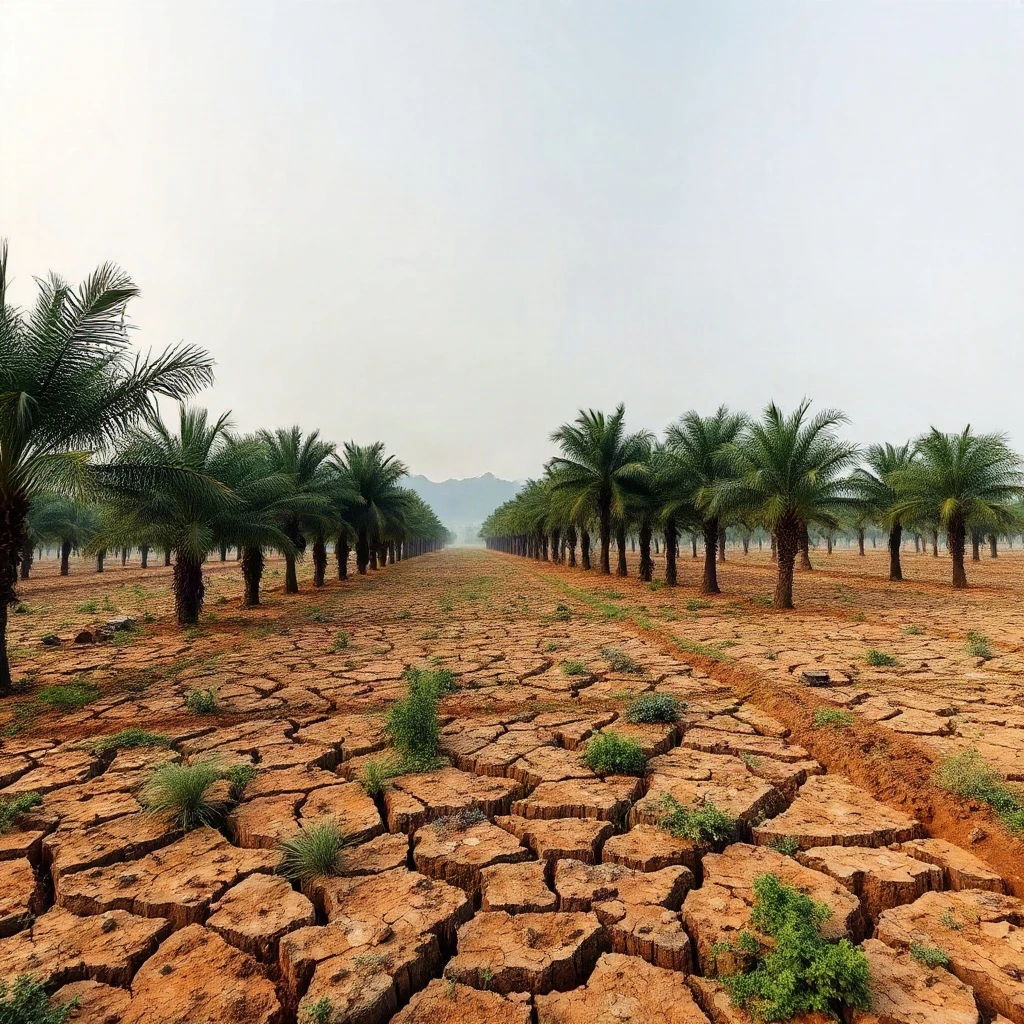
Current ENSO conditions point to El Niño, with the Oceanic Niño Index at +1.4. The notable weather signal is dry: Sarawak, Sumatra/Riau, and Kalimantan are all reported dry. These are core oil palm zones, so the balance between short-term field access and longer-term tree stress matters for the production outlook.
Near-term harvest and logistics Because conditions are dry rather than wet, fresh fruit bunch collection and transport are unlikely to face rain-related stoppages. Heavy rain typically disrupts estate roads, slows evacuation, and can reduce mill intake within days. That disruption is not the present concern. Instead, dry ground may support fieldwork and keep harvesting on schedule during the seasonal peak, which is one reason near-term output can hold up even as moisture stress builds.
The 6–12 month yield lag El Niño drought affects oil palm with a substantial delay. Moisture deficits during inflorescence development, bunch growth, and fruit set can reduce bunch weight, fruit count, and oil extraction rate, but those effects appear months later. The current dryness in Sarawak, Sumatra/Riau, and Kalimantan is therefore more likely to show up in lower yields in the first half of 2027 than in immediate output figures. Soil moisture depletion, elevated fire or haze risk, and reduced photosynthesis are the key channels.
- Dryness in Sarawak, Sumatra/Riau, and Kalimantan keeps near-term harvest logistics open but starts to stress developing bunches.
- With ONI at +1.4, a 6–12 month lag means current moisture stress may translate into softer yields later in the season and into 2027.
- Heavy rain is not currently clogging estate roads; instead, prolonged dryness is the operational watch item.
Market anchor Malaysian CPO benchmark sits near $1,143/MT, or about RM4,613/MT, while the World Bank global palm benchmark is around $1,101/MT and Indonesia’s reference is about $997/MT. Brent crude near $90/bbl supports biodiesel blend economics, and Indonesia’s B50 mandate remains part of the demand side. Our model outlook sees two-sided risk: El Niño supply fears, a palm–soy discount of BOPO $414/MT, and the mandate lean supportive, but July MPOB stocks rose 7.2% month-on-month to 1.43 million tonnes, about 61% above the five-year average, while seasonal production is peaking and speculative soyoil longs are crowded. A weak rupiah adds another cross-current.
July MPOB data showed CPO production of 1,792,979 tonnes, up 9.4% month-on-month, and palm oil exports of 1,392,178 tonnes, up 14.5% month-on-month, with a stocks-to-use ratio of 12.5%. The published path implies a 1.7% gain over 7 sessions, and our base case sees modest upward drift with consolidation roughly in the $1140–$1180 range, though confidence is low because the anchor is four days stale and key data are unavailable.