
Where the price sits now Malaysian benchmark CPO traded at about $1,143 per metric ton, up 0.4% from the previous session, equivalent to RM4,613 per metric ton at USD/MYR 4.03. The World Bank palm oil benchmark stood near $1,101 per metric ton and Indonesia's reference price near $997 per metric ton. Brent crude was around $88 per barrel, down 0.2%. The slight daily gain does not signal a trend; our model outlook describes consolidation near $1,146 with choppy near-term trade.
What is pushing CPO higher El Niño supply threat: ENSO ONI is at +1.4°C, with notable dryness in Sarawak and Kalimantan. Producer groups such as GAPKI warn that El Niño could crimp Indonesian output, creating medium-term bullish anticipation. Buyers may step in early or hold off selling, supporting deferred values even if prompt supply remains ample.
Wide BOPO spread: Soybean oil is around $1,565 per metric ton versus palm at $1,143, leaving a $419 per metric ton discount for palm. That gap strongly favors demand switching from soybean oil to palm in food and industrial uses, funneling incremental orders toward palm and providing a demand-side floor.
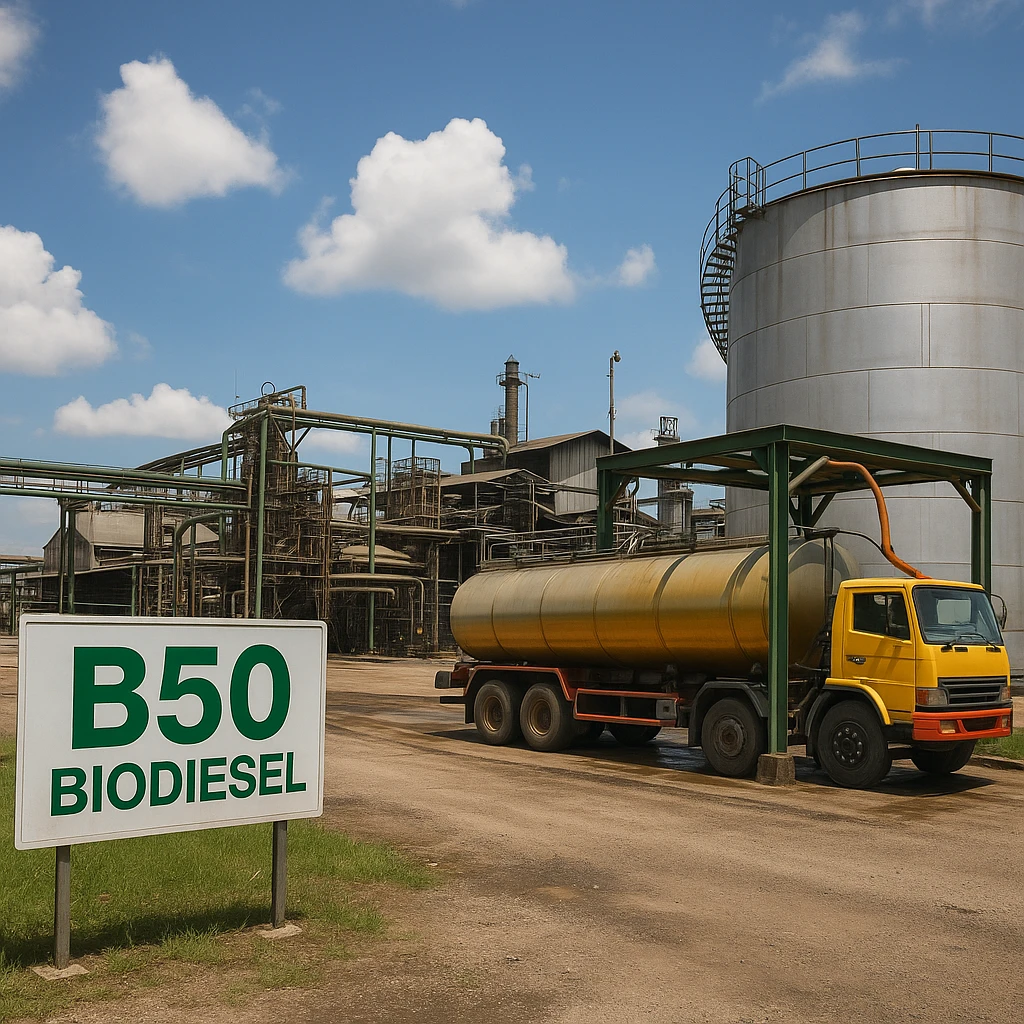
Indonesia B50 mandate: The transition from B40 to B50 is progressing and is expected to absorb 3–4 million tonnes per year of new demand. This is the largest structural demand variable in the market and underpins medium-term consumption, although it does not remove near-term supply pressure.
What is pushing CPO lower Ample July MPOB stocks: Malaysia's closing stocks rose 7.2% month-on-month to 1,429,316 tonnes, 61% above the five-year average, with a stocks-to-use ratio of 12.5%. Comfortable inventories reduce buyers' urgency and encourage sellers to clear volume, pressuring prompt prices.
Peak production seasonality: September historically averages a 0.9% monthly decline in price, and the seasonal production path points to a 7.0% rise next month. Higher output during the peak crop period typically outpaces demand growth, adding seasonal bearish pressure.
Weak Brent crude: Brent fell 6.5% over seven days to $88.3 per barrel, lowering the valuation of palm oil as a biodiesel feedstock. Even though POGO remains negative and technically supportive, the decline in the energy complex weakens a key demand anchor and makes biodiesel blending less compelling at the margin.
Weak Indonesian rupiah: USD/IDR at 17,759 makes Indonesian palm cheaper in dollar terms, prompting aggressive export selling by Indonesian producers. That increases regional supply and undercuts Malaysian CPO prices, adding a bearish regional dynamic.
Crowded speculative long: Managed money in soybean oil sits at the 79th percentile of its net-long positioning, down 9,795 contracts. If sentiment shifts, this crowded position is vulnerable to long liquidation, which could spill over into palm oil and amplify downside moves.
Which side has the upper hand Our model's factor balance is three bullish factors against five bearish factors, so the downside currently has the upper hand. El Niño fears, the wide BOPO discount, and Indonesia's B50 mandate provide support, but ample July stocks, peak seasonality, weak Brent, aggressive Indonesian selling, and an overcrowded speculative long are capping gains. Near-term trade is likely choppy, and rallies should be viewed against this bearish backdrop.
For the balance to flip, we would need to see confirmation that El Niño is actually reducing output, a sustained recovery in Brent to restore biodiesel feedstock valuation, or evidence that the BOPO discount is triggering stronger palm demand in export data. A reset in speculative positioning—either via long liquidation or fresh short cover after a washout—would also help. Key watchpoints are the upcoming MPOB August release in about 14 days and the missing cargo-surveyor export pace; a bearish August stock build or weak exports would reinforce the downside, while a bullish production miss or export surprise could begin to shift the balance.