
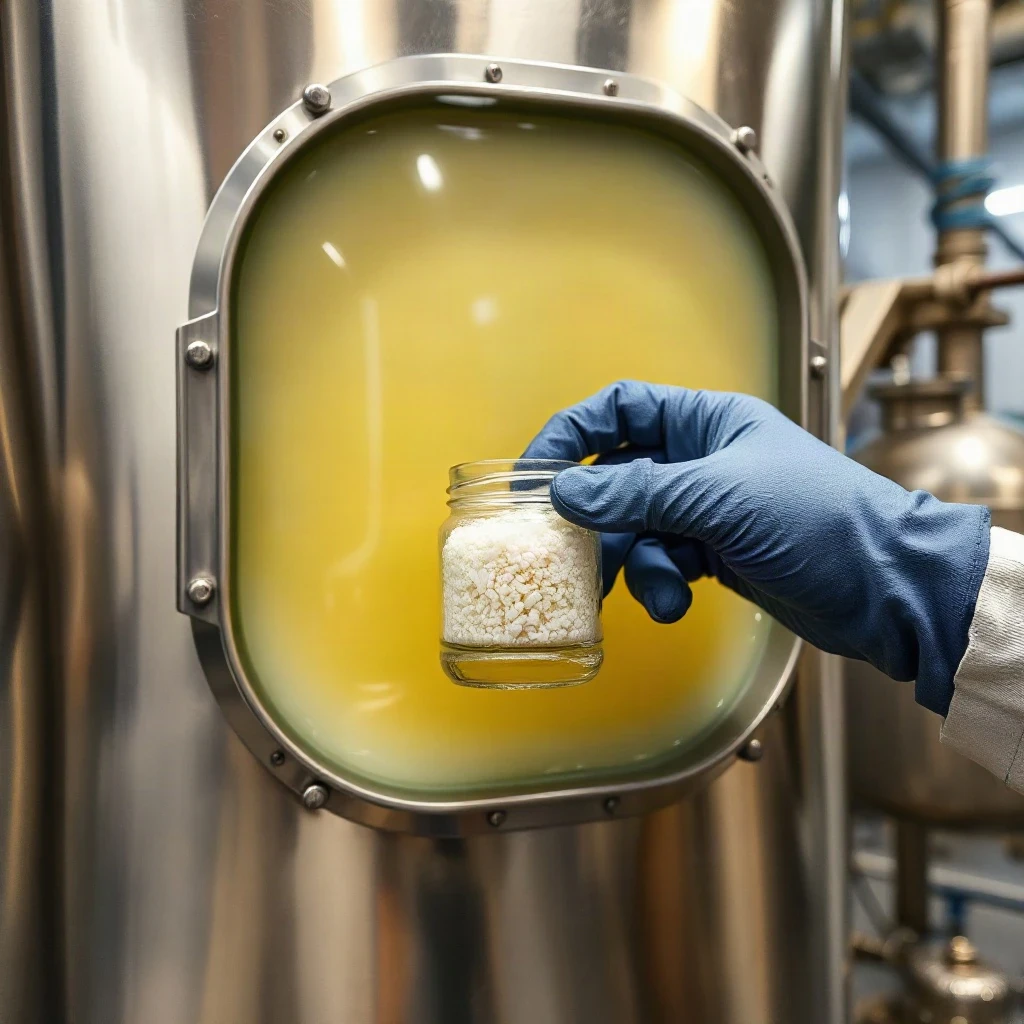
Cocoa butter substitute (CBS) is a vegetable fat used in confectionery to mimic the melting and snap properties of cocoa butter. For procurement managers new to palm products, the key is understanding that CBS is not a single oil but a tailored blend built around one base: palm kernel stearin.
The starting point: palm kernel oil
Palm kernel oil is extracted from the kernel of the oil palm fruit, distinct from the flesh-derived palm oil. It is naturally high in saturated fat, giving it a sharp melting profile. To make CBS, the oil undergoes fractionation, a controlled cooling and crystallization process that separates it into a liquid olein and a solid stearin.
The stearin fraction is the workhorse for CBS. It is hard, brittle, and melts in a narrow temperature range near body heat, which is essential for a chocolate-like mouthfeel.
Fractionation and blending
A single fractionation pass yields a stearin with a melting point around 30-35°C. For many CBS applications, this is further fractionated into a mid-stearin, which offers a cleaner melt and less waxy texture. The mid-stearin is then blended with other vegetable fats, typically palm oil fractions or lauric oils, to fine-tune hardness and cooling behavior.
Buyers should note that CBS is classified as a lauric fat because of its high content of lauric acid. This gives excellent snap and gloss but also makes the product prone to soapy off-flavors if it contacts moisture and lipase enzymes. Proper storage and handling are critical.
Processing steps after blending
The blended fat is then refined, bleached, and deodorized to remove free fatty acids, color, and odor. This produces a neutral, white fat with a long shelf life. Some producers add a small amount of emulsifier, such as lecithin, to improve texture in the final chocolate.
Final tempering is done at the confectionery plant, not the fat refinery. CBS is a non-tempering fat, meaning it sets directly from a melt without the complex crystallization steps required for cocoa butter. This simplifies production but also means the product is not compatible with cocoa butter in high ratios, a key specification point for buyers.
What buyers should check
When sourcing CBS, request a spec sheet showing the melting point, solid fat content profile, and iodine value. These determine how the fat behaves in your specific recipe. Also verify the lauric content and whether the product is fully hydrogenated or fractionated only, as this affects hardness and cost.
A common pitfall is substituting CBS for cocoa butter in a standard chocolate recipe. The two are not interchangeable. CBS is designed for compound coatings and filled products where cocoa butter is partially or fully replaced. Always run a pilot batch before committing to a large order.
Understanding the production path helps you ask the right questions and avoid costly mismatches. The fractionation process, blend ratios, and refining steps are the levers that determine whether a CBS will perform in your application.