
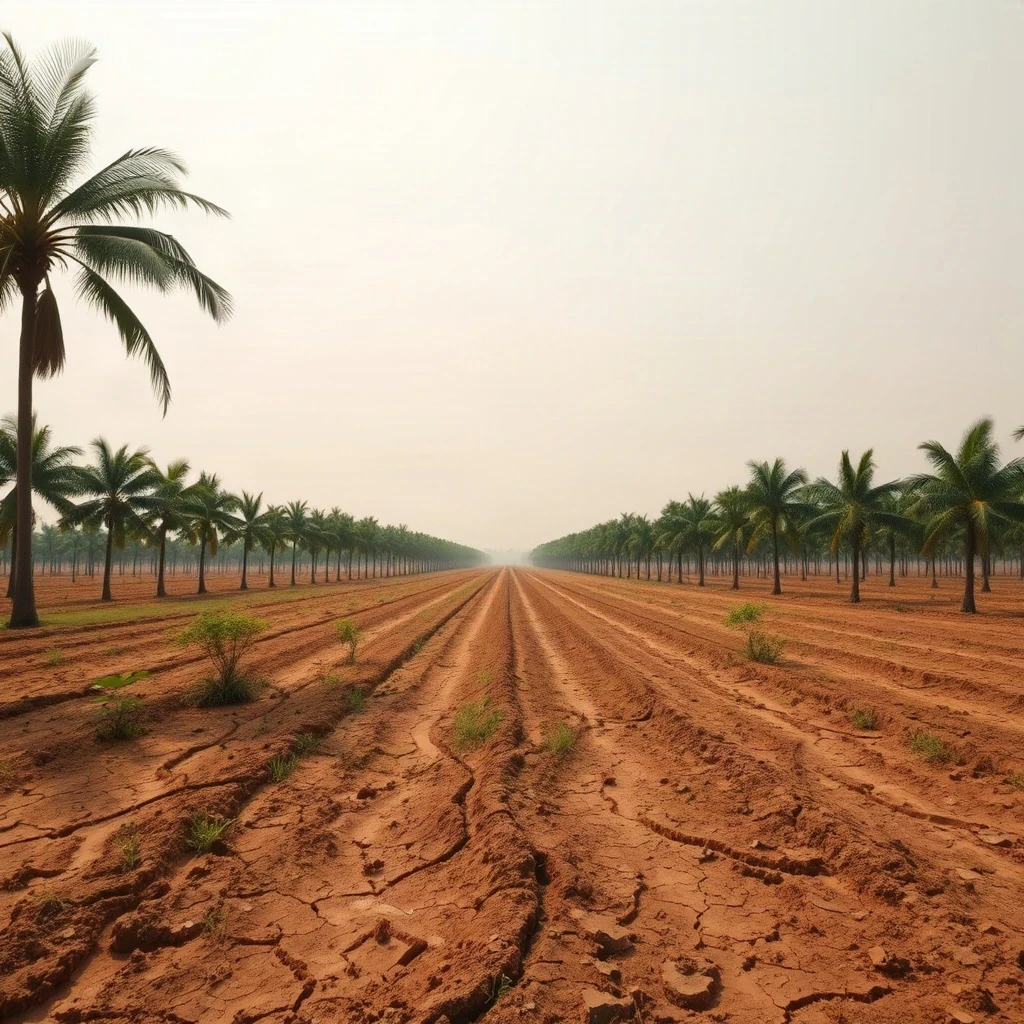
The palm oil belt is still under an active El Niño, with the ONI at +1.4, and the latest 7-day rainfall outlook shows notable dryness across Sumatra, Kalimantan and Sarawak. For the near term, the main impact is on harvesting and logistics: dry weather generally supports field access and fruit collection, but the lack of moisture now will feed through to yields with a 6-12 month lag, mainly via lower fruit bunch weights.
Current output vs. forward risk
Malaysia’s July production data already reflect a strong seasonal uptick, with CPO output at 1,792,979 tonnes, up 9.4% from June. Closing stocks rose 7.2% to 1,429,316 tonnes, while exports jumped 14.5% to 1,392,178 tonnes. These figures suggest the market is still enjoying the tail-end of a decent crop cycle.
However, the persistence of El Niño into August and the dry conditions across Sarawak, Sumatra and Kalimantan point to a different picture for early 2027. The lagged effect means that the stress on fruit development now will show up in reduced bunch weights and lower yields several months down the line. Our model outlook also notes that the market is already pricing in some of this risk, with CPO benchmark at about $1,138 per tonne, down 1.1% on the session, but with an upward bias over the next seven days.
Indonesia: dry Sumatra and Kalimantan
In Indonesia, the dry conditions in Sumatra and Kalimantan are particularly significant because these regions account for a large share of national output. The government’s reference price is about $997 per tonne, and the wide discount to the global benchmark (around $1,101) partly reflects concerns over supply availability. If the dryness persists, it could tighten supplies later in the year and into 2027.
Weather vs. logistics
While dry weather is generally favourable for harvesting and transport, the risk of sudden heavy rain remains. In contrast to El Niño, La Niña typically brings wetter conditions to Southeast Asia, which can disrupt harvesting and logistics immediately. For now, the dry spell is more of a slow-burn threat to yields, but any shift to intense rainfall would create short-term bottlenecks at mills and ports.
Market implications
Our model outlook suggests mild gains over the next week, with consolidation around month-end as high Malaysian stocks and weak crude oil (Brent at about $86 per barrel) and a soft rupiah cap upside. The BOPO discount and Indonesia’s B50 biodiesel mandate provide underlying demand support. But the weather remains the key variable to watch: a continuation of the dry spell in the main producing regions would reinforce the case for tighter supply later in the crop year.
For now, the market is balancing strong current output against a drier-than-normal outlook. The next few months will be critical in determining whether the El Niño effect translates into a more pronounced production shortfall.