The abolition of the transatlantic slave trade by Britain in 1807 and the subsequent enforcement of that ban along the West African coast did not simply end one trade; it opened another. European merchants, seeking to maintain profitable exchange with African coastal states, turned to agricultural produce as a 'legitimate' alternative. Among these, palm oil—extracted from the fruit of the oil palm (Elaeis guineensis), indigenous to West Africa—emerged as the most significant.
The Mechanics of 'Legitimate Commerce'
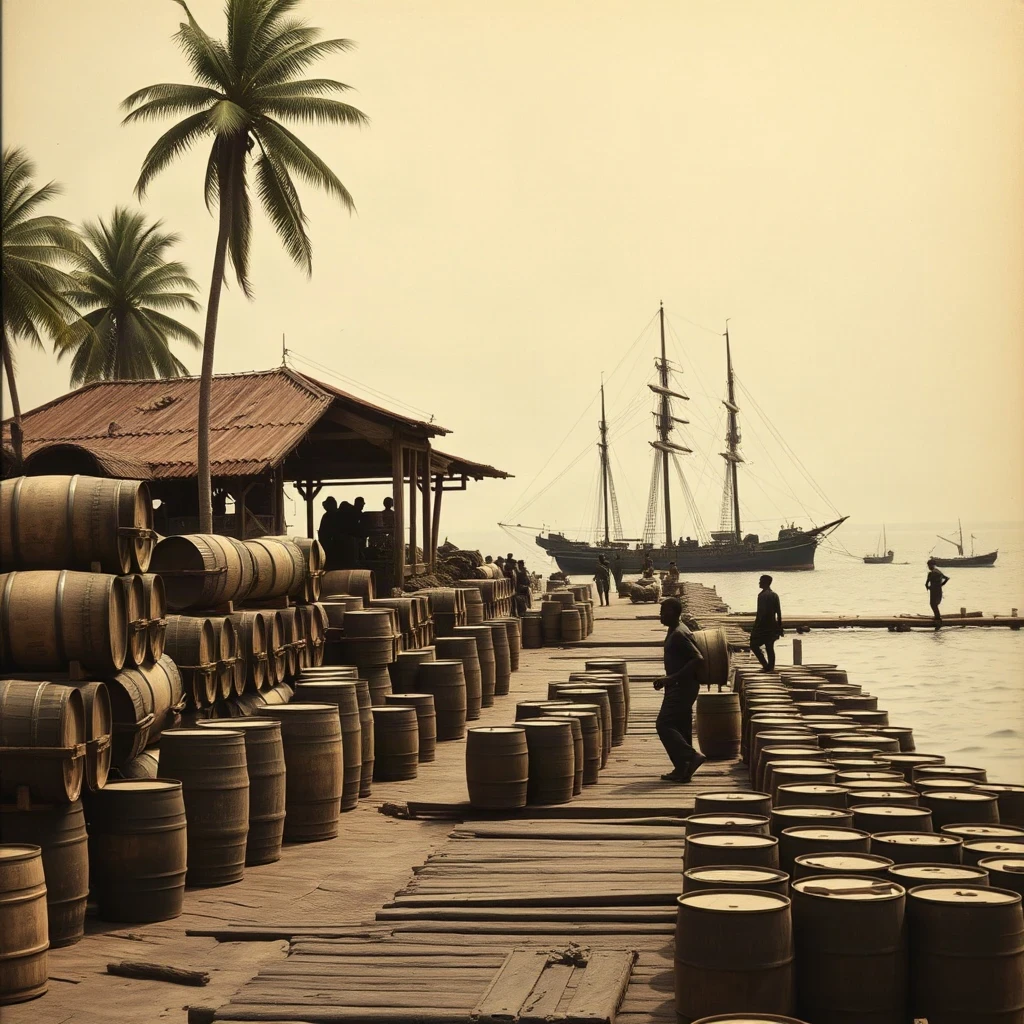
'Legitimate commerce' was the term contemporaries used to describe trade in commodities rather than people. In practice, it was a complex adjustment. African states and merchants, who had long controlled the interior trade networks and the coastal entrepôts, now redirected their commercial and political energies toward the collection, processing, and export of palm oil. The oil was produced by smallholder farmers and processed locally, often by women, before being bulked at coastal trading forts and shipped to Europe, where it was used in soap-making, candles, and later as a lubricant for industrial machinery.
The transition was neither smooth nor uniform. Some coastal states, like the kingdom of Dahomey, initially resisted the shift, while others, such as the city-states of the Niger Delta (notably Bonny and Calabar), adapted rapidly, becoming major exporters. The trade was volatile, subject to price fluctuations and competition among European buyers, but it grew steadily. By the mid-19th century, palm oil had become the principal export of the region, surpassing other commodities like ivory and gold in value.
Impact on West African Economies and Societies
The palm oil trade had profound effects. It increased the economic importance of the coastal regions, which acted as intermediaries between European ships and the interior. It also intensified labor demands, as the collection and processing of palm fruit were labor-intensive. This led to an expansion of slave labor within Africa itself, even as the export of slaves was suppressed—a tragic irony of 'legitimate' commerce. The trade also fostered the growth of a class of African merchants who accumulated wealth and influence, some of whom became powerful middlemen.
The Long Shadow on Today's Industry
The patterns established during this era—smallholder production, coastal aggregation, and export to global markets—persist in many forms today. The modern palm oil industry in West Africa still relies heavily on smallholder farmers, and the logistical challenges of moving oil from inland groves to ports echo the historic trade routes. The term 'legitimate commerce' has faded, but the underlying structure of the trade—a global commodity chain connecting African producers to international buyers—remains a direct legacy of that pivotal 19th-century transition. Understanding this history is essential for appreciating the deep roots of the industry's current dynamics, from supply chain organization to the socio-economic role of palm oil in West African economies.