
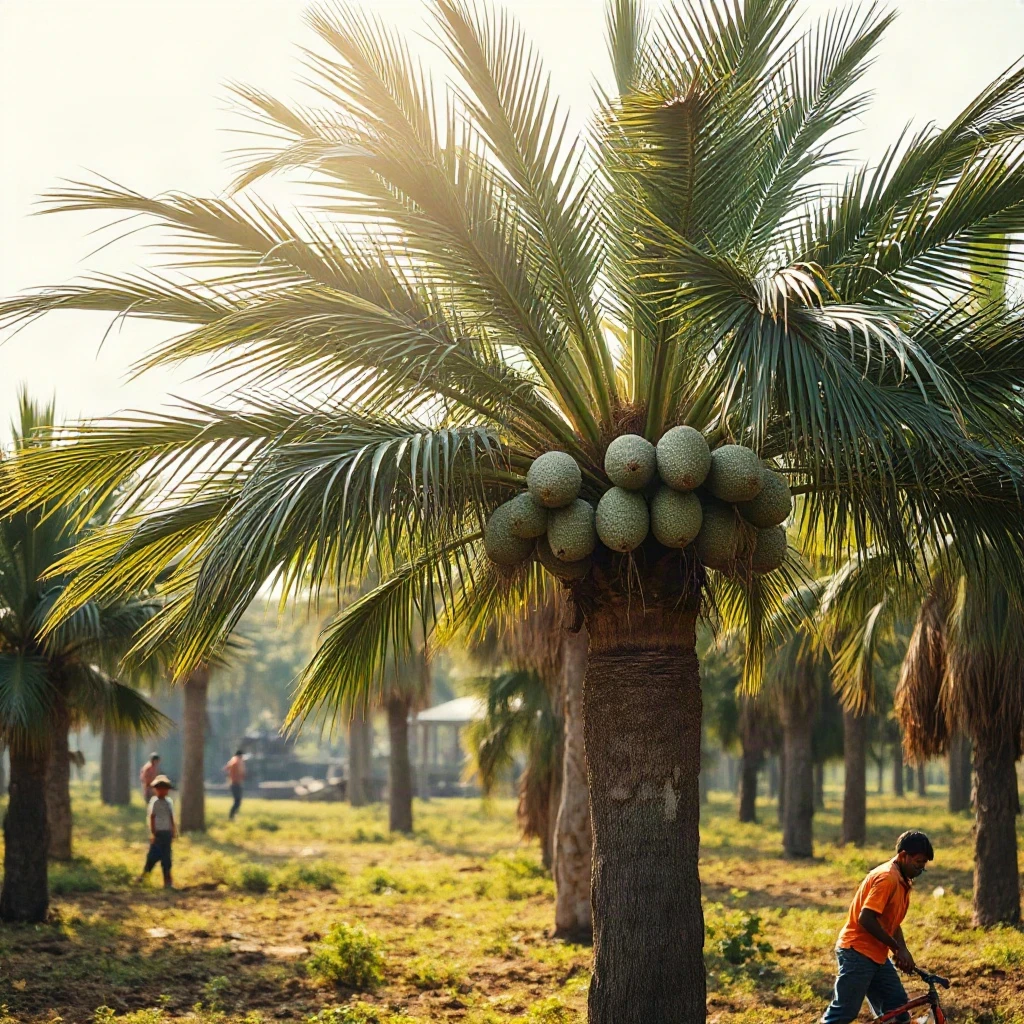
The modern oil palm industry traces its genetic roots to a remarkably small number of palms. In the late 19th century, four seedlings, reportedly from West Africa, were planted in the Bogor Botanical Gardens in Java. From these, seeds were distributed to early plantations in Sumatra and Malaya. One particular type, the thick-shelled dura, came to be known as the Deli dura, named after the Deli region of Sumatra's east coast where it was first cultivated on a commercial scale.
These Deli palms were selected for their high yields and vigorous growth. They became the foundation of the industry's first planting material. Estate managers and planters in the early 20th century recognized their value and propagated them widely. The Deli dura was not just a local variety; it was the standard against which all other oil palm planting material was measured for decades.
The genetic bottleneck was real. A handful of original palms gave rise to millions of commercial trees. This uniformity brought advantages: consistent performance and predictable characteristics. But it also carried risks, such as vulnerability to diseases and limited adaptability. Breeders responded by introducing new germplasm from Africa and other regions, broadening the genetic base while still relying on the Deli dura as a core component.
The significance of the Deli dura extends to the modern industry's structure. Most commercial planting material today, whether hybrid tenera or advanced crosses, contains Deli dura ancestry. The breeding programs of major seed producers and research institutes still reference the Deli dura as a benchmark for yield and quality. The history of the Deli dura is a reminder that the industry's success rests on a narrow genetic foundation, and that preserving and diversifying that foundation is crucial for future resilience.
For today's palm oil professional, understanding the Deli dura is not just historical curiosity. It explains why certain planting material behaves in certain ways, why genetic diversity is a constant concern, and why the industry's past choices continue to shape its present and future. The palms of Deli, though few in number, left an outsized legacy that still influences every plantation and mill.