
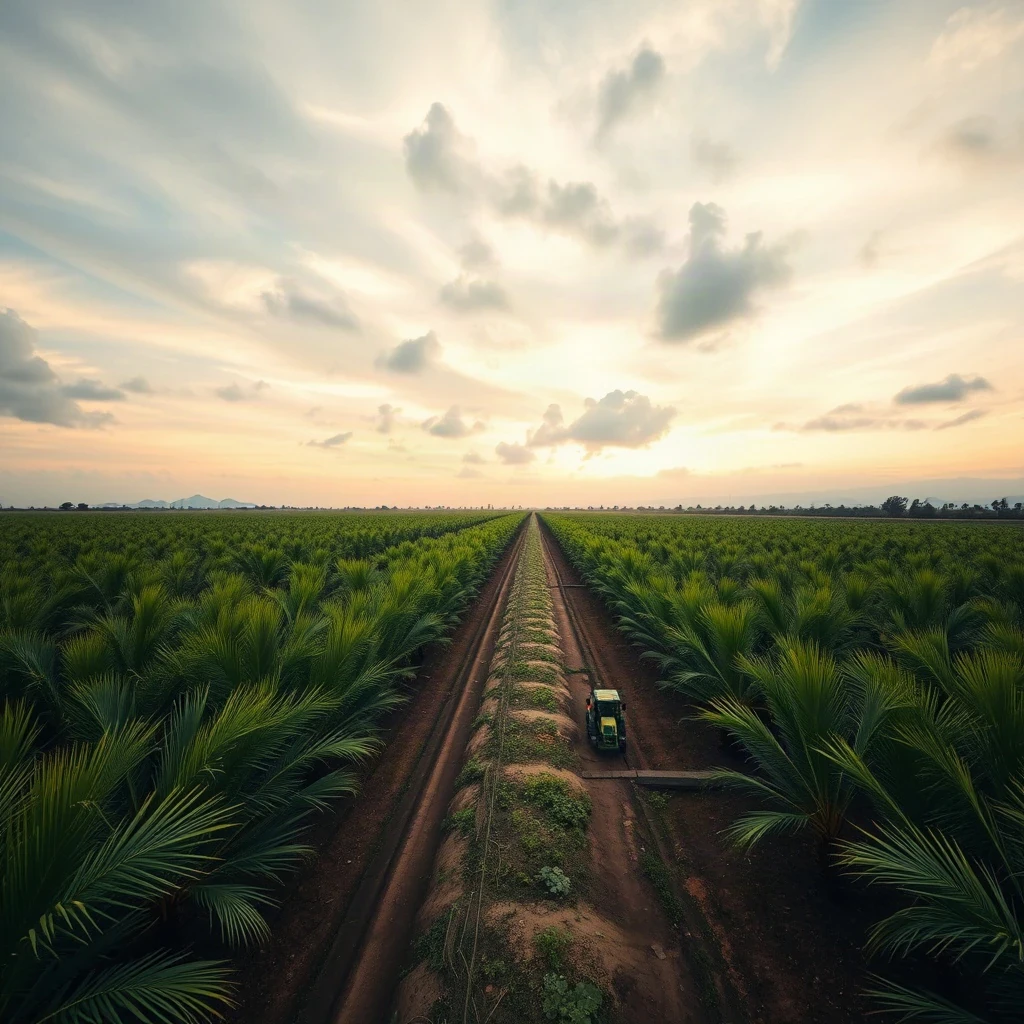
Indonesia's push toward the B50 biodiesel mandate continues to shape palm oil market fundamentals, with policy signals reinforcing demand expectations for crude palm oil (CPO). Reports indicate the country's export levy revenue could climb 31% this year, partly driven by higher CPO prices and sustained export volumes. The stronger levy intake is seen as a buffer for the government's biodiesel subsidy program, which underpins domestic CPO offtake and helps support fresh fruit bunch (FFB) prices for smallholders.
B50 and Domestic Demand
The B50 mandate, projected to raise domestic biodiesel consumption, is a key pillar of Indonesia's palm oil policy. A stronger mandate reduces the volume of CPO available for export, tightening global supply and supporting benchmark prices. Recent commentary highlights that the mandate's expansion is a deliberate tool to stabilize farmer incomes, even as global demand fluctuates.
For compliance-minded buyers, the policy shift means tighter export availability from Indonesia, the world's top producer. This could push more sourcing toward Malaysia, though that market faces its own dynamics.
Supply-Side Pressures
Malaysia's July data show production and stocks rising month-on-month, with CPO output up 9.4% and inventories up 7.2%. Exports also jumped 14.5%, indicating strong demand, but the stock build suggests supply is keeping pace. However, El Niño conditions (ONI +1.4) are causing dryness in key regions like Sarawak and Kalimantan, which could curb future yields. Our model outlook notes that while technicals are bullish, the market is overbought near upper Bollinger bands, and the combination of stock builds and weaker crude oil prices may limit upside.
Market Implications
Brent crude at about $85 per barrel, down 0.8%, affects biodiesel blend economics. Lower crude prices make biodiesel less competitive without subsidies, but Indonesia's levy revenue cushion helps maintain the mandate. The wide BOPO (biodiesel production margin) of $330 per tonne, as cited in our model outlook, indicates favorable processing economics, which supports continued biodiesel demand.
For buyers, the policy environment points to steady or higher CPO prices, with the benchmark around $1150/MT (RM 4645/MT). The Indonesian reference price at about $997/MT and the World Bank benchmark at $1101/MT offer reference points for contract negotiations. Compliance with sustainability pledges remains a separate concern, as recent reports suggest zero-deforestation commitments have had limited measurable impact on forest preservation, a factor buyers may weigh in sourcing decisions.
Overall, the policy push for B50 and rising levy revenue are bullish for palm oil prices, but supply-side resilience and external factors like crude oil and weather will moderate gains. Market participants should monitor Indonesia's implementation pace and any adjustments to export levies, as these will directly affect global supply and pricing dynamics.