
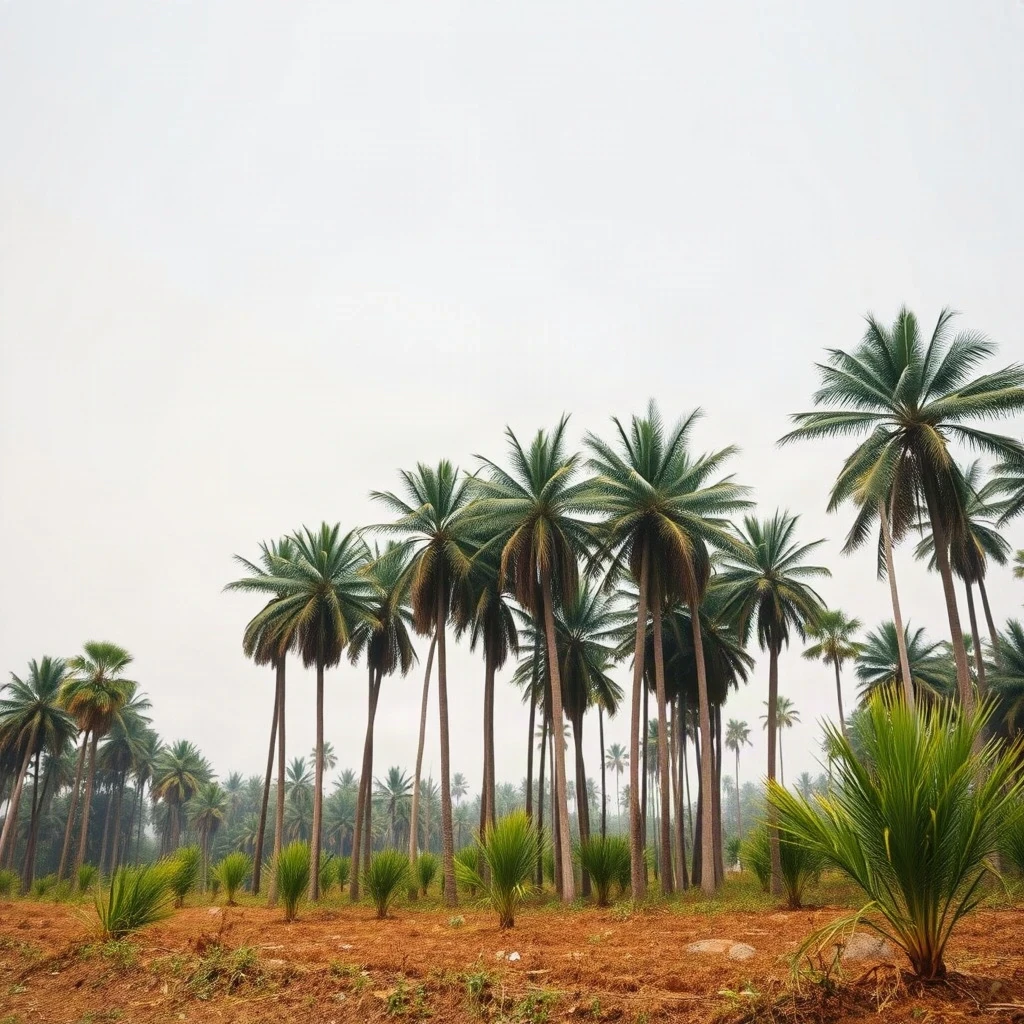
The palm oil market's attention is fixed on the near-term price path, with the Malaysian benchmark at about $1150/MT, down 1.0% on the session, and MPOB July data showing a 9.4% month-on-month rise in CPO production to 1,792,979 tonnes. But beneath the monthly swings sits a slower-moving structural issue: a large share of the world's planted oil palm area is now past its peak-yield window, and the replanting response remains patchy.
The age profile problem
Oil palm yields typically peak between roughly 8 and 18 years after planting, then decline gradually. Industry estimates suggest that on the order of a quarter to a third of mature area in top producers is now above that optimal band, with some blocks in Malaysia and Indonesia well into their third decade. The MPOB's own FFB reference price, at RM 49.50 (+1.2% MoM), reflects firm fresh fruit values, but that does not offset the biological drag of old palms.
Replanting has been slow for years. High crude palm oil prices during the 2021-2022 rally encouraged growers to keep old trees standing rather than clear and replant, and the cost of land preparation plus the 3-4 year immature period remains a major deterrent. Smallholders, who manage a significant share of area in both Malaysia and Indonesia, are often the slowest to replant due to capital constraints and insecure land tenure.
What the data show
Malaysia's July production rebound to 1,792,979 tonnes (+9.4% MoM) is a seasonal recovery, not a sign of structural yield improvement. Closing stocks rose 7.2% MoM to 1,429,316 tonnes, while exports jumped 14.5% MoM to 1,392,178 tonnes. The stock build is modest relative to the export surge, but it still points to a market where supply is adequate in the near term — even as the underlying age profile erodes potential.
Weather adds a further layer. ENSO is in El Niño territory (ONI +1.4), with notable dryness in Sarawak and Kalimantan. Dry conditions can accelerate the yield decline of older palms, which have shallower root systems and less resilience to water stress. The impact may show up more clearly in late 2026 and 2027 production than in current monthly figures.
Price implications
Current pricing already reflects some of this tension. The wide BOPO spread of about $330/t and Indonesian policy support underpin the market, while weaker crude at about $85/bbl (-0.8%) limits biodiesel-driven demand upside. Our model outlook expects mixed daily moves with slight upward drift over the next seven sessions, with technicals bullish but overbought near the upper Bollinger band.
What would shift the picture
For the supply outlook to improve materially, replanting rates would need to rise sharply and stay elevated for several years. That requires sustained grower profitability, access to finance, and policy incentives — including faster permitting and support for smallholder replanting programs. A return to La Niña conditions would also help, easing moisture stress on older trees.
Buyers should watch three things: monthly MPOB production and yield per hectare data, replanting acreage announcements from major growers and government programs, and the progression of the El Niño into the next wet season. A failure of replanting to accelerate, combined with a strong El Niño impact, would tighten supply more than current prices suggest.