
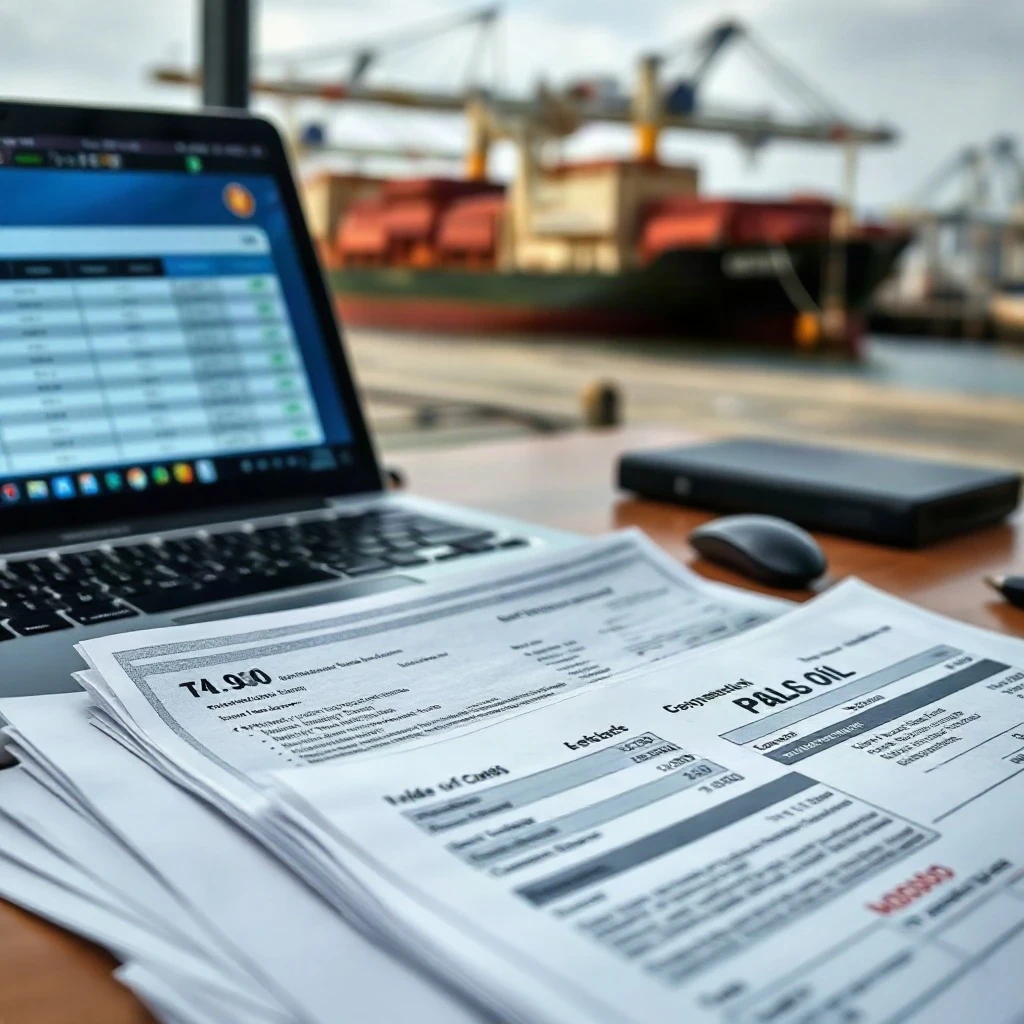
A letter of credit (LC) is a bank's conditional commitment to pay a seller on behalf of a buyer once specified documents are presented within a set timeframe. In palm oil trade, where cargoes often move long distances and counterparties may be new to each other, an LC shifts payment risk from the buyer's promise to the issuing bank's undertaking. This makes it a widely used tool for first-time palm-product buyers and procurement managers who need to reassure suppliers.
How the LC structure works
The buyer's bank (issuing bank) opens the credit in favour of the seller, usually after the buyer provides collateral or a credit line. The issuing bank sends the LC through SWIFT to an advising bank in the seller's country, which authenticates it and notifies the seller. If the seller requests added protection, a confirming bank may add its own payment undertaking.
Payment under an LC is triggered by documents, not by the physical goods. The seller must present documents that strictly match the LC terms. If they comply, the bank pays. If they contain discrepancies, banks may refuse payment unless the buyer waives them. This is why documentary precision is critical.
Documents commonly required for palm oil shipments
Typical documents in a palm oil LC include: - Commercial invoice showing product description, quantity, and unit price. - Full set of clean on board ocean bills of lading, consigned as required by the LC. - Packing list and weight list. - Certificate of origin, often issued by a chamber of commerce or authorised body. - Certificate of analysis or quality certificate from an independent surveyor. - Phytosanitary certificate, where required by the destination country. - Insurance certificate or policy, if the buyer is responsible for insurance under the agreed Incoterm.
Always specify exactly which documents are needed and in how many originals and copies. Vague descriptions such as 'usual documents' create disputes.
Practical steps for buyers
A buyer and seller first sign a sales contract that states payment by irrevocable LC. The buyer then applies to its bank with the contract details. The LC should mirror the contract: product description, quantity with tolerance (for bulk palm oil, often plus or minus a small percentage), unit price, latest shipment date, expiry date, and presentation period (commonly within a fixed number of days after bill of lading date).
Allow partial shipments unless you need the full cargo in one lot. Specify whether the LC is payable at sight or on a deferred basis. For first-time buyers, an irrevocable LC is strongly preferable; a confirmed LC may be requested by the seller if they are uncertain about the issuing bank or country risk.
What an LC does not do
An LC covers documentary compliance, not product quality or quantity in the physical sense. If a seller presents forged or inaccurate documents that appear compliant, the bank will pay, and the buyer may end up with a claim against the seller rather than the bank. Pre-shipment inspection by an independent surveyor can reduce this risk.
Key rules and costs
Most LCs are subject to UCP 600, the ICC's uniform rules for documentary credits. Banks charge opening, advising, confirmation, and amendment fees; these are usually for the buyer's account, though confirmation fees may be negotiated. The buyer should budget for these as part of the landed cost.
For procurement managers and first-time buyers, the practical priorities are: agree LC terms before signing the contract, keep document requirements simple and obtainable, and work with a trade finance specialist at your bank to structure the credit correctly.