
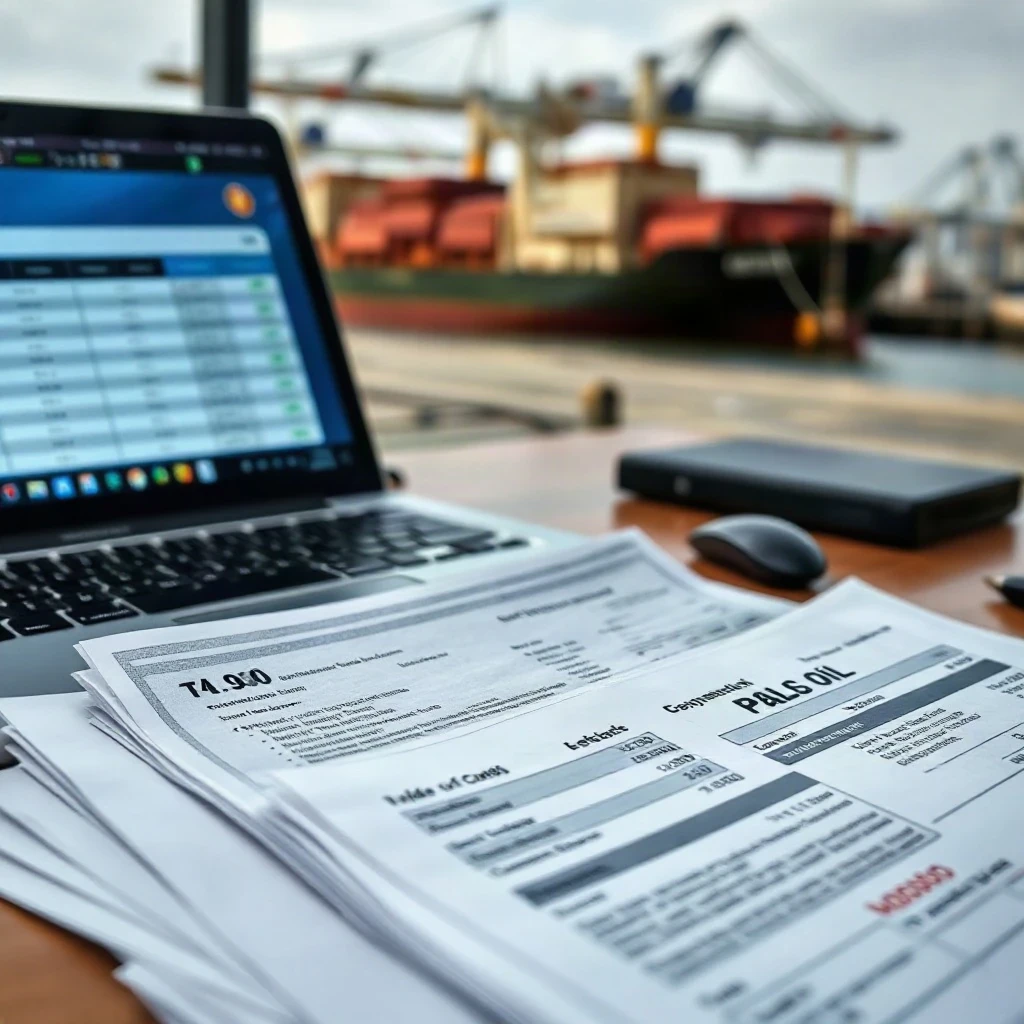
For procurement managers new to palm oil, the letter of credit (LC) is the backbone of international trade finance. It is a bank-backed guarantee that the seller will receive payment once they present the required shipping documents, and the buyer receives proof that the goods have been shipped as agreed.
How an LC works
The process begins when the buyer and seller agree on a sales contract. The buyer then asks their bank to issue an LC in favor of the seller. This document specifies the exact goods, quantities, price, shipping terms, and the latest shipment date. The seller's bank (the advising or confirming bank) checks the LC and notifies the seller.
Once the palm oil is loaded onto the vessel, the seller submits a set of documents to their bank—typically the commercial invoice, bill of lading, certificate of origin, and quality/weight certificates. If these documents match the LC terms exactly, the bank pays the seller. The buyer's bank then releases the documents to the buyer, who uses the bill of lading to take delivery of the cargo.
Why use an LC?
For the buyer, an LC ensures that payment is only made when the seller has shipped the goods and provided the required paperwork. For the seller, it replaces the risk of non-payment with the creditworthiness of a bank. This is especially important in palm oil, where cargoes can be worth millions of dollars and counterparties are often in different countries with different legal systems.
Key LC types in palm oil
- Sight LC: Payment is made immediately when the documents are presented and checked. This is common for spot cargoes.
- Usance LC: Payment is deferred for a set period (e.g., 30 or 60 days after the bill of lading date). This gives the buyer time to sell the oil before paying.
- Confirmed LC: A second bank (usually in the seller's country) adds its guarantee, protecting the seller against political or transfer risk in the buyer's country.
Practical tips for buyers
- Be precise: Any discrepancy between the LC and the documents can delay payment or cause rejection. Work with your bank to ensure all fields match the sales contract.
- Understand Incoterms: The LC must align with the agreed Incoterm (e.g., CIF, FOB). This defines who pays for freight and insurance, and where risk transfers.
- Check the shipping window: Palm oil LCs often allow a "latest shipment date" and a "period for presentation" (usually 21 days after shipment). Miss these and the LC may become inoperative.
- Beware of soft clauses: Some LCs contain conditions that the seller cannot control (e.g., "inspection certificate issued by buyer"). Avoid these unless you have a trusted relationship.
Costs and timelines
Banks charge issuance, amendment, and negotiation fees, typically a small percentage of the LC value. The process takes a few days to set up, but the LC remains valid for the entire shipment cycle, which in palm oil can be several weeks from loading to arrival.
For first-time buyers, using an LC is a reliable way to manage risk, but it requires careful documentation and a clear understanding of the terms. Always consult your trade finance officer or a specialist before committing to a contract.