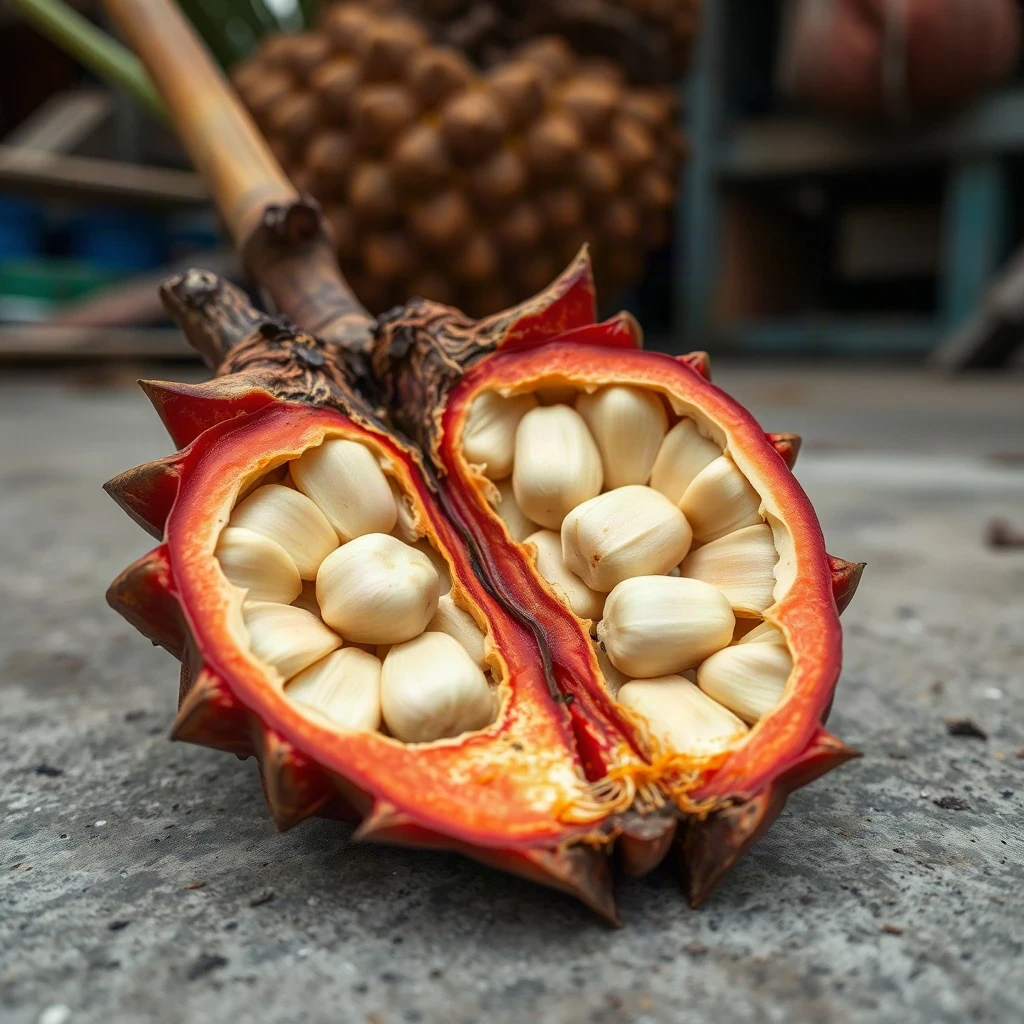
The oil palm fruit yields two distinct oils, each with its own supply chain, fatty-acid profile and end-use markets. Crude palm oil (CPO) is extracted from the fleshy mesocarp, while palm kernel oil (PKO) comes from the inner kernel or seed. Though they share a botanical origin, the two products behave very differently in processing, pricing and application.
Yield and Cost
On a per-fruit basis, the mesocarp yields far more oil than the kernel. A typical bunch might produce roughly four to five times as much CPO as PKO by weight. This volume advantage makes CPO the dominant commodity, with global production measured in the tens of millions of tonnes annually, while PKO is a smaller, higher-value by-product stream. Because PKO is scarcer, it generally commands a premium over CPO, though the exact spread fluctuates with supply and demand in the lauric oils market.
Fatty-Acid Composition and Properties
CPO is roughly balanced between saturated and unsaturated fatty acids, with a significant oleic acid content. It is semi-solid at room temperature and highly stable for frying. PKO, by contrast, is highly saturated, dominated by lauric acid, giving it a sharp melting profile and a harder texture at ambient temperatures. PKO also contains a higher proportion of medium-chain triglycerides, which affects both its melting behaviour and its suitability for certain formulations.
Applications and Market Positioning
CPO is the workhorse of the edible oils industry, used in cooking oils, margarines, shortenings and frying fats across the globe. It also feeds the oleochemical sector for soaps and personal-care products. PKO finds its natural home in confectionery fats, ice cream, non-dairy creamers and specialty bakery shortenings, where its sharp melting point and creamy mouthfeel are valued. PKO's lauric content also makes it a preferred feedstock for high-quality soap and surfactant production, often competing with coconut oil rather than with CPO.
Sustainability and Practical Buying Notes
Both oils face the same sustainability scrutiny, as they originate from the same plantation systems. However, the smaller PKO stream often carries a higher per-tonne certification cost, which can affect sourcing decisions. For buyers, the choice is not about which oil is superior but about which fits the application. If the requirement is a bulk frying oil or general-purpose fat at a competitive price, CPO is the clear workhorse. If the formulation demands a sharp melting profile, lauric content or specific texture in confectionery or personal care, PKO is the appropriate buy, despite its higher cost. Many buyers hold both, using CPO for volume and PKO for functionality.