
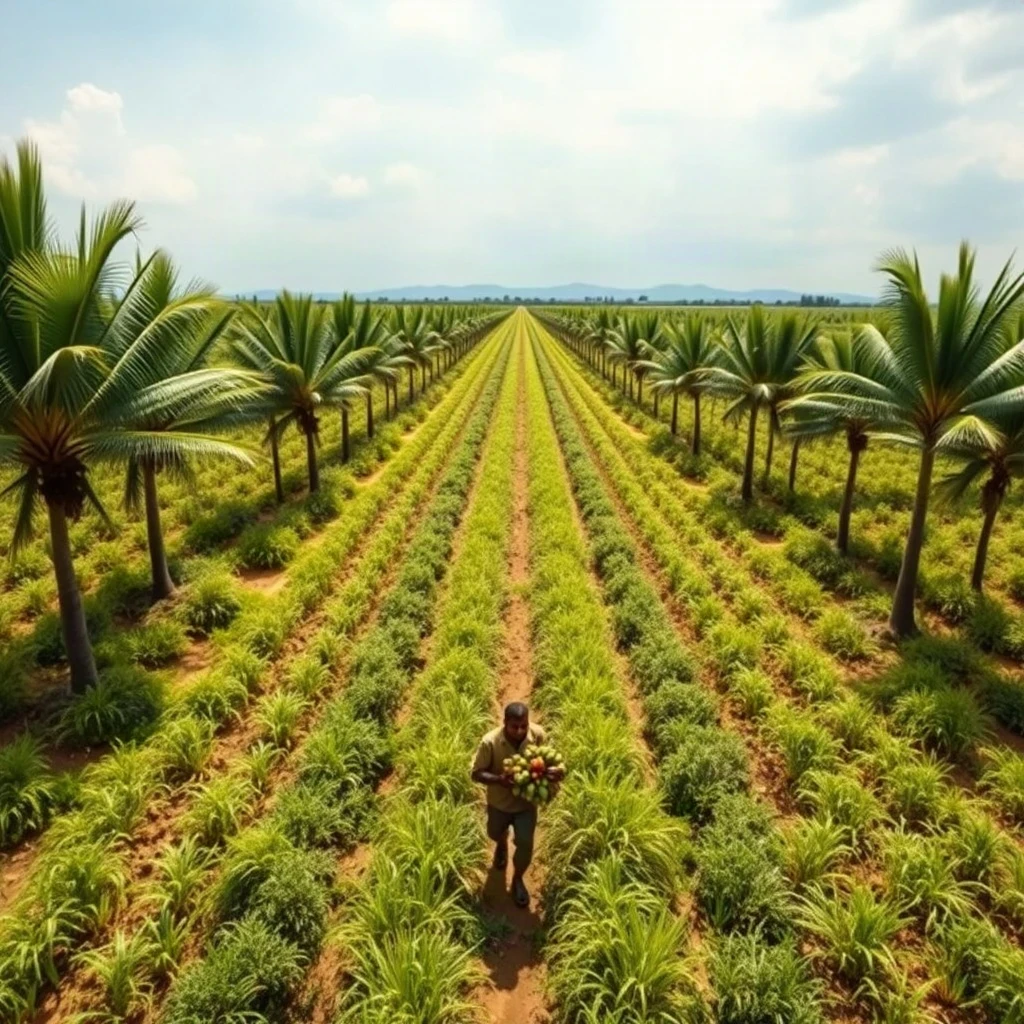
For much of the 20th century, Malaysia was the undisputed heart of the global palm oil industry. Its plantations, developed under British colonial rule and expanded aggressively in the post-independence era, set the standard for efficiency and scale. By the 1980s, Malaysia accounted for the majority of world exports, and its palm oil research and milling infrastructure were the envy of the tropics.
Indonesia, by contrast, was a late starter. Although oil palms had been introduced during the Dutch colonial period, large-scale commercial development was slow. Political instability and a focus on other commodities kept the sector small. That began to change in the 1970s and 1980s, when the Indonesian government, seeking rural development and export earnings, launched transmigration and smallholder schemes that brought millions of hectares into cultivation.
The turning point came in the mid-2000s. Driven by a combination of favourable land availability, lower production costs, and a deliberate policy push, Indonesia's output surged. By around 2006, Indonesia had overtaken Malaysia as the world's largest producer of crude palm oil. The exact year is sometimes debated, as different agencies count output differently, but the shift was unmistakable. Indonesia's advantage lay in sheer land area and a younger plantation age profile, which yielded higher fresh fruit bunch productivity.
This change did more than swap the ranking of two countries. It redrew the map of global palm oil trade. Malaysia, having long been the primary supplier to India, China, and the Middle East, found itself competing with a neighbour that could offer similar quality at lower prices. Indonesian ports such as Dumai and Belawan grew in importance, while Malaysian ports like Port Klang and Penang saw their transshipment roles evolve. Some Malaysian refiners began importing Indonesian crude palm oil to keep their facilities running, a reversal of the old flow.
The shift also altered investment patterns. Multinational traders and plantation companies that had once focused on Malaysia turned their attention to Indonesia, bringing capital and technology. At the same time, Indonesian producers began to integrate forward into refining and oleochemicals, reducing their reliance on Malaysian processing capacity.
Today, the industry's centre of gravity is firmly in Indonesia, which produces roughly twice as much palm oil as Malaysia. But the two neighbours remain deeply intertwined. Malaysian expertise still plays a role in Indonesian plantation management, and Malaysian ports still handle a significant share of Indonesian exports, especially for refined products. The rivalry has become a partnership of sorts, with both countries cooperating on sustainability standards and market promotion.
For those working in the trade, this history explains the current landscape: why Indonesia's policies on export taxes and domestic consumption have outsized influence, why logistics hubs have shifted, and why the industry's future will be decided largely in Jakarta and the plantation belts of Sumatra and Kalimantan, not in Kuala Lumpur alone.