
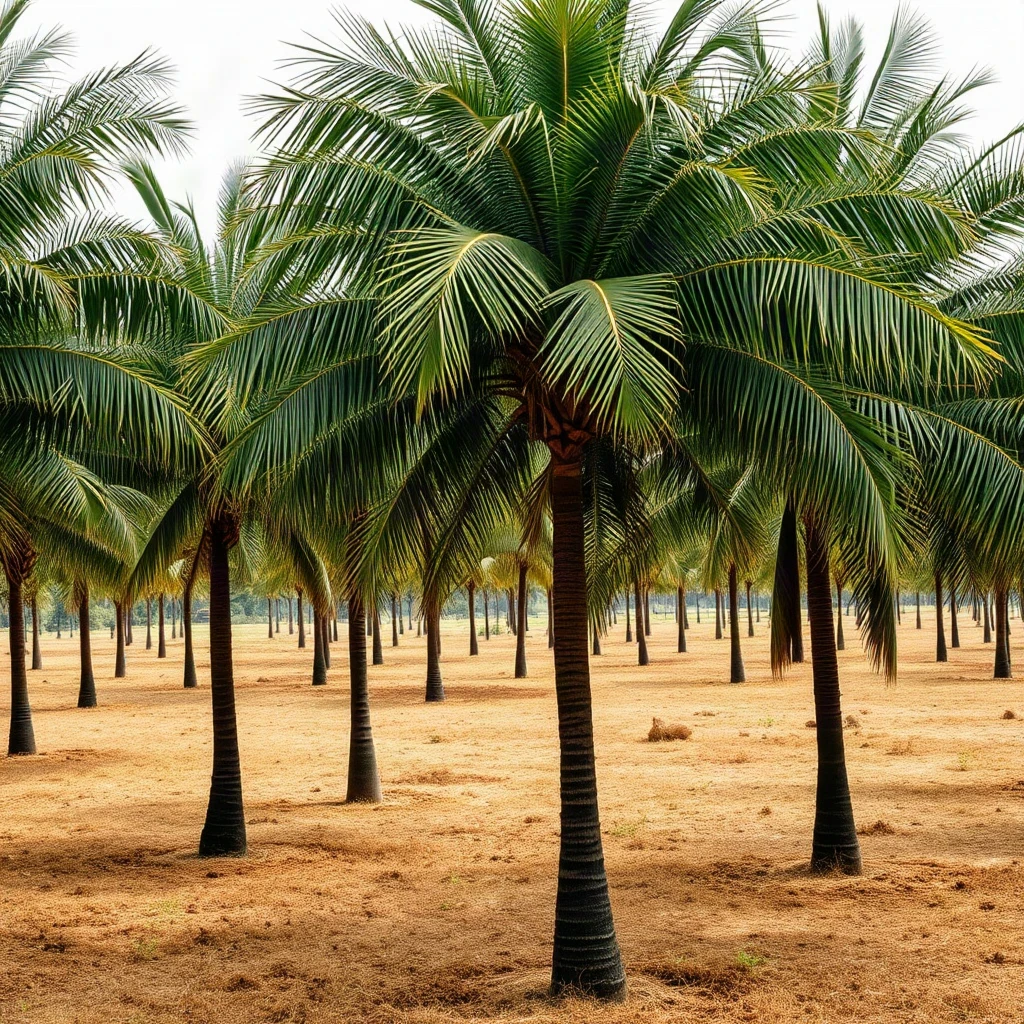
The palm oil market enters late August with a weather backdrop that is pulling in two directions: immediate dryness in parts of Indonesia's Kalimantan belt and a broader El Nino signal whose yield impact typically trails by six to twelve months. For traders weighing near-term supply, the distinction between what is being harvested now and what was set in motion months ago is central.
Current ENSO State
The El Nino episode remains active, with the ONI index at +1.4, a moderate-to-strong reading. That places the region firmly in a warm-phase pattern that historically suppresses rainfall across much of maritime Southeast Asia. The most visible expression right now is Kalimantan, where rainfall has been notably dry. That is a key production zone for Indonesian palm oil, and dry weather there matters for both current operations and future yields.
The Lagged Yield Effect
El Nino's most damaging impact on palm oil is not immediate. Drought stress reduces fruit bunch weight and slows flower sex differentiation, but those effects surface in the field with a lag of roughly six to twelve months. That means the current ONI reading is not a signal for today's harvest; it is a forward indicator for early-to-mid 2027 output. If dryness persists, the market should expect lighter bunch weights and slower yield growth in the affected belts well after the current crop cycle peaks.
Near-Term Harvest and Logistics
Conversely, heavy rain is the more immediate disruptor. Intense downpours flood plantation roads, slow harvesting crews, and delay trucking to mills, which can compress daily throughput even when the crop itself is healthy. The current dry spell in Kalimantan removes that friction for now, which is supportive of steady harvesting. But the same dryness, if prolonged, becomes a yield problem rather than a logistics one.
Malaysia and Indonesia Contrast
Malaysia's July data showed output climbing to 1.79 million tonnes, up 9.4% month on month, with exports also rising sharply. That reflects a peak-season crop and normal weather patterns across Peninsular Malaysia and Sabah/Sarawak. Indonesia's situation is less uniform, with Kalimantan's dryness standing out against relatively normal conditions in Sumatra. The divergence means aggregate supply is not yet under stress, but the regional imbalance is worth monitoring.
Model Outlook
Our model outlook sees the benchmark entering a short-term uptrend after breaking above its upper Bollinger Band, supported by El Nino headlines and a wide biodiesel-olein spread. The base case is for modest consolidation to firmer trade, with daily moves around plus or minus 0.2%. Downside risk comes from profit-taking in crowded soyoil longs, while an El Nino-driven breakout remains the key upside trigger. Missing cargo-surveyor export data widens the uncertainty band. The published path is for a 0.1% gain over the next seven sessions.
Bottom Line
For the next few weeks, weather is a background factor rather than a dominant price driver. The dry Kalimantan pocket supports the narrative of future supply tightness, but it is not yet cutting into current output. The real test will come if dryness expands or persists into the final quarter, which would start to feed the lagged yield models for 2027. Until then, the market is likely to trade on biodiesel economics and export flows more than on rainfall maps.