For procurement managers and first-time buyers, the single most important fact about vegetable oils is land use. Oil palm is the most productive oil crop in the world, and the gap is not marginal. On a per-hectare basis, oil palm produces roughly four to five times more oil than rapeseed, sunflower, or soybean. This is not a marketing claim but a function of plant biology and cultivation practice.
The biology of the bunch
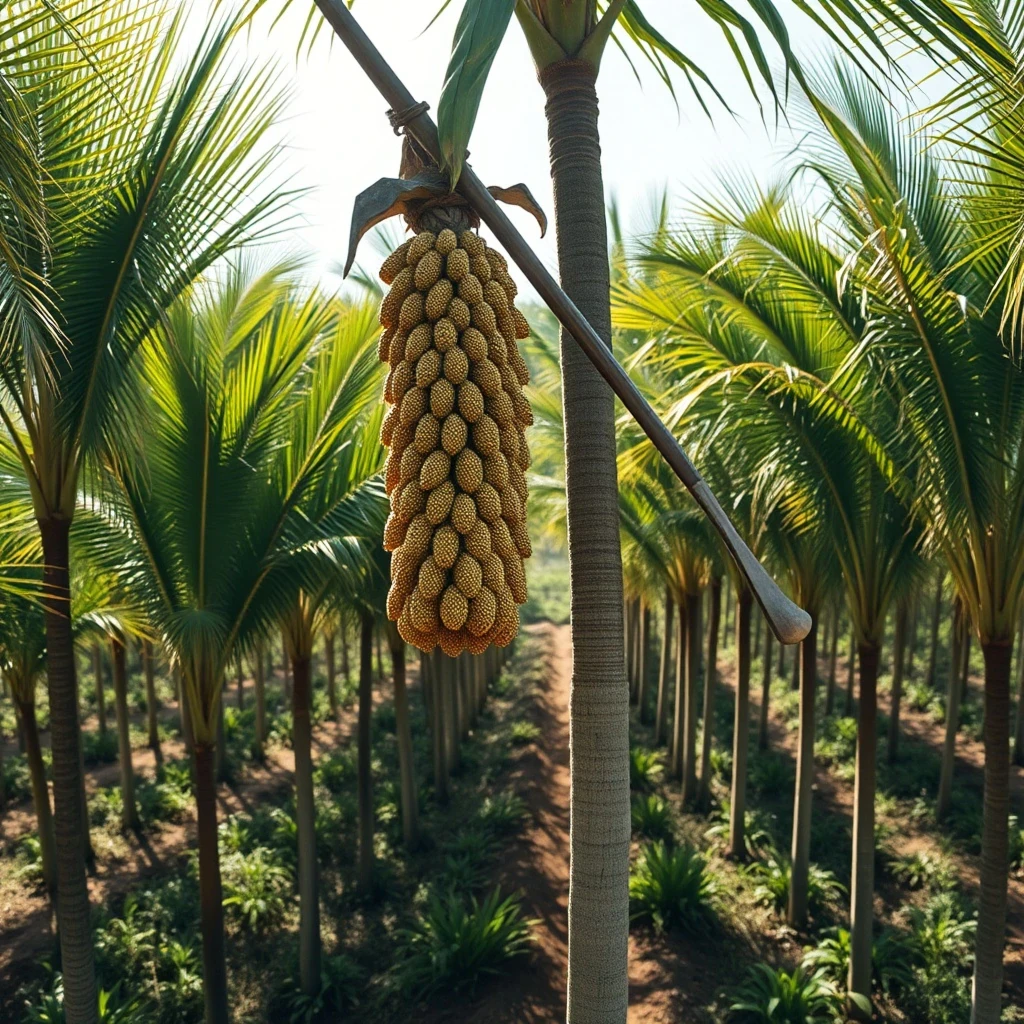
The oil palm is a perennial tree, not an annual field crop. While soybeans, rapeseed, and sunflowers must be replanted every season, a single oil palm tree continues producing for 25 to 30 years. Each tree bears multiple fruit bunches year-round, with peak production occurring between years 5 and 15. This continuous, multi-year harvest cycle means the plant spends far less energy on vegetative regrowth and far more on fruit and oil formation.
Two oils from one fruit
The oil palm fruit yields two distinct oils. The fleshy mesocarp produces crude palm oil, while the kernel inside the nut yields palm kernel oil. No other major oil crop offers this dual output from a single harvest. This effectively doubles the oil yield per hectare compared to crops that produce only seed or fruit oil.
High oil content per fruit
A fresh oil palm fruit bunch typically contains about 20 to 25 percent oil by weight. In contrast, a soybean seed contains roughly 18 to 20 percent oil, and a rapeseed seed about 40 to 45 percent. However, the palm fruit's much larger biomass per tree and year-round fruiting far outweigh the higher oil concentration in small seeds.
Practical implications for buyers
For a buyer, the yield gap translates directly into land footprint. Producing one tonne of soybean oil requires about two hectares of farmland. The same tonne of palm oil needs only about 0.4 hectares. This efficiency is why palm oil is consistently the lowest-cost major vegetable oil on the global market, and why it dominates the edible oils trade.
The sustainability trade-off
Higher yield per hectare also means less land is needed overall to meet global demand. If all palm oil were replaced by soybean oil, the world would need roughly double the current oil-crop area. This is the central argument in favor of palm oil's land efficiency. However, the crop's expansion into tropical rainforest and peatlands has created serious environmental concerns, and buyers increasingly require certified sustainable sources.
What this means for your supply chain
For procurement, the yield advantage means palm oil offers price stability and supply security that other oils cannot match. But it also means your sourcing decisions carry a land-use footprint. Understanding the yield gap helps you negotiate better, compare life-cycle costs, and explain to stakeholders why palm oil remains the backbone of the global edible oils market.