
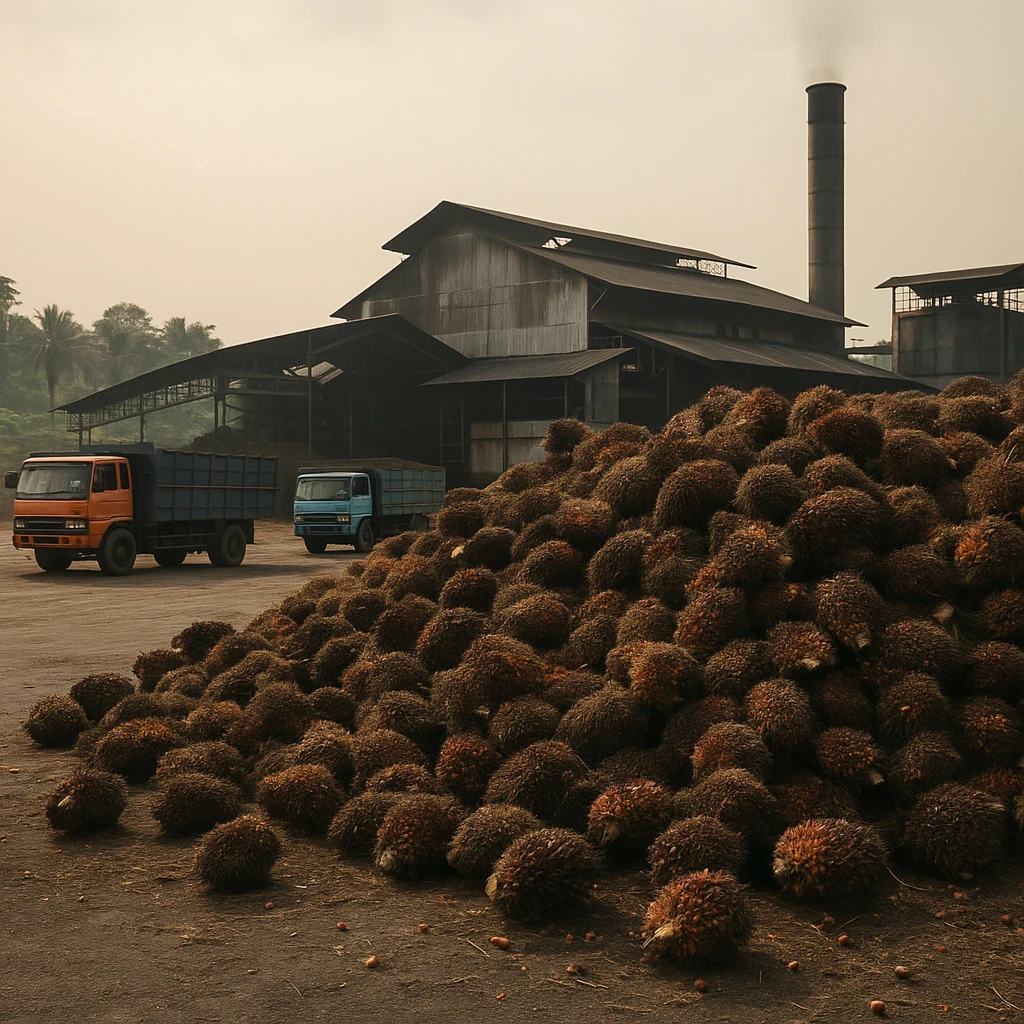
The Malaysian crude palm oil benchmark settled at about $1,101 per metric ton (RM 4,498) on 31 July, down 0.3% from the previous session. The global World Bank benchmark stood at roughly $1,105/MT, while Indonesia's reference price was around $1,030/MT. The narrow gap between Malaysian and Indonesian pricing reflects continued competition in export markets.
Supply: MPOB data shows rising output and stocks
Malaysia's June 2026 MPOB report, released mid-July, showed CPO production at 1,638,777 tonnes, up 8.1% month-on-month. Closing stocks rose 3.7% to 1,332,697 tonnes, while exports increased 6.2% to 1,204,013 tonnes. Imports surged 135.3% to 103,113 tonnes, an unusual spike that may reflect arbitrage flows from Indonesia or temporary logistical adjustments. The FFB reference price eased 1.3% to RM 48.90, signalling softer fresh fruit bunch values at the farm gate.
Weather remains a key swing factor. The ENSO state is El Niño, with an ONI reading of +1.0, and notable dryness is reported in Kalimantan. Dry conditions in Indonesian growing regions can pressure yields in the coming months, though Malaysian production has so far trended higher. Buyers should watch whether El Niño intensifies into the fourth quarter, as that could tighten supply faster than current stock builds suggest.
Demand: India restocking and biodiesel policy in focus
India's edible oil imports fell 30% in June, but trade reports indicate imports are expected to surge from July through October as buyers rebuild inventories ahead of the festival season. This restocking window is a key support for near-term palm demand. Meanwhile, India is seeking sunflower oil alternatives amid Black Sea disruptions, which could redirect some demand toward palm and soy oils.
Indonesia's B50 biodiesel mandate, rolled out in July, continues to underpin structural palm demand. However, Brent crude fell 1.5% to about $88 per barrel, narrowing the incentive for biodiesel blending. A weaker crude complex tends to cap palm oil's energy-linked premium, and some analysts have flagged that a sharp oil decline could reprice the biodiesel story. The current wide BOPO spread, however, still favours blending economics.
Currency and market dynamics
The ringgit traded at about 4.09 per US dollar, while the rupiah was around 18,067 per dollar. A firmer ringgit can dampen export competitiveness for Malaysian palm, though the move has been modest. Palm futures have shown two-way volatility this week, rebounding on firmer crude and rival edible oils in some sessions, then slipping when energy prices weakened.
What to watch
Our model outlook points to slight downward drift in a volatile regime. Near-term bearish pressure comes from softer crude, but support is visible from the wide BOPO spread, pre-festival restocking, and El Niño-related supply concerns. For buyers, the key signals are Brent's trajectory, Indonesia's B50 implementation pace, and any fresh MPOB data confirming whether the June stock build extends into July. Watch the ringgit and rupiah for currency-driven price swings, and monitor Kalimantan rainfall as the dry season progresses.