
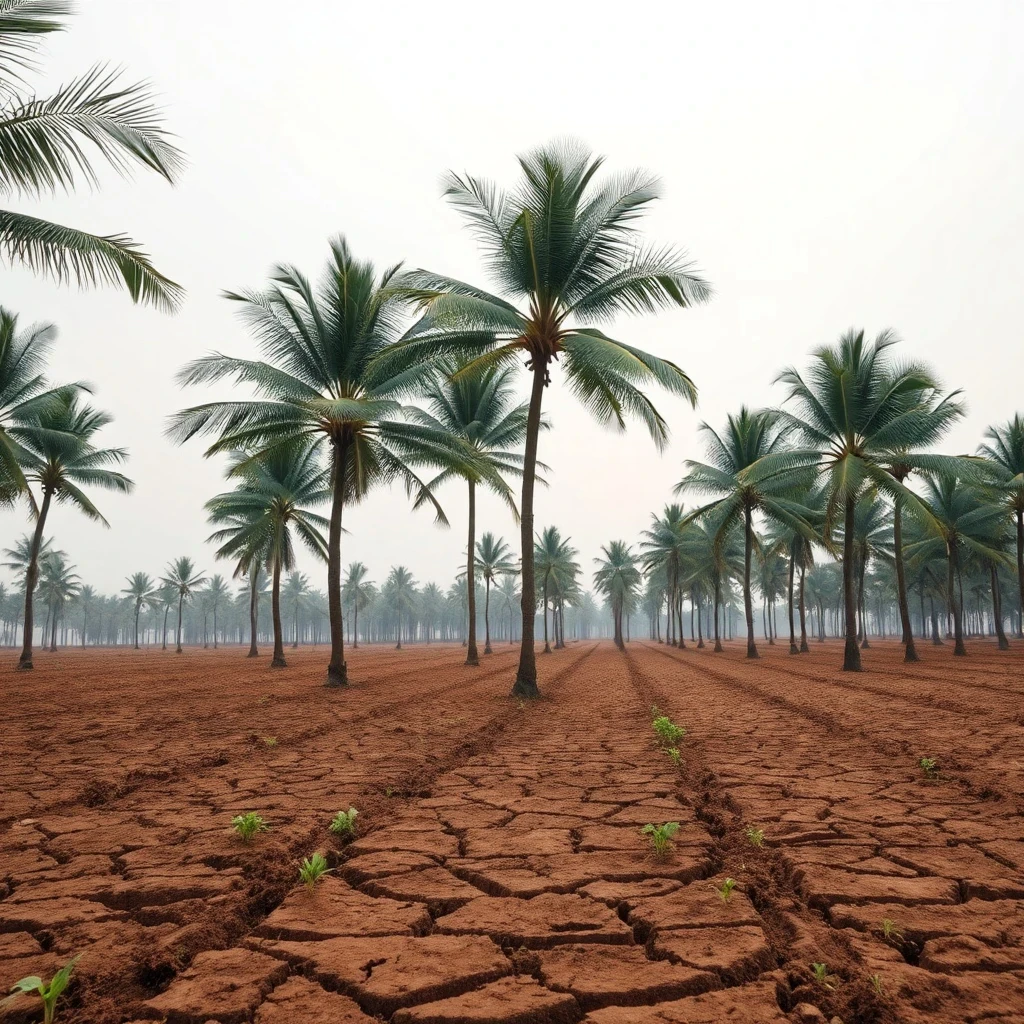
The current El Niño episode, with an ONI of +1.0, continues to influence rainfall patterns across the Malaysian and Indonesian palm belts, posing a mixed near-term outlook for fresh fruit bunch yields and harvest logistics.
Kalimantan dry spell intensifies
Indonesia’s key producing region of Kalimantan is experiencing notably dry conditions, according to recent rainfall data. This is consistent with the typical El Niño footprint, which suppresses convective activity over parts of the archipelago. While the immediate impact on harvesting is limited—dry weather aids field access and fruit collection—the lack of soil moisture is a concern for fruit development over the coming months.
Palm oil yields respond to water stress with a lag of 6-12 months, as reduced rainfall during the flowering and fruit-set stages leads to smaller bunch weights at harvest. The current dryness in Kalimantan suggests that output from this region could face downward pressure in late 2026 and early 2027, particularly if the El Niño persists or transitions slowly.
Malaysia: adequate moisture, logistical risks low
In contrast, rainfall across Peninsular Malaysia and Sabah/Sarawak has been near normal in the past week. This supports ongoing harvesting and mill operations, though any sudden heavy downpours could disrupt collection and transport. Malaysian production is currently at seasonal peak, with MPOB June data showing CPO output of 1.64 million tonnes, up 8.1% month-on-month. Stocks have risen to 1.33 million tonnes, reflecting ample supply in the near term.
Sumatra: mixed picture
Sumatra, Indonesia’s largest palm-producing island, has seen a mixed rainfall pattern. Some areas received adequate precipitation, while others are beginning to show signs of moisture deficit. The region remains a key watch point; any sustained dry spell would amplify the lagged yield impact from the broader El Niño event.
Market context
Our model outlook expects CPO to trade in a choppy, slightly upward-biased range over the next seven days. A firm ringgit and recovering crude oil prices provide support, while ample Malaysian stocks and weaker Indian import demand cap gains. The wide palm-soyoil spread continues to encourage demand switching, but the underlying weather risk from El Niño could tighten fundamentals into late 2026.
Monitoring ahead
Traders will watch the mid-August MPOB data release for confirmation of production trends. Any further deterioration in Kalimantan’s rainfall will reinforce the narrative of a lagged output decline, potentially supporting forward premiums. For now, the market remains balanced between near-term supply abundance and medium-term weather risk.