
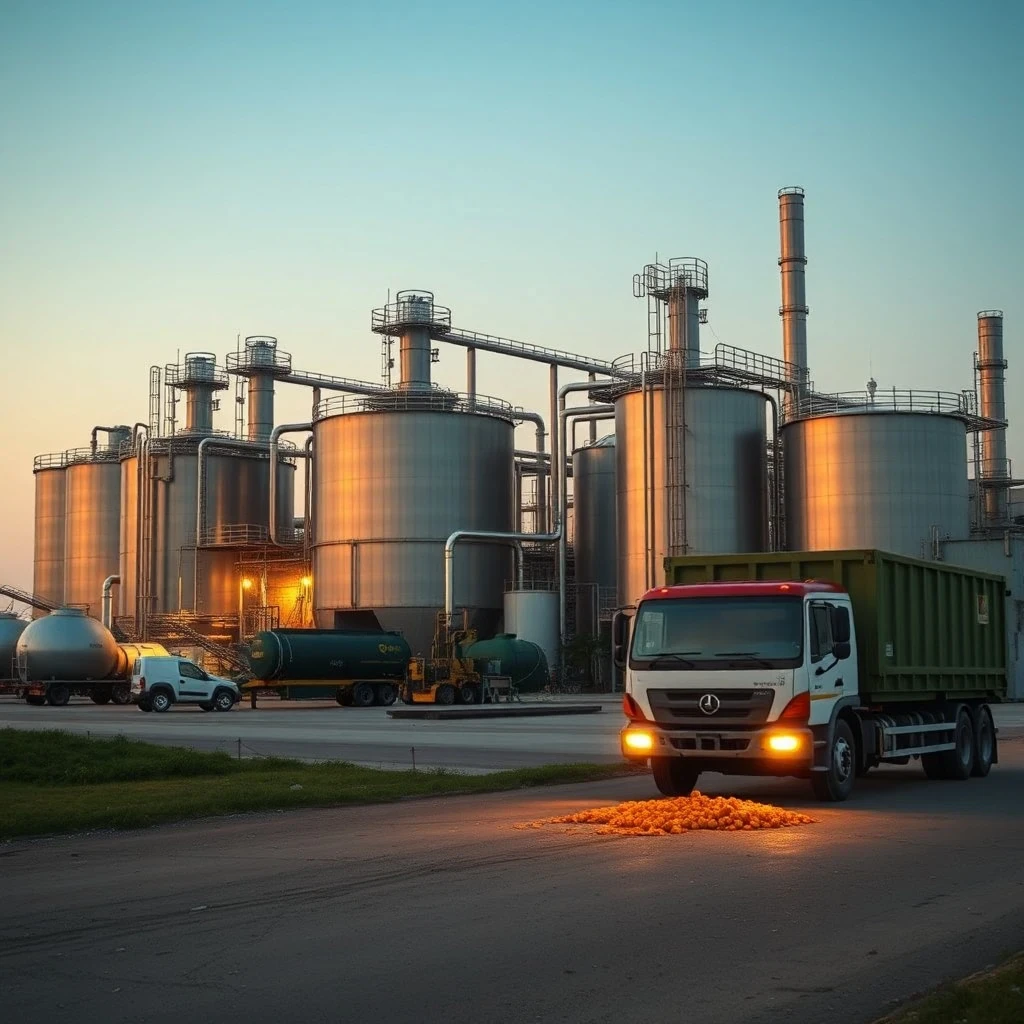
Palm methyl ester (PME) is the fatty acid methyl ester derived from palm oil through transesterification. It is the most widely used feedstock for biodiesel in tropical markets such as Indonesia and Malaysia, and increasingly in blending mandates across Asia, Europe, and the Americas. For procurement managers and industrial buyers, understanding the PME supply chain is essential to manage cost, quality, and regulatory compliance.
Production Chemistry and Process
The core reaction is straightforward: refined, bleached, and deodorized palm oil (RBD palm oil) or crude palm oil (CPO) is reacted with methanol in the presence of a base catalyst—typically sodium or potassium hydroxide. This yields methyl esters and glycerol as a co-product. The reaction is carried out at around 60–70°C and atmospheric pressure, with excess methanol to drive conversion above 98%.
After reaction, the glycerol phase is separated by gravity or centrifugation. The crude methyl ester is then washed, dried, and often distilled to meet specifications such as EN 14214 or ASTM D6751. Key quality parameters include ester content (minimum 96.5% for EN 14214), methanol content, free and total glycerol, acid value, oxidation stability, and cold-flow properties.
Feedstock Variability and Its Impact
Palm oil's fatty acid profile—roughly 44% palmitic, 39% oleic, 10% linoleic, and 4% stearic—gives PME excellent cetane number and oxidation stability compared to soybean or rapeseed methyl esters. However, the high saturated fat content also means poor cold-flow properties. Cloud point is typically around 16°C for palm biodiesel, requiring winterization or blending with other esters for cold climates.
Procurement managers should note that CPO quality varies with harvest season, storage conditions, and free fatty acid (FFA) content. High FFA (>2%) requires an acid-catalyzed pre-esterification step, adding cost and complexity. Sourcing RBD palm oil or low-FFA CPO reduces processing risk.
Supply Chain Structure
The PME supply chain begins at palm oil mills, which produce CPO. CPO is either sold directly to biodiesel plants or first refined at a fractionation or refining facility. Biodiesel plants are typically located near ports or palm oil refineries to minimize logistics costs. Methanol, a key input, is sourced from natural gas or coal-based producers, often imported.
After production, PME is stored in heated tanks (to prevent solidification) and blended with petrodiesel at terminals or directly injected into distribution pipelines. Many jurisdictions require B20 or B30 blends, meaning 20–30% PME content in diesel fuel.
Commercial Considerations for Buyers
- Certification: Ensure PME meets regional standards (EN 14214 in Europe, ASTM D6751 in the US, ISCC for sustainability).
- Traceability: Demand proof of feedstock origin, especially under EU RED II or similar schemes.
- Storage and Handling: PME is hygroscopic and can degrade if exposed to moisture or high temperatures. Use nitrogen blanketing and avoid copper or brass fittings.
- Cold-Flow Additives: If your application requires winter operability, specify that the PME has been winterized or treated with cold-flow improvers.
Risk Factors
Price volatility in CPO and methanol markets directly affects PME cost. Policy changes—such as Indonesia's B35 mandate or EU anti-deforestation rules—can disrupt supply. Buyers should negotiate contracts with price adjustment clauses and maintain multiple certified suppliers.
In summary, PME is a technically robust biodiesel feedstock, but its commercial success depends on careful specification, stable feedstock sourcing, and rigorous quality control at every link in the chain.