
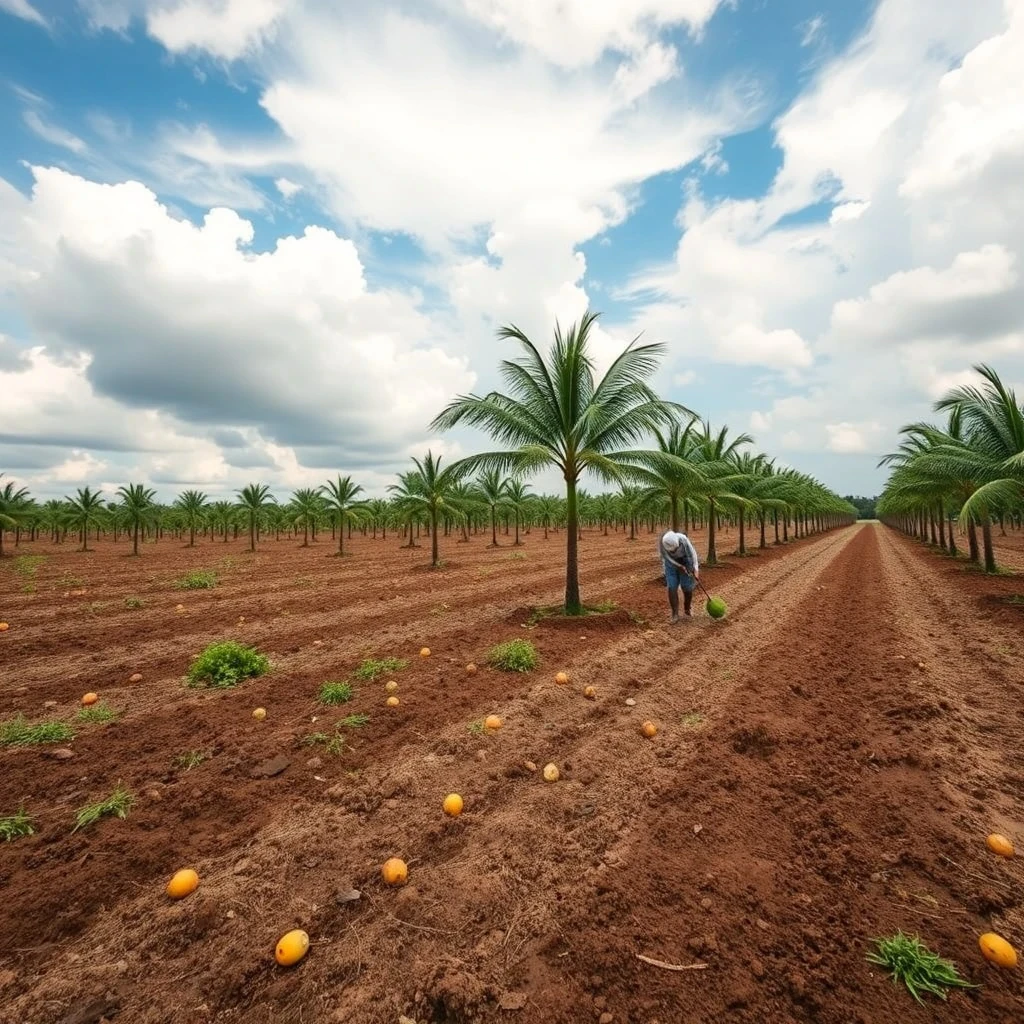
The palm oil producing regions of Malaysia and Indonesia are currently experiencing broadly normal rainfall, according to the latest weather data. This neutral precipitation pattern provides a window for harvesting and logistics to proceed without the disruptions that heavy rain often brings.
ENSO State and Lagged Yield Impact
The El Niño event, with an ONI index of +1.0, remains in place. The key concern for palm oil production is the well-documented 6-12 month lag between dry conditions and reduced fruit bunch weight. While the current rainfall is adequate, the stress from earlier dry months may still be feeding through into lower yields in the coming quarters. Producers should monitor fruit bunch development closely, as the full impact of the 2025/26 El Niño may not yet be fully reflected in production figures.
Near-Term Harvest and Logistics
For the immediate outlook, the absence of heavy rain is a positive. Harvesting teams can access fields without waterlogging, and fruit collection and transport to mills face fewer delays. This supports a steady flow of fresh fruit bunches (FFB) to processing facilities, which is critical for maintaining crude palm oil (CPO) quality and output.
In Malaysia, the MPOB June data showed CPO production rising 8.1% month-on-month to 1.64 million tonnes, partly aided by favourable weather. The normal rainfall pattern is likely to sustain this operational momentum in July and August.
Indonesia Palm Belt
Indonesia’s main producing regions on Sumatra and Kalimantan are also experiencing normal rainfall. This supports the ongoing harvest season and helps maintain the country's robust export supply chain. The absence of extreme weather reduces the risk of sudden production dips that can tighten global supply.
Market Context
The neutral weather backdrop comes at a time when CPO prices are under modest pressure. The Malaysian benchmark fell 1.6% to around $1,108 per tonne, influenced by weaker crude oil prices and profit-taking after a recent spike. However, the wide palm-soybean oil spread and expectations of rising Indian imports ahead of festivals provide underlying support.
Our model outlook suggests CPO is likely to see modest downside in the coming week, but mean-reverting conditions and low volatility prevail. The normal rainfall regime reduces the chance of weather-driven supply shocks, keeping the market focused on demand-side factors and broader vegetable oil dynamics.
Outlook
For now, the palm belt’s weather is a non-factor for near-term yields. The focus should remain on the lagged effects of El Niño and any shift in the ENSO forecast toward La Niña, which would bring wetter conditions and potentially disrupt harvesting later in the year. Producers and traders should watch for any change in the rainfall outlook that could alter the current balanced supply picture.