
Understanding the three main packaging options
Procurement managers and first-time buyers of palm oil and its derivatives typically face three standard packaging methods: bulk vessels, flexitanks and drums. Each serves a distinct order-size range and carries its own cost, handling and quality considerations.
Bulk vessels are the most economical choice for large volumes, typically from about 1,000 metric tonnes upward. The oil is loaded directly into a ship's tank. This method minimises per-unit packaging cost and reduces waste. However, it requires port-side storage and dedicated receiving infrastructure, such as tanks and pipelines, at the destination.
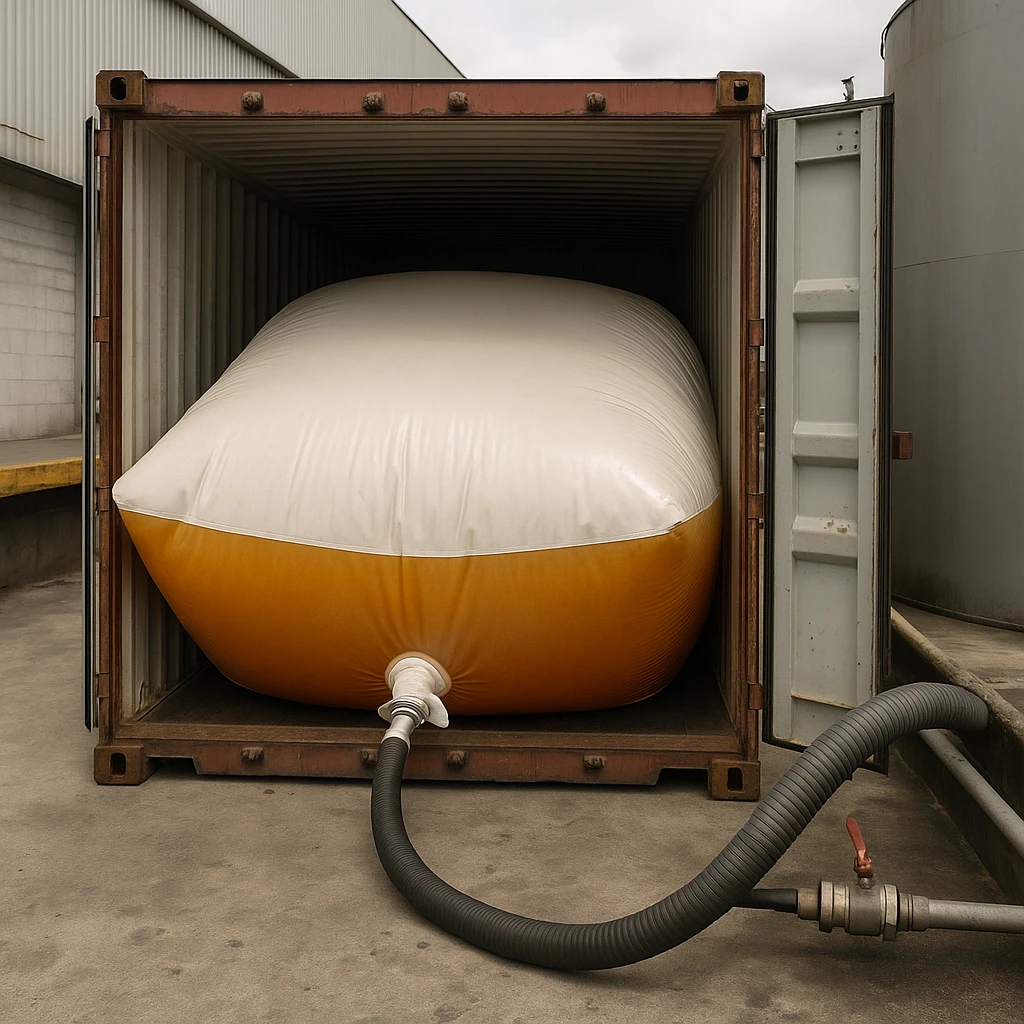
Flexitanks are large, single-use plastic bladders fitted inside standard 20-foot containers. They hold roughly 16 to 24 tonnes of oil, depending on product density. Flexitanks are suitable for medium-sized orders — from about 16 tonnes up to several hundred tonnes — and offer door-to-door convenience without the need for dedicated storage tanks. They are widely used for refined, bleached and deodorised (RBD) palm olein and other liquid fractions.
Drums — typically 200-litre (55-gallon) steel or plastic containers — are the standard for small orders, often under 16 tonnes. Drums allow easy handling, stacking and re-drumming at destination, and are preferred for specialty products, samples or markets with limited bulk infrastructure. They carry higher per-tonne packaging and freight costs.
Matching packaging to order size
- Under 5 tonnes: Drums are the only practical option. Buyers should confirm drum type (new or reconditioned) and lining, if required.
- 5 to 16 tonnes: Small flexitank or multiple drums. Flexitanks become cost-effective at the upper end of this range.
- 16 to 200 tonnes: Flexitanks in series of containers. This range suits buyers who lack bulk storage but need more than drum quantities.
- 200 to 1,000 tonnes: Partial bulk vessel (parcel) or multiple flexitanks. Bulk is cheaper per tonne but requires logistics planning.
- Above 1,000 tonnes: Full bulk vessel charter. This is the standard for refineries, large food manufacturers and biodiesel plants.
Quality and handling considerations
Bulk vessels require careful tank-cleaning protocols and segregation between different grades. Cross-contamination risk exists if the vessel previously carried non-edible cargoes.
Flexitanks must be fitted correctly to avoid leakage. They are single-use, so no cleaning is needed, but the container must be structurally sound. Temperature-sensitive products may require insulated containers or heating pads.
Drums are robust but prone to denting and label damage. They require more labour for loading, unloading and disposal. Buyers should specify if drums need to be food-grade, UN-rated or lined.
Cost trade-offs
Per-tonne packaging cost rises sharply from bulk to flexitank to drum. Bulk shipping typically adds about $5–$15 per tonne in packaging and handling. Flexitanks add roughly $30–$60 per tonne. Drums can add $100–$200 per tonne or more, depending on drum type and destination.
Freight cost also varies: bulk vessels charge by tonne-mile, while containerised flexitanks and drums incur per-container rates. For small volumes, drums may be cheaper overall due to lower minimum freight commitments.
Final advice for first-time buyers
First-time buyers should start with the smallest practical packaging to test product quality and logistics. Once demand is stable, they can scale up to flexitanks or bulk to reduce per-tonne cost. Always request a packaging specification sheet from the supplier and confirm that the packaging is compatible with the product's melting point and storage conditions.
Palm oil economics favour bulk for volume, flexitank for flexibility and drums for entry-level orders. The right choice depends on order size, infrastructure and budget.