
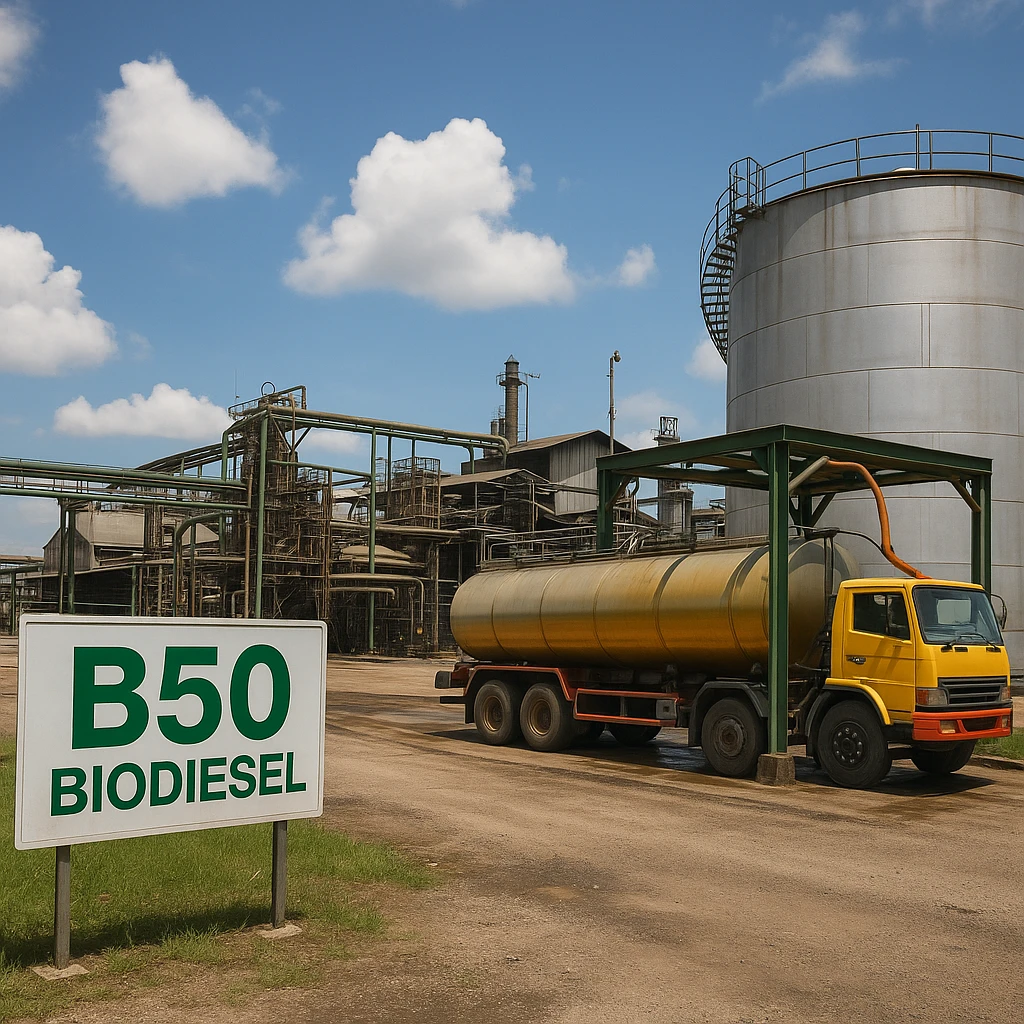
Indonesia’s rollout of the B50 biodiesel mandate is reshaping the palm oil market, with analysts estimating a potential $2.7 billion loss in export revenue as domestic consumption rises. The policy, launched this week, requires a 50% palm oil blend in biodiesel, boosting local demand and tightening global supplies.
Price reaction
Palm oil futures climbed to a two-week high, supported by strength in rival vegetable oils and crude oil. Soybean oil also rose to a three-week high amid geopolitical tensions in the Middle East, which have lifted biofuel demand expectations. The rally reflects broader market anticipation of reduced export availability from Indonesia, the world’s largest palm oil producer.
Supply-demand dynamics
The B50 mandate is expected to divert significant volumes of palm oil from export markets to domestic biodiesel production. This shift could reduce Indonesia’s export revenue by $2.7 billion, according to industry estimates. Meanwhile, Thailand has tightened its palm oil export controls, further reshaping regional supply flows. European Union imports of Malaysian palm oil have increased year-on-year, indicating sustained demand from key buyers.
El Niño concerns add to supply uncertainty, with analysts raising price forecasts for 2026-27. The combination of weather risks and biodiesel-driven demand is tightening global stocks, supporting a bullish outlook.
Competing oils and trade flows
India and China have signed an edible oil trade pact to boost soybean oil imports, potentially easing pressure on palm oil demand from the two largest vegetable oil importers. However, the immediate impact of Indonesia’s biodiesel policy is expected to keep palm oil prices elevated relative to other oils.
Takeaway for buyers
Monitor Indonesia’s B50 implementation pace and export allocation data closely. Any delays or adjustments in the mandate could shift price direction, while El Niño developments will remain a key supply risk through the second half of 2026.