
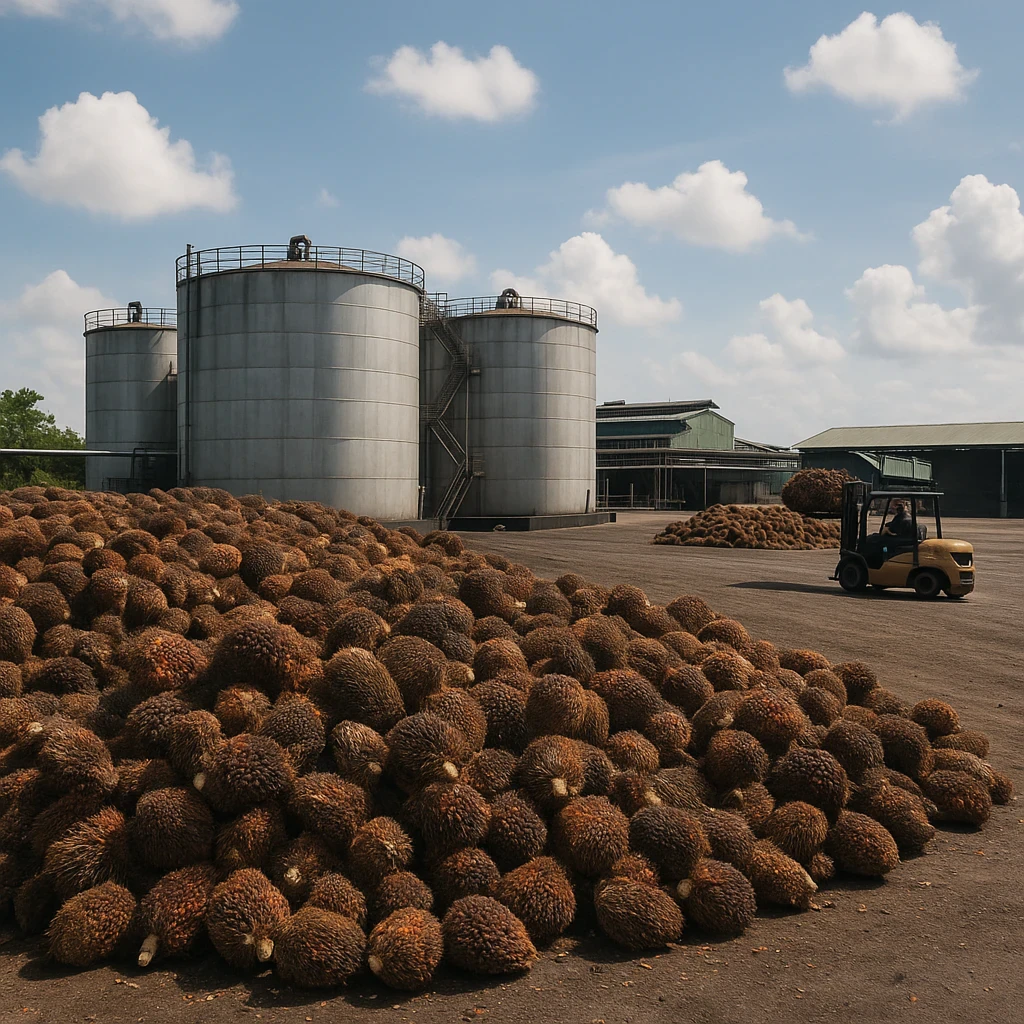
Malaysia's palm oil inventories climbed to a five-month high in July, according to data from the Malaysian Palm Oil Board (MPOB), as production expanded at a faster pace than exports. Closing stocks rose 7.2% month-on-month to 1,429,316 tonnes, while crude palm oil (CPO) output increased 9.4% to 1,792,979 tonnes. Exports grew 14.5% to 1,392,178 tonnes, but the stock build signals that supply is outpacing demand in the near term.
For buyers and traders, the inventory accumulation is a key supply-side indicator. It suggests that the market is well supplied despite recent price rallies, which could temper upside momentum. The stock increase comes as the industry enters the peak production season, typically lasting through the third quarter, adding further potential pressure on prices.
Market Context
Despite the bearish stock data, CPO futures have shown resilience. The benchmark contract on Bursa Malaysia Derivatives settled around $1,106 per tonne (RM 4,520), up 0.1% from the previous session. This follows a rally to a four-month high earlier in the week, supported by firmer crude oil prices—Brent crude traded near $87 per barrel, up 0.6%—which improves the economics of biodiesel blending and supports vegetable oil demand.
However, the inventory build may limit further gains. Our model outlook suggests CPO is expected to trade rangebound with a slight upward bias near $1,100-$1,120 per tonne over the next seven sessions. The wide BOPO spread (about $476 per tonne) and firm crude oil provide support, while the stock build and peak production cap upside. Crowded speculative long positions also add to the risk of a pullback.
Weather and Regional Factors
Weather conditions remain a watch point. The current El Niño (ONI +1.4) has brought dry conditions to parts of Kalimantan in Indonesia, which could affect future production. However, no immediate supply disruptions have been reported.
In Indonesia, the government's reference price for CPO is about $1,030 per tonne, and export duty remains at 10% for September, according to a recent announcement. This policy stability provides some predictability for trade flows.
Outlook
Traders will be watching export data from cargo surveyors to gauge demand momentum. The market also faces uncertainty from delayed Indonesian policy updates and the pace of shipments. While the stock build is a clear signal of ample supply, the interplay with crude oil prices and biodiesel demand will be crucial in the coming weeks.
For now, the market appears balanced between bearish inventory pressure and supportive external factors, with prices likely to remain rangebound in the near term.