
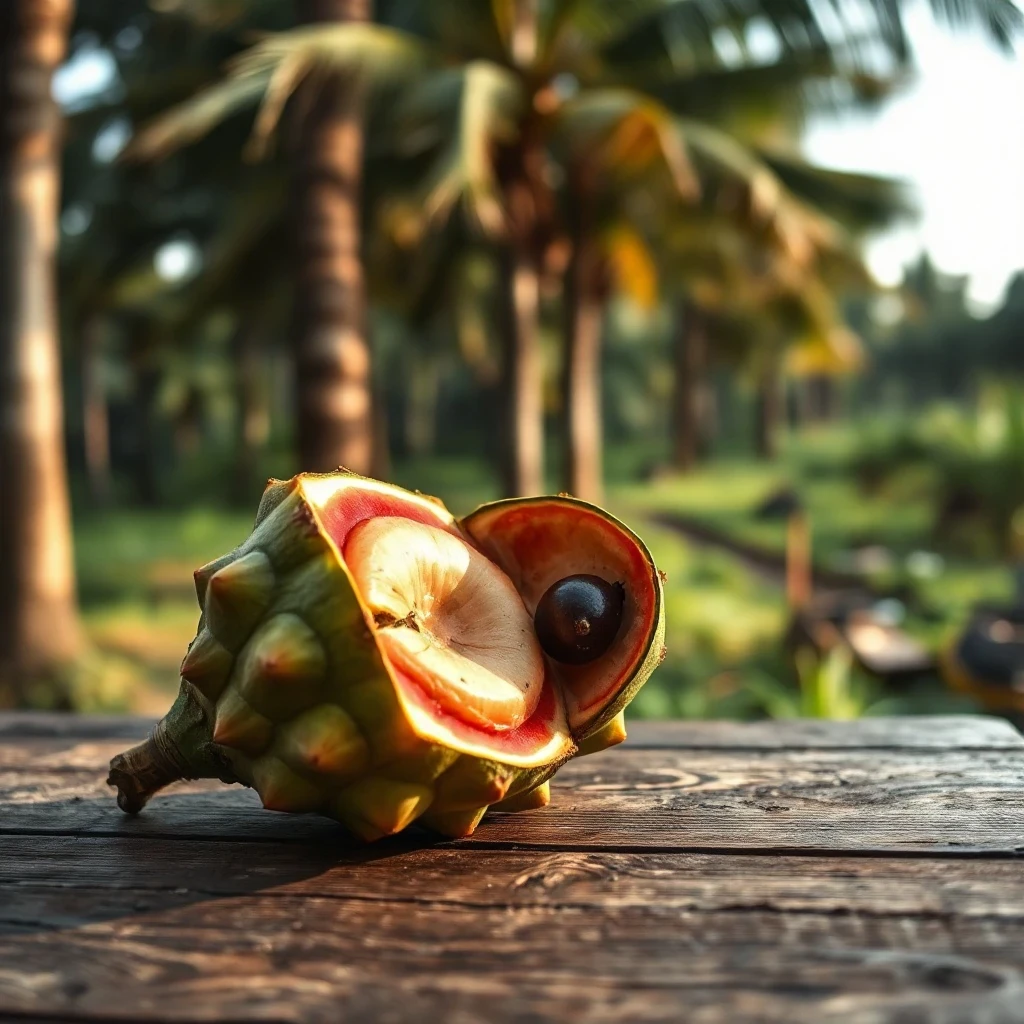
The Problem of the Thick Shell
For much of the early 20th century, oil palm planters faced a frustrating puzzle. The two known varieties of the African oil palm, *Elaeis guineensis*, each had a serious drawback. The thick-shelled dura form produced a large kernel but relatively little oil-bearing mesocarp. The shell-less pisifera form, while rich in mesocarp, was often female-sterile, yielding few or no fruit bunches. Neither type alone offered a commercially viable path to high oil output.
Planters knew that crossing the two sometimes produced a third type, called tenera, with a thinner shell and more mesocarp. But the results were inconsistent, and the underlying genetics remained a mystery. Without that understanding, breeding was a gamble.
The Key Insight
In the 1930s, a Belgian agronomist working in the Belgian Congo, Adrien Hallet, made a crucial observation. Through careful study of fruit types in his plantations, he deduced that shell thickness was governed by a single gene, with incomplete dominance. The dura form carried two copies of the thick-shell allele, the pisifera carried two copies of the thin-shell allele, and the tenera, with one of each, showed an intermediate shell.
This simple Mendelian model explained everything. Crossing a dura with a pisifera consistently yielded tenera offspring. More importantly, it meant that all tenera palms were hybrids, and that breeding them together would not produce uniform progeny. The only way to guarantee the high-yielding tenera type was to cross dura and pisifera parents directly.
The Yield Leap and Its Limits
The practical impact was enormous. Tenera fruit typically has a mesocarp content of 60-80% by weight, compared to roughly 40-50% for dura. Because the oil is extracted from the mesocarp, this difference directly translates into a far higher oil yield per hectare. Estimates suggest that the shift from dura to tenera planting material roughly doubled oil output per unit of land. That single genetic discovery turned the oil palm from a niche crop into the world's most productive oilseed.
But the tenera breakthrough also created a permanent constraint. Since tenera palms cannot breed true from seed, every commercial planting must be produced by crossing selected dura and pisifera parents. This is why seed production today is a specialized, controlled operation, and why the industry relies on a relatively small number of improved seed varieties.
The Legacy in Modern Plantations
Virtually all commercial oil palm planted today is tenera. The discovery of its inheritance pattern did not just improve yields; it laid the foundation for modern breeding programs. By understanding the genetic basis of shell thickness, breeders could select for other traits—such as disease resistance, oil quality, and adaptation to different environments—while maintaining the tenera fruit form.
For the trader and the planter, the tenera story is a reminder that the industry's economics rest on a biological foundation. The high yields that make palm oil so competitive are not a natural given but the product of a specific genetic combination, carefully managed through controlled crossing. That system, born from a simple observation in the 1930s, remains the backbone of palm oil production today.