
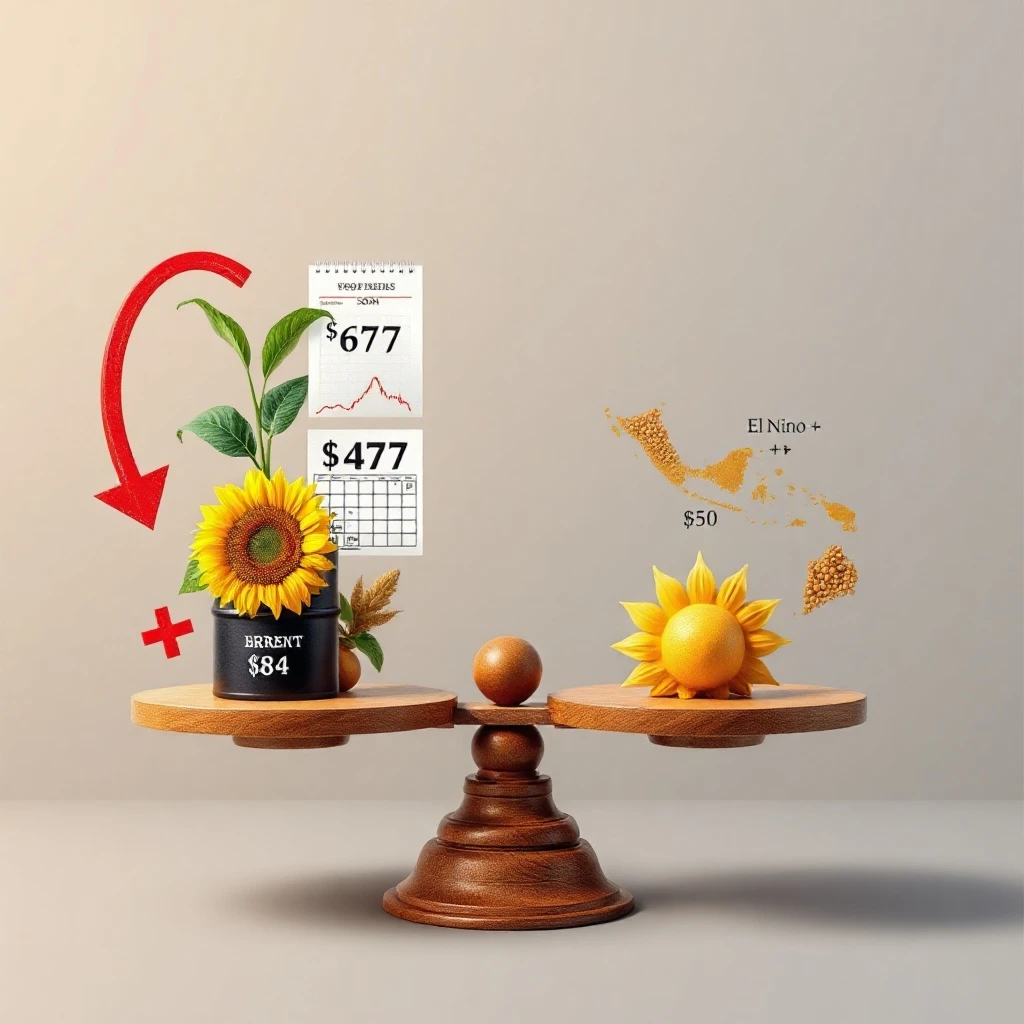
Malaysian CPO futures slipped 0.3% to about $1,104 per tonne (RM 4,515) on Wednesday, extending a cautious tone as the market braces for a seasonal stock build and contends with softening crude oil. The modest move belies a deeper tug-of-war between six bearish catalysts and four bullish anchors, leaving the near‑term balance tilted to the downside.
What is pushing prices UP
The most conspicuous prop is the yawning soy‑palm spread, which at $477 per tonne makes palm oil exceptionally cheap against soybean oil. This discount lures price‑sensitive buyers—particularly in India—to switch demand toward palm, underpinning physical offtake.
Indonesia’s B50 launch is another structural floor. Pertamina began nationwide distribution of the 50 % biodiesel blend on July 27, locking in a mandated offtake of millions of tonnes of palm oil that would otherwise compete for export. By diverting feedstock into domestic tanks, B50 shrinks the exportable surplus and supports global prices.
El Niño anticipation continues to inject a risk premium. The Oceanic Niño Index sits at +1.4 °C—strong El Niño territory—and historically such events cut fresh fruit bunch yields 6–12 months later. Traders are front‑running that supply anxiety, even though physical conditions have yet to tighten materially.
A fresh demand tailwind comes from sunflower‑oil disruptions. India is actively scouting for alternatives after Black Sea supply routes were hit in late July, and palm—already deeply discounted—stands to capture the redirected orders.
What is pushing prices DOWN
The most immediate headwind is positioning ahead of the July MPOB report, due in four days. June closing stocks of 1.33 million tonnes and a stocks‑to‑use ratio of 13 % already point to comfortable supply, and expectations are for a further seasonal build. Traders are lightening positions to avoid being caught long into a bearish print.
Brent crude’s 7.3 % slide over the past seven days has gutted biodiesel blending economics. At around $84 a barrel, crude is now so cheap that discretionary biodiesel demand evaporates, weakening the industrial‑use case for palm oil and dragging futures lower.
Indian demand is buckling. Edible oil imports collapsed 30 % in June, the steepest drop this year, signalling that high prices and a strong rupee are curbing appetite in the world’s top buyer. Less ship‑borne palm oil means more stocks piling up in producing countries.
In the futures market, managed‑money liquidation is spreading from soy oil to the broader vegetable‑oil complex. The CFTC’s latest data show money managers slashed their soy‑oil net long by 29,000 contracts—a historically aggressive pull‑back that spills over into palm via correlation trades.
Technicals reinforce the negative bias. The five‑day moving average has crossed below the 20‑day, forming a “death cross” that triggers momentum selling, even though the RSI remains in neutral territory.
Finally, the seasonal clock is against bulls. Peak production season running from July through October reliably floods the market with new supply, and this year’s strong output recovery—June production jumped 8.1 % month‑on‑month—suggests the wave has room to run.
Which side has the upper hand — and what could flip it
With six bearish factors against four bullish, the downside currently holds the upper hand. Our model’s near‑term outlook reflects this: “slightly bearish amid peak production season and weak crude oil, but wide BOPO spread and El Niño anticipation provide support.” The next MPOB report is the immediate binary risk that could either anchor or upend this view.
To shift the balance from bearish to bullish, either the demand side or the supply narrative would need to turn dramatically. A sustained rebound in Brent above $90 would revive biodiesel economics. A surprise dip in Malaysian stocks below 1.3 million tonnes would puncture the stock‑build story. Accelerating El Niño—say, an ONI climbing toward +1.6 °C—could intensify yield‑impact fears. Alternatively, if soy‑oil prices spike on a US weather scare, the BOPO spread could widen beyond $500, forcing more demand toward palm. Until then, sellers remain in charge.