
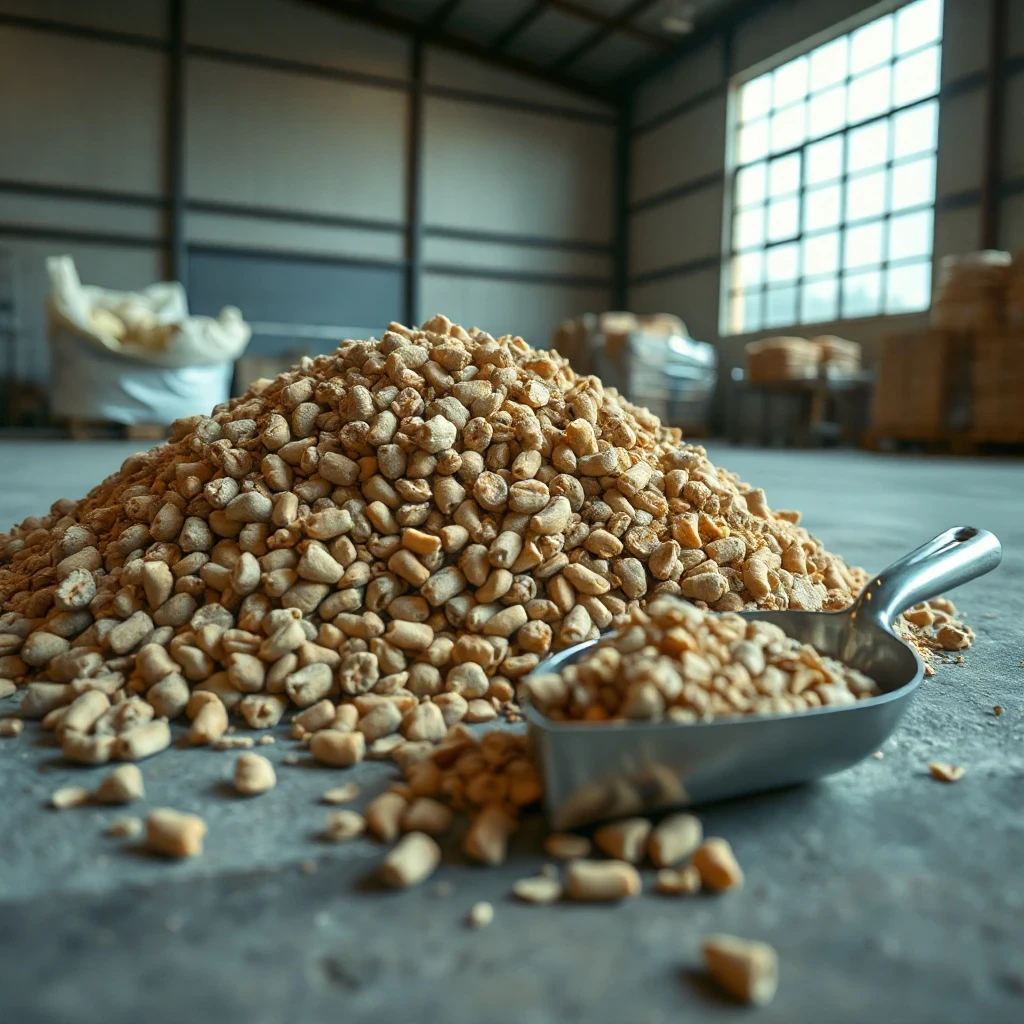
Palm kernel expeller (PKE) and palm kernel cake (PKC) are the solid residues left after oil is extracted from palm kernels. They are distinct from the empty fruit bunches and mesocarp fibre that come from the main palm oil milling line. For feed formulators, PKE/PKC is a familiar, cost-effective energy and protein source for ruminants, and to a lesser extent for pigs and poultry.
How the meal is made
Kernels are recovered from the nut after the palm fruit has been pressed for crude palm oil. The nuts are cracked, and the kernels are dried before oil extraction. Two main routes produce the meal:
- Mechanical pressing (expeller pressing) yields a cake with roughly 8-12% residual oil. This is the classic palm kernel cake.
- Solvent extraction, using hexane, removes nearly all oil, leaving a meal with about 1-2% oil. This is often called palm kernel meal, though the terms are used loosely.
The higher oil content of expeller cake makes it more energy-dense but also more prone to rancidity if stored poorly. Solvent-extracted meal is more stable but requires careful desolventising to avoid solvent residue.
Nutritional and commercial value
PKE/PKC is valued for its high fibre and moderate protein (roughly 14-18% crude protein) and a good mineral profile, particularly calcium and phosphorus. Its energy value is moderate, and it is a strong fit for dairy and beef cattle rations, where it partially replaces grain and other protein meals.
Commercially, PKE is a major export commodity from Southeast Asia, shipped in bulk to feed markets in Europe and elsewhere. Its price tends to track other protein meals, but it often trades at a discount, making it an attractive inclusion when grain prices spike. For buyers, the key commercial lever is the residual oil content, which directly affects energy value and price.
What to check when sourcing
Procurement managers should verify several quality parameters before committing to a shipment:
- Residual oil content: Higher oil means more energy but also more risk of oxidative rancidity. Specify a range that matches your ration's energy target.
- Moisture content: Excess moisture (above about 10-12%) encourages mould growth and reduces dry matter yield per tonne.
- Crude protein and fibre: These vary by origin and process. Ask for a certificate of analysis from each lot.
- Aflatoxin risk: Palm kernel products can carry mycotoxins if kernels were stored damp. Insist on aflatoxin screening, especially for dairy rations.
- Particle size and foreign matter: Uniform grind aids mixing; stones, shell fragments or metal are unacceptable.
- Solvent residue (for solvent-extracted meal): Verify that hexane levels are within permitted limits.
Storage and handling notes
PKE/PKC is dusty and can self-heat if piled damp. Store in dry, ventilated conditions, and rotate stock to avoid long-term storage. For buyers, a consistent, well-documented supply chain is worth more than a marginal price saving.
Understanding these fundamentals lets a buyer negotiate on measurable quality, not just price, and build a reliable feed programme around a proven by-product.