
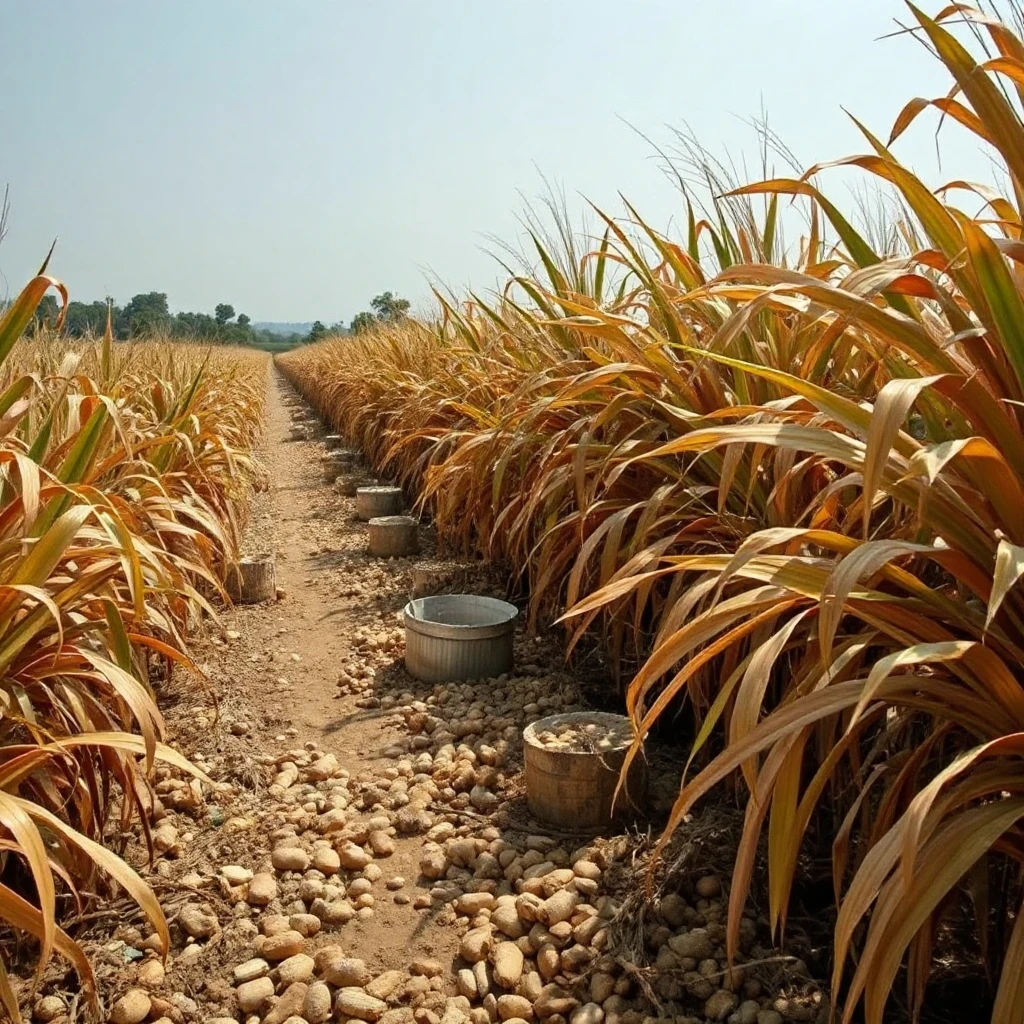
Global palm oil supply is entering a phase where the traditional driver of growth — planting more land — is no longer the default option. Environmental regulation, moratoriums on new plantations and the sheer scarcity of suitable land in the two main producing countries mean that future supply increases will have to come primarily from higher yields per hectare rather than from area expansion. The question is whether that productivity growth can materialise fast enough to meet demand.
Current market context
Malaysian crude palm oil futures traded at about $1108 per tonne on 6 August 2026, up 0.7% on the session, with the global benchmark near $1101 and Indonesia's reference price at about $1030. The narrow spread between benchmarks reflects a market that is well supplied in the near term but structurally dependent on how efficiently existing trees are managed.
Malaysian output data for June 2026 underline the challenge. CPO production reached 1,638,777 tonnes, up 8.1% month-on-month, and closing stocks rose 3.7% to 1,332,697 tonnes. Exports were 1,198,567 tonnes, up 5.7%. The month-on-month production gain is typical of the seasonal uptick, but the underlying yield trend is the more important variable. With limited new planting, Malaysia's output growth increasingly hinges on agronomic improvements — better fertiliser regimes, higher-yielding planting material and improved harvesting practices.
Weather and yield risk
The current El Niño episode, with an ONI of +1.4, is already showing up in regional rainfall patterns. Sarawak, Sumatra, Riau and Kalimantan are all experiencing dry conditions. Dry weather can stress trees and reduce fruit bunch weights, directly hitting yields. If the dryness persists into the next flowering and fruit-set cycle, the impact will appear in production data several months down the line. This makes the near-term yield outlook uncertain even as stocks are building seasonally.
The structural case for yield growth
Indonesia and Malaysia together account for the vast majority of global palm oil output. Both countries have largely exhausted the frontier of easily available land for expansion. Remaining suitable areas are often peatland or forested land with high conservation value, where clearing is either prohibited or commercially and politically costly. As a result, the industry's growth model is shifting from horizontal expansion to intensification.
Yield growth is not a theoretical option — it is already happening in parts of both countries. Smallholders, who manage a significant share of planted area, often lag behind estate yields by a wide margin. Closing that gap through better planting material, training and access to inputs offers a large, low-cost source of additional supply. On the estate side, precision agriculture and improved mill efficiency can also lift effective output per hectare.
But the realistic pace of that improvement is the crux. Yield gains tend to be incremental, measured in single-digit percentage points over years, not in the step-change that area expansion once delivered. With demand from food and biodiesel sectors continuing to grow, the margin for error is thin.
What would change the picture
For the supply outlook to shift decisively, several things would need to happen. A sustained La Niña or well-distributed rainfall would ease the immediate yield drag from dry weather. Policy changes — such as allowing replanting on existing concessions with higher-yielding seedlings, or accelerating smallholder certification and support programmes — could accelerate productivity gains. On the demand side, a sharp drop in crude oil prices, as seen over the past week with Brent falling 12.9%, weakens the economics of biodiesel blending and could reduce the pull on palm oil for fuel use.
What buyers should watch
Buyers should track the upcoming MPOB release, due in about five days, for confirmation of whether the stock build is accelerating or slowing. Beyond that, monthly rainfall data for the key producing regions of Sarawak, Sumatra and Kalimantan will be the single most important indicator of future yield performance. A sustained dry spell would tighten supply expectations despite current stock levels. Also worth monitoring is the pace of replanting and smallholder yield improvement programmes in both Malaysia and Indonesia — these are the real levers of future supply growth. Our model outlook points to mixed signals: bearish positioning on seasonal stock builds, but supportive factors from strong Indian demand and the wide BOPO spread. The market is finely balanced between near-term abundance and structural tightness.