
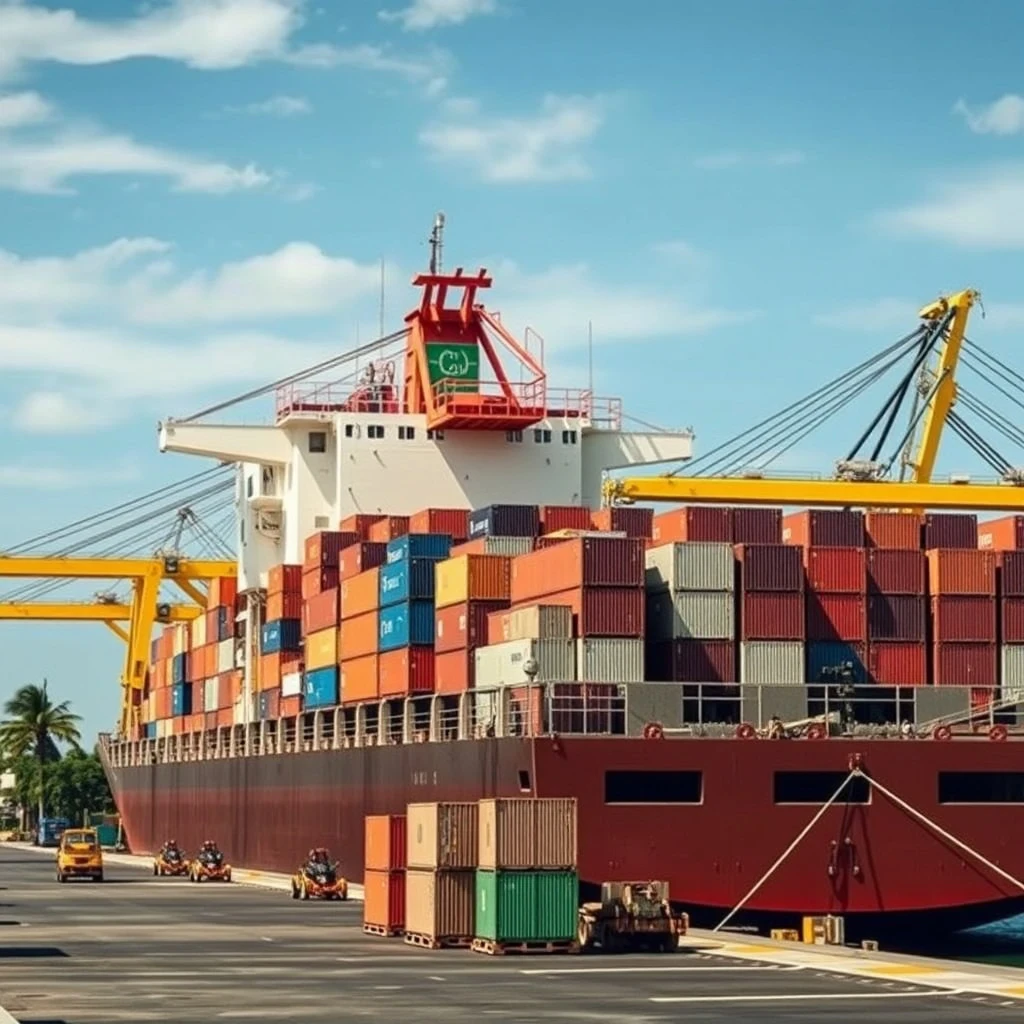
When buying palm oil, the incoterm you choose determines more than just the price. It decides who pays for freight and insurance, who holds the risk if the cargo is damaged in transit, and when the legal title to the goods passes from seller to buyer. For procurement managers and first-time buyers, understanding the difference between FOB, CIF, and CFR is critical to avoiding costly surprises.
FOB (Free On Board)
Under FOB, the seller is responsible for delivering the goods on board the vessel named by the buyer at the port of loading. Once the cargo is loaded, the risk transfers to the buyer. The buyer arranges and pays for the main ocean freight, insurance, and all costs from that point onward.
- Risk transfer: At the ship's rail (or as per the agreed loading point) in the port of shipment.
- Costs: Buyer pays freight, insurance, and import charges.
- Title: Usually passes to the buyer when the goods are on board, though the seller may retain title until payment under the contract terms.
FOB is common when the buyer has its own shipping arrangements or wants to control freight costs. It gives the buyer more flexibility but also more responsibility.
CIF (Cost, Insurance, and Freight)
Under CIF, the seller pays for the cost of the goods, the freight to the destination port, and the marine insurance. The seller also arranges the insurance policy. However, the risk transfers to the buyer once the goods are on board the vessel at the port of shipment, not at the destination.
- Risk transfer: At the port of loading, when the goods are on board.
- Costs: Seller pays freight and insurance; buyer pays import duties and onward transport.
- Title: Passes to the buyer when the goods are on board, but the seller holds the documents until payment.
CIF is convenient for buyers who do not want to arrange shipping or insurance. But note: the insurance is usually the minimum cover, so buyers may want to add their own coverage for full protection.
CFR (Cost and Freight)
CFR is similar to CIF, but the seller does not arrange insurance. The seller pays for the freight to the destination port, but the buyer must insure the cargo from the port of loading.
- Risk transfer: At the port of loading, on board the vessel.
- Costs: Seller pays freight; buyer pays insurance and import charges.
- Title: Passes to the buyer when the goods are on board.
CFR is less common in palm trade than CIF, but it is used when the buyer prefers to arrange insurance themselves, perhaps because they have a global policy.
Practical considerations for palm buyers
- Risk vs. cost: The incoterm defines where risk passes, not necessarily where you take physical delivery. Even under CIF, you bear the risk during the ocean voyage, even though the seller paid for the freight and insurance.
- Insurance quality: Under CIF, the seller's insurance is usually the minimum (Institute Cargo Clauses C). For palm oil, which can be sensitive to heat and contamination, consider upgrading to Clauses A or B.
- Documentation: Under CIF and CFR, the seller provides the shipping documents (bill of lading, invoice, insurance policy) which you need for customs clearance.
- Disputes: If the cargo arrives damaged, the claim process differs. Under FOB, you claim against your own insurer or the carrier; under CIF, you claim against the seller's insurer.
Choosing the right incoterm is a balance of control, cost, and risk. For first-time buyers, CIF is often simpler, but FOB gives more control over freight rates. Always read the full contract terms, as incoterms are only part of the agreement.
For more market intelligence on palm oil trade mechanics, keep reading Palm Oil Economics.