
Who Is Bound
The EU Deforestation Regulation (EUDR) applies to any operator or trader who places specified commodities—including palm oil—on the EU market, or exports them from it. In practice, that means EU-based importers, processors, and distributors, but the obligations flow up the supply chain. Non-EU producers, exporters, and traders are not directly regulated, yet they must supply the data and documents that EU counterparties need to comply. If they cannot, their product may be barred from entry.
Due Diligence Obligations
EUDR requires a three-step due diligence process before a product can be placed on the EU market. First, an operator must collect information proving the product is deforestation-free—that is, produced on land not subject to deforestation after a specified cutoff date. Second, they must carry out a risk assessment, weighing factors such as country of origin, region, and commodity. Third, if risk is not negligible, they must take mitigation steps, which can include independent audits or additional supplier documentation.
The regulation is designed to be risk-based. If a country or region is assessed as low risk, simplified due diligence may apply. If high risk, more rigorous checks are required. The system is not static: the European Commission periodically reviews country risk classifications, so obligations can shift as assessments are updated.
Geolocation Evidence
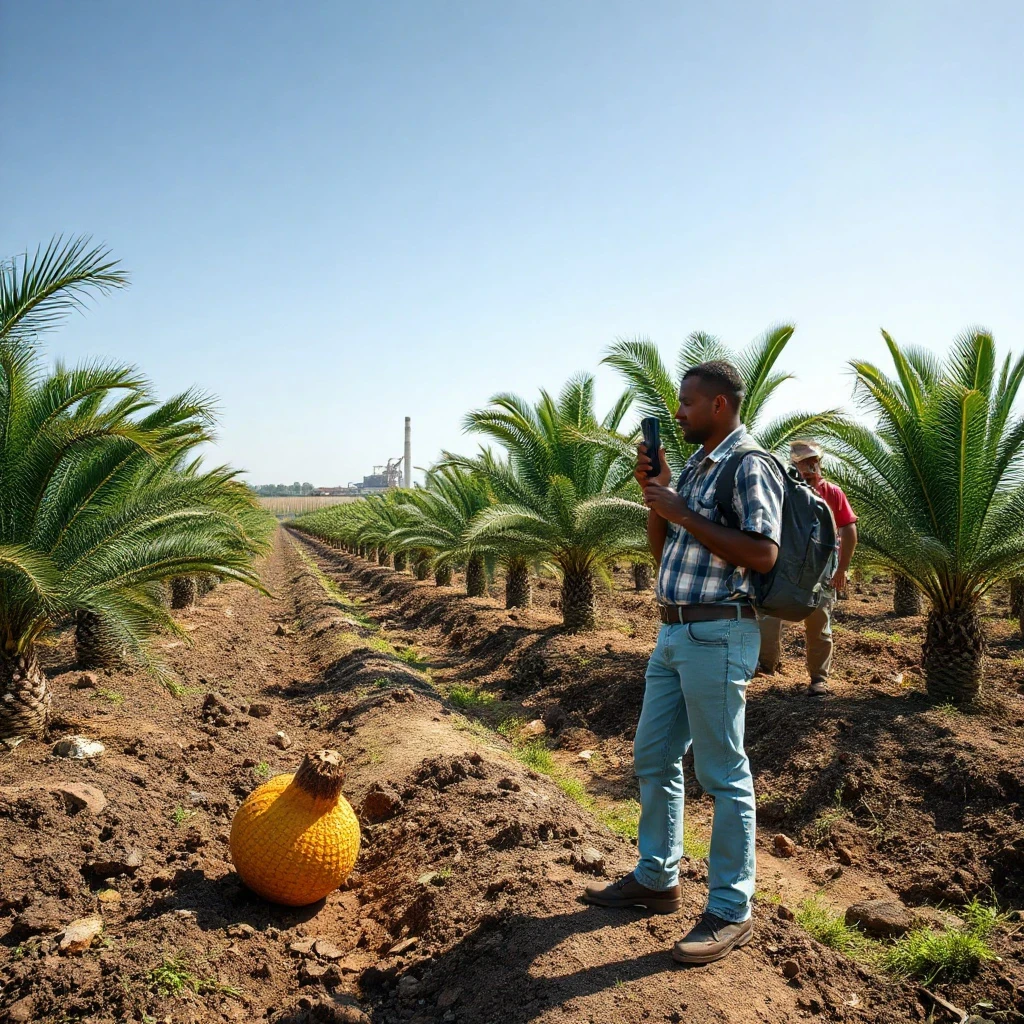
A central feature is geolocation. Every plot of land where the palm fruit was grown must be identified by GPS coordinates, with a minimum precision of one point per parcel. For large plantations, a single polygon may suffice, but for smallholders, each plot typically needs its own coordinates. This data must be submitted to an EU-wide information system, along with the due diligence statements. Without accurate geolocation, the product cannot be cleared.
The burden is practical: exporters must map their supply base, including smallholder plots, which can be a significant logistical challenge. Buyers and traders must ensure that every batch carries the correct coordinates, and that they can trace the fruit back to the specific plot.
Compliance Timeline
The regulation sets a phased implementation. Large operators face an earlier compliance date, while micro and small enterprises have a longer transition. The exact dates are set by the regulation and subsequent delegated acts, and they may be adjusted if the Commission proposes changes. What matters for market participants is that the clock is running: any operator placing palm oil on the EU market must be fully compliant by the applicable deadline, or face penalties that include fines and exclusion from the market.
Because the timeline can shift, traders should monitor official announcements rather than rely on fixed schedules. An illustrative example: if the large-operator date were set for a certain year, smallholders might have an additional two years—but that is illustrative only, and actual dates are determined by the legal text.
Practical Consequence
For exporters, traders, and buyers, the practical effect is on documentation, specification, and cost. Every shipment will need a due diligence statement, geolocation files, and proof of deforestation-free status. This adds administrative overhead and may require investment in traceability systems. Specifications will need to include origin data down to the plot level, and buyers may demand contractual clauses that allocate responsibility for non-compliance. Costs could rise for data collection, auditing, and potential delays if documentation is incomplete. In short, EUDR transforms palm oil trade into a data-intensive exercise where compliance is a precondition for market access. ---
*This article reflects the position as of 4 August 2026. Duty structures, levies and mandates change often, sometimes at short notice. Please verify the current position, and any changes made after this date, before relying on it.*