
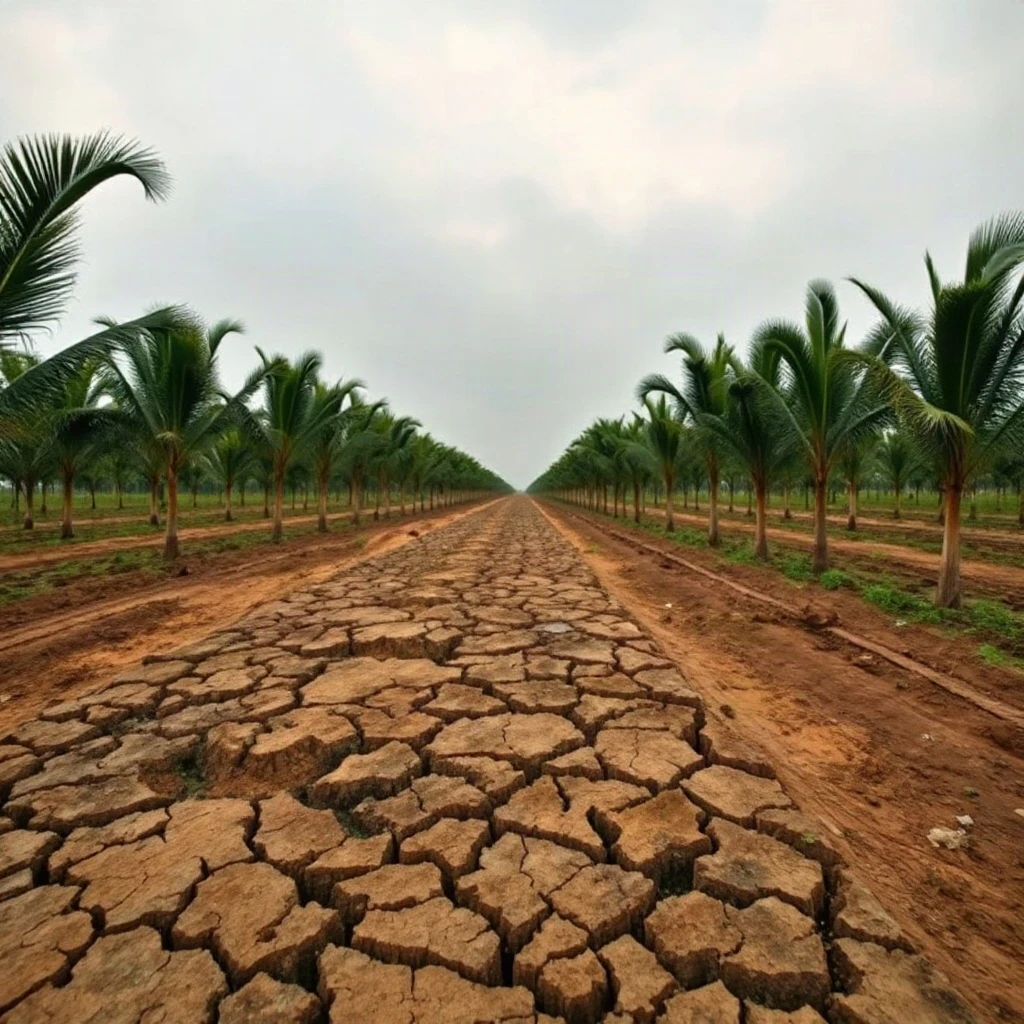
The palm oil complex enters August with the El Niño state firmly in place, an ONI reading of +1.0 confirming a moderate event. For the crop-weather desk, the immediate concern is not the current dryness alone but the delayed effect on yields. Reduced fruit bunch weights typically manifest six to twelve months after the onset of drought stress, meaning the current ENSO phase is still feeding into the output profile for late 2026 and early 2027.
Regional Rainfall Divergence
Seven-day rainfall forecasts point to a stark divergence across the two main producing nations. Sarawak in Malaysian Borneo and Kalimantan in Indonesian Borneo are both flagged as notably dry. This is significant because these areas have been key contributors to regional output in recent months. Persistent dryness here accelerates soil moisture depletion, and while the immediate impact is on harvesting logistics and fruit quality, the longer-term signal is for lighter bunch weights in the coming quarters.
Conversely, the broader Southeast Asian region is not yet seeing the widespread wet anomaly that would signal a transition toward La Niña. A La Niña shift typically brings heavier rains to the palm belt, which would alleviate drought stress but introduce a different set of problems: waterlogged fields, disrupted harvesting schedules, and higher incidence of bunch rot and transport delays.
Production and Stock Dynamics
Malaysian June data from MPOB already reflects a complex picture. CPO production rose 8.1% month-on-month to 1,638,777 tonnes, while closing stocks climbed 3.7% to 1,332,697 tonnes. This suggests that current yields are still holding up, largely due to the lagged nature of El Niño's impact. However, the dry conditions in Sarawak are a cautionary signal for the July and August figures, as that state's contribution to national output is substantial.
Indonesia, meanwhile, faces a different near-term pressure. A weakening rupiah, trading around 18,053 per dollar, makes export selling more attractive for local producers, potentially increasing supply into the global market even as Kalimantan's dry spell threatens future output. This creates a paradoxical situation: ample near-term availability masking a deteriorating crop condition.
Market Implications
Our model outlook suggests the market is likely to remain rangebound around the $1,100 per tonne level for Malaysian CPO, with a slight initial dip possible on currency-driven export flows. The wide BOPO spread offers some price support, while the anticipation of El Niño's lagged yield hit is already partly priced in. Seasonal August firming, driven by tighter supply expectations ahead of the year-end monsoon, adds another layer of support.
The key variable to watch over the next four to six weeks is whether the dry anomaly in Sarawak and Kalimantan expands or contracts. If the current dry window persists, we would expect to see a downward revision in output forecasts for the fourth quarter, as the reduced bunch weight effect becomes more pronounced. Conversely, any unexpected return of widespread rains would shift the focus from yield concerns to harvest disruption risks.
For now, the crop-weather desk maintains a neutral-to-cautious stance, with the balance of risks tilted toward lower production in the medium term, even as immediate supply appears comfortable.